Black-winged damselfly Coloring Pages

About Black-winged damselfly
The Lady in the Black Dress Dancing by Early Summer to Autumn Streams
The Black-winged damselfly is a kind of damselfly you can see near clean streams and canals from late May in early summer to October in autumn. Instead of flying fast in a straight line through the big sky like ordinary dragonflies, its main feature is how it flutters its black wings gracefully, dancing gently like a lady in a black dress. Its magical and lovely beauty has charmed many people since long ago, making it a favorite bug by the water.
The Origin of the Name and the Culture of Tooth Blackening
It is said that the Japanese name for the Black-winged damselfly comes from two stories deeply linked to Japanese history and culture. One is a simple idea that it was named Black-winged Dragonfly simply because its wings are pitch-black. The other story comes from Ohaguro, an old Japanese makeup custom where adult women and nobles painted their teeth jet-black. People say the deep, shiny black of the Black-winged damselfly's wings looked just like those black teeth, giving it this name.
The English Name Ebony Jewelwing and Wings Like Black Jewels
In English-speaking countries, the Black-winged damselfly and its close relatives are called by the romantic name Ebony Jewelwing. "Ebony" means dark ebony wood used for fine furniture and instruments, or a deep jet-black color. "Jewelwing" means "wings made of jewels." When the sun shines on them, the male's emerald-green body and jet-black wings sparkle just like jewels set on black velvet, which is how they got this wonderful name. It is also known by other elegant names, like Black-winged damselfly and the French name Atra Demoiselle (Black Lady).
Beliefs and Culture: Called God Dragonfly and Buddha Dragonfly
In some regions, people cherish the Black-winged damselfly and give it sacred names like God Dragonfly or Buddha Dragonfly. There are two mysterious reasons for this: the season and the way it moves. The time when adult Black-winged damselflies appear near water in towns and forests matches the Obon season in July and August, when families welcome their ancestors' spirits. Also, when it rests on water plants or leaves, it slowly opens and closes its black wings. This looks like a person putting their hands together to pray to their ancestors, so people have warmly protected it as a special helper carrying the spirits of ancestors.
An Elegant Flight Style Fluttering Like a Butterfly
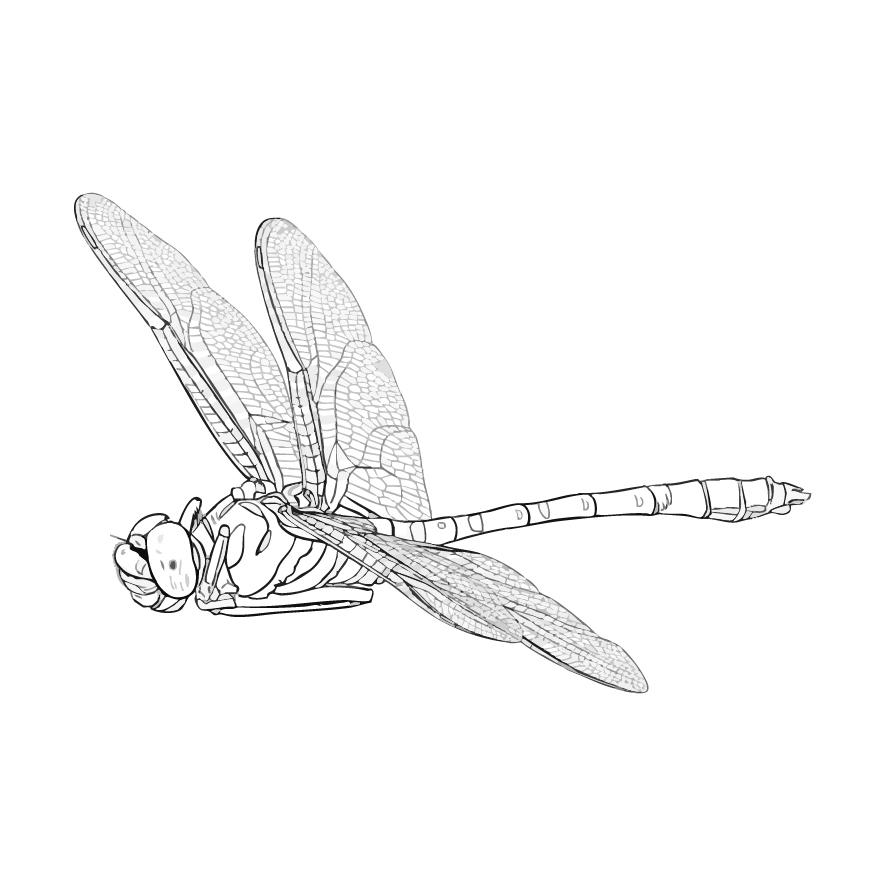
Big dragonflies like the blue skimmer or the giant darner move their four wings quickly and fly straight like a bullet with a "Whoosh!" But the Black-winged damselfly gently flexes its four wings up and down one by one, fluttering gracefully just like a swallowtail butterfly. Floating softly over the water and grass as if riding the wind, this swimming-like flight style is a special charm you can only see with the Black-winged damselfly.
Folding Wings neatly on Its Back: The Wonder of Damselflies
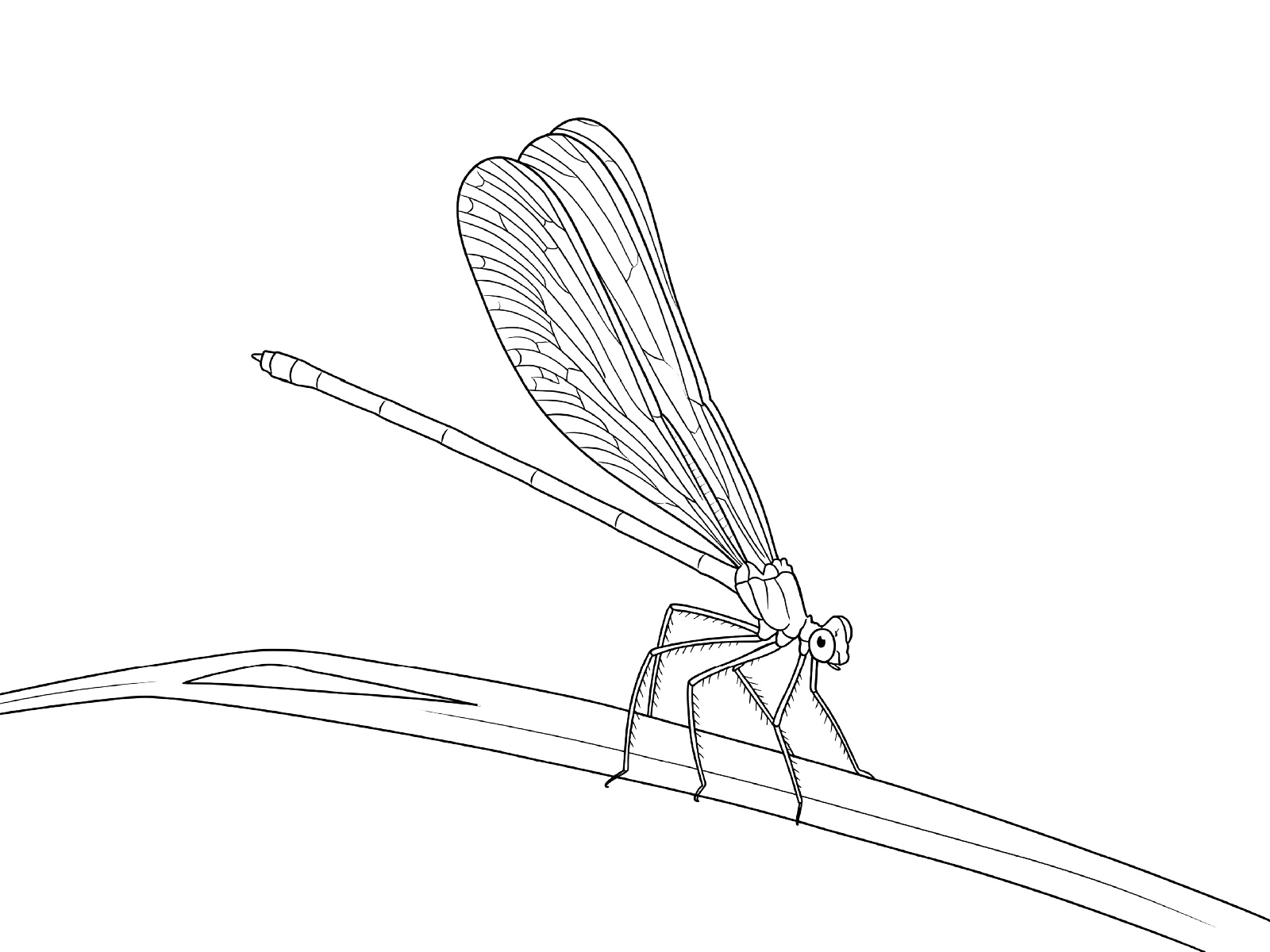
When regular dragonflies rest, they spread their wings out straight to the left and right. But the Black-winged damselfly rests in a completely different way! When it lands on a leaf or branch, it folds its four black wings straight up together on its back. This is because the Black-winged damselfly belongs to a group of damselflies with thin bodies like toothpicks, creating a lovely, delicate shape.
Emerald Green and Chic Black! How to Tell Males and Females Apart
Telling a male (boy) and female (girl) Black-winged damselfly apart is super easy! You just need to check the color of their tummy (body). The male's body is a shiny emerald green that sparkles wonderfully when light hits it. On the other hand, the female's body has no shine and is covered in a calm, dark brown color. Both have jet-black wings, but if you hold them up to the light, the female's wings look a bit brownish, which is fun to see!
Clean Streams with Sunlight Through Trees! Their Favorite Home
Black-winged damselflies do not live just anywhere. They choose places with rich nature and very clean water. Their favorite homes are gentle streams and water canals with lots of water plants. Rather than bright, open spots with strong sunlight, they prefer quiet, shadowy places surrounded by trees where sunlight peeks through the leaves. Seeing a Black-winged damselfly flying by a stream is wonderful proof that the natural environment is kept beautiful!
Slim Nymphs Living Underwater and the Secret of Growing Up
A mother Black-winged damselfly lays her eggs by poking her tail into the stems and leaves of water plants near the surface. The babies born from the eggs are called nymphs, and they grow up in the water. Unlike regular dragonfly nymphs, Black-winged damselfly nymphs have very long, thin legs and bodies, with three leaf-like gills on their tails. They hide well by holding onto water plants and grow underwater for six months to a year. In early summer, they climb up water plants during the night and shed their skin to become splendid adults!
Hunters in the Sky! A Helpful Hero Catching Mosquitoes and Small Bugs
Even though it dances so softly and gracefully, an adult Black-winged damselfly is a great hunter! It uses its big compound eyes to look around and quickly catches flies, mosquitoes, and small moths in mid-air. Its legs have many tiny spikes, allowing it to scoop up bugs like a net while flying. Because it eats lots of pesky mosquitoes that bite humans, it is actually a dependable hero that protects the balance of nature!
How to Color Black-winged damselfly
How to Choose Colors: Metallic Green for Males and Dark Brown for Females
To make your Black-winged damselfly look real and neat, decide if it is a boy or a girl first! If you want to color a male, try using bright emerald green, yellow-green, or metallic green for his long tummy. Add a bit of yellow or gold on his back where the light hits. This makes him shine like real metal! If you want to color a female, use dark brown, deep brown, or black for her whole tummy. This gives her a cool, mature look. For the big round eyes on the head, use deep black or dark brown. Leave a tiny white dot for the light to make the eyes look full of life!
Blending Colors to Make See-Through Black Wings
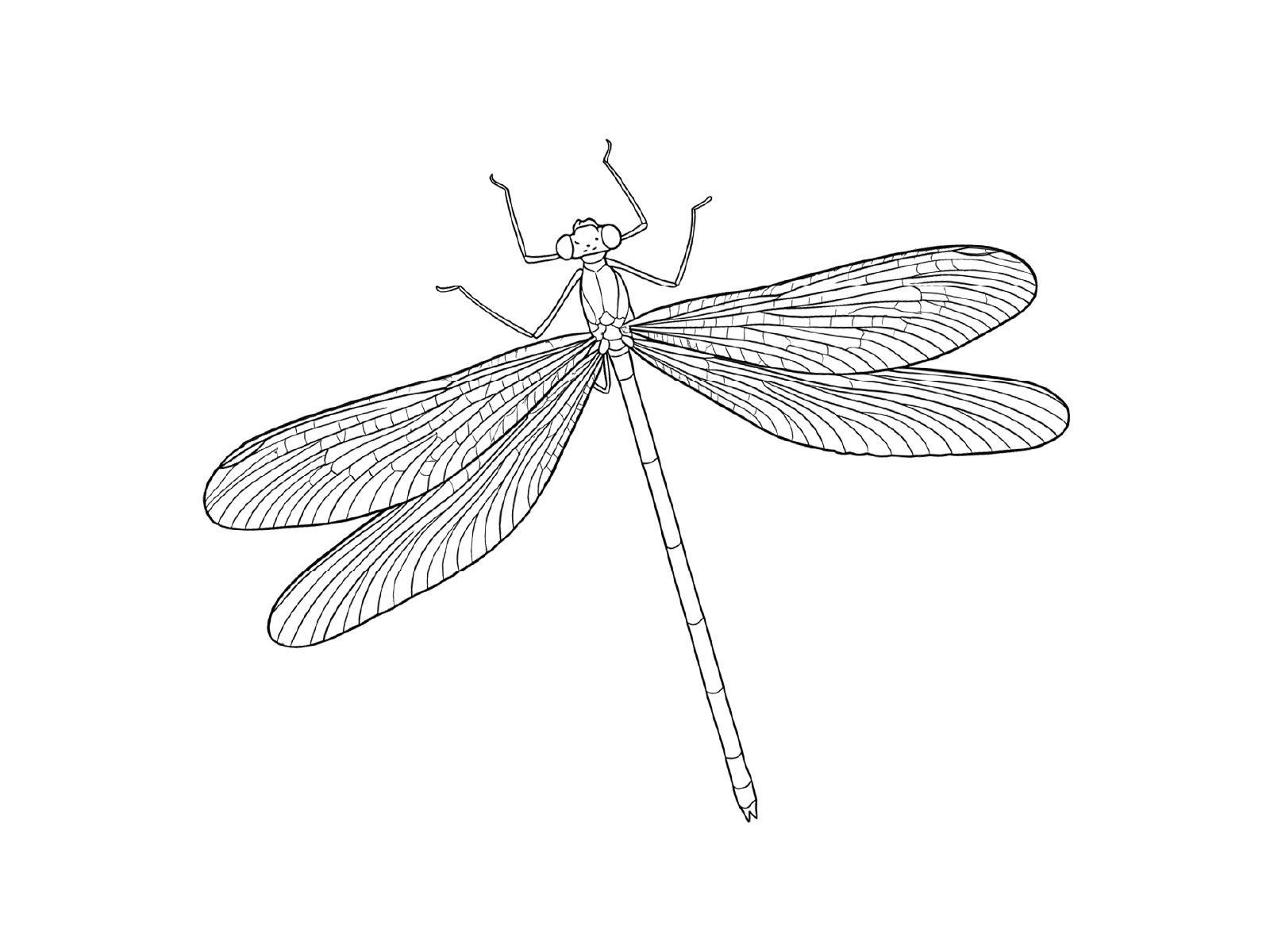
The four large black wings are the best part of the Black-winged damselfly. Do not color them with just one dark color. Instead, color them so light can shine through! Make your colored pencil sharp. Carefully trace each line of the wing grid with black or dark brown. Do not color the inside of the grid too hard. Add a light layer of deep purple or dark navy blue to blend the colors. Near the edges of the wings, use very light gray or light blue. Leave a few white spots to show light passing through. Now you have beautiful, see-through wings for your Black-winged damselfly!
Tips for Coloring the Thin Body and Delicate Legs
The body of the Black-winged damselfly has joints like bamboo. Its lines are very thin and delicate. Make your pencil extra sharp so you do not cover the fine lines. For the six thin legs, trace each line smoothly with black or dark brown. Trace the tiny spikes on the legs too! This makes it look like a picture in a real bug book. Add a dark shadow with black or dark green on the tummy joints. This will make the thin body look round and pop out!
Coloring a Resting Pose with Light and Shadow
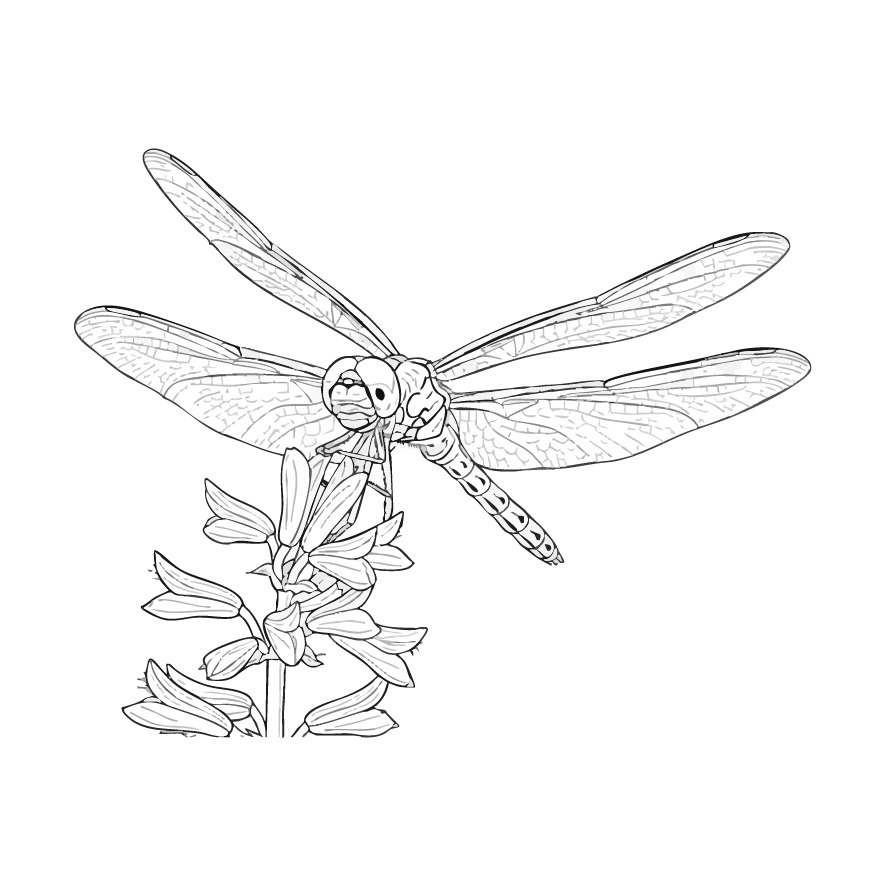
If your coloring page shows the Black-winged damselfly sitting on a leaf, think about sunlight and shadows. Put bright yellow-green or light cream on top of the round head, the curved back, and the bent legs. These soft colors make bright light spots! Next, add shadows with dark brown or black. Put them where the four wings cross, under the feet on the leaf, and under the chest. Strong light and dark colors will make your Black-winged damselfly jump right off the page!
Add a Stream and Sunlight to Finish the Water World
When you finish your Black-winged damselfly, draw a pretty water scene around it! Color the water plants and leaves with bright green or yellow-green. Use dark green for the lines on the leaves. For the clear stream near its feet, blend sky blue and light emerald green softly. Draw lines of sunlight shining through the trees with bright yellow. Leave white dots for little water bubbles on the stream! You can almost hear the cool wind and the sound of flowing water. Have fun coloring with your own cool ideas!
Fun Facts About Black-winged damselfly
Jet-Black Wings and Fluttering Like a Butterfly
Just as its name says, the Black-winged damselfly has four jet-black wings. It does not fly fast and straight like normal dragonflies. Instead, it flutters gracefully like a butterfly!
Boys and Girls Have Different Body Colors!
Boy and girl Black-winged damselflies have cool color differences. The boy's body shines like shiny metallic green. The girl's body is a calm dark brown.
A Magical Bug Called the "God Dragonfly"
When it rests on a twig, it slowly opens and closes its wings. This looks like someone putting their hands together to pray to God! That is why people call it special names like the "God Dragonfly."
A Lucky Insect That Visits in Summer
You can see many Black-winged damselflies during the Obon season in July and August. People long ago believed they carry the spirits of ancestors. Seeing one is thought to bring you good luck!
They Love Clean Water and Cool Shade
Black-winged damselfly babies grow up in slow, clean rivers and streams. Grown-ups love shady spots near the water instead of bright, sunny places.
Share These Black-winged damselfly Coloring Pages


-
Atala insect
-
Atala damselfly 2
-