Skipjack tuna Coloring Pages

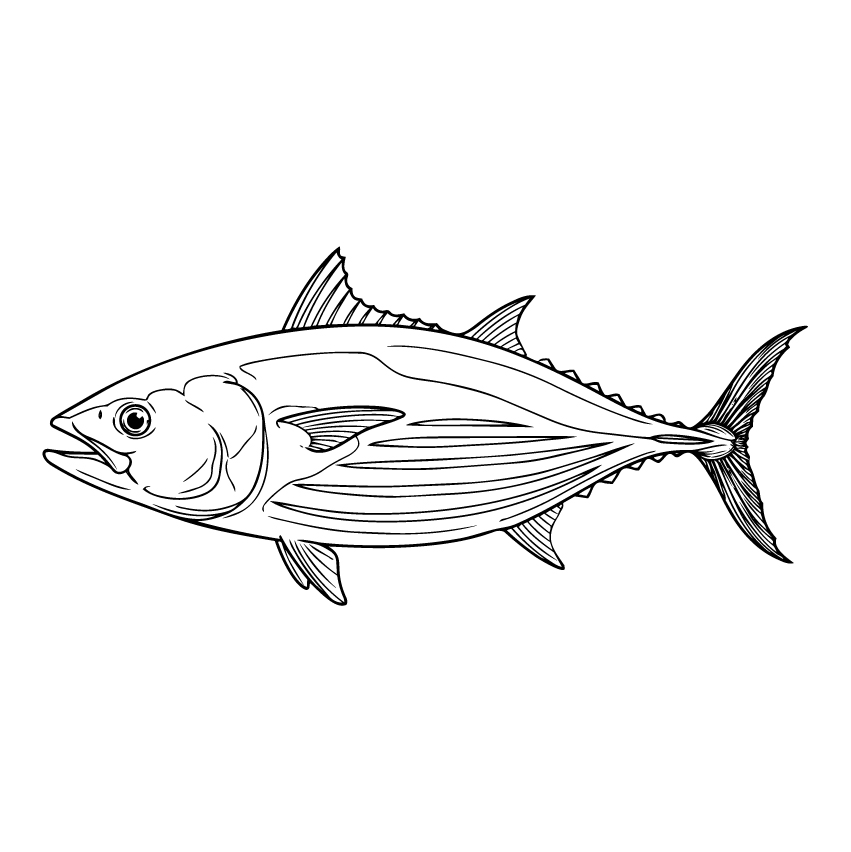
About Skipjack tuna
English Name and Name Origin
The Skipjack tuna has a very fun name history based on its body and history!
-
English Name: It is called "Skipjack tuna." "Skipjack" comes from how it jumps across the water. "Tuna" shows that it is part of the tuna family!
-
Japanese Name Origin: The main story says people called it "Kata-uo" (hard fish) because its meat gets hard fast. That word slowly changed into "Katsuo." Long ago, samurai loved this fish because its name sounded like "winning fish"! It brought them good luck.
-
Scientific Name: Katsuwonus pelamis. Its Japanese name "Katsuo" is right inside its real scientific name!
How It Lives and Where It Swims
The Skipjack tuna is a very busy, medium-sized meat-eating fish that swims all across the big ocean.
-
Where It Lives: It lives in warm seas all over the world. In Japan, it rides the warm ocean currents north and moves around with the seasons.
-
Super Swimming Ability: If it stops swimming, it cannot breathe! So it never stops, even when it sleeps. People call it a speed star of the sea. It can swim faster than 60 kilometers per hour!
A Smooth Body Built for Super Speed
The body of the Skipjack tuna has a perfect smooth shape to slice right through the water.
-
Fins: Its back, chest, and tail fins are super strong. They help the fish steer and stay steady when swimming fast.
-
Fish Scales: It is different from most fish. Most of its body has no scales at all! Hard scales only gather near its chest fins and side line.
Secret of the Special Stripes
The Skipjack tuna is famous for the dark stripes on its tummy.
-
How the Stripes Show Up: You cannot see these stripes well while the fish is swimming happily! The stripes pop out on its body when it gets excited or caught. When you color this coloring page, add these stripes so everyone knows it is a Skipjack tuna!
Taste and Power That Change with the Seasons
In Japan, people enjoy eating Skipjack tuna in two different seasons.
-
Hatsu-katsuo (Spring Skipjack tuna): This Skipjack tuna swims north in spring. It has bright red meat and a light, fresh taste.
-
Modori-katsuo (Autumn Skipjack tuna): This Skipjack tuna eats a lot of food and swims back south in autumn. It has lots of healthy fat and tastes rich and yummy!
How to Color Skipjack tuna
Shiny Colors and How to Use Them
The body of the Skipjack tuna is shiny like metal! It sparkles in silver and blue when the light hits it.
-
Coloring the back: Use dark navy blue or blue almost like black as your base. Leave one small spot white or light blue. This creates a shiny highlight that makes the fish look wet!
-
Coloring the belly: Use silver, light gray, or white. If you gently add a little bit of purple or pink, you can show the cool shiny reflection of the Skipjack tuna!
Tips to Make the Stripes Stand Out
The belly stripes are the most important part to make it look like a real Skipjack tuna!
-
How to draw the lines: When you trace the lines on the coloring page, try dark gray or dark blue instead of plain black. It will blend in nicely with the silver around it.
-
Try smudging: After you draw the lines, gently smudge them up and down with your finger or a cotton swab. It will look just like real stripes showing through from inside the body!
Make It Move with the Background
Let's use background colors to show how fast the Skipjack tuna swims!
-
Color of the sea: Color the sea with dark blues, blending from dark to light. If you draw small white bubbles around the Skipjack tuna, it will look like it is zooming through the water!
-
Making contrast: The body of the Skipjack tuna is shiny silver. If you make the background a little dark, your fish will pop out and look cool and real!
Fun Facts About Skipjack tuna
If it stops, it can't breathe!?
Skipjack tuna are fish that are bad at breathing by moving their gills on their own. They breathe by swimming with their mouths open to pass fresh seawater over their gills, so believe it or not, they never stop swimming—even "while sleeping"! They really are fish that keep swimming their whole lives.
The mystery of the stripes
Skipjack tuna have cool vertical lines (stripes) on their bellies, but did you know that when they are swimming relaxed in the sea, they actually have "no stripes (they are plain)"? Those stripes only show up clearly when they get caught by anglers or get excited while eating food.
A speed runner in the sea
A Skipjack tuna's body has a smooth, rocket-like shape that reduces water resistance. Just like a bullet, it can swim through the sea at "super fast speeds" of over 50 kilometers per hour. It really is a cool speed runner of the sea.
Turning into the hardest food in the world?
When you smoke Skipjack tuna meat and dry it until it is rock-hard, it turns into "Katsuobushi (dried Skipjack tuna flakes)", which is used to make broth for miso soup or sprinkled on top of takoyaki. This Katsuobushi is said to be one of the hardest foods in the whole world.
Share These Skipjack tuna Coloring Pages


-
Skipjack tuna
-