Rosalia batesi Coloring Pages
 ~
~ 
About Rosalia batesi
A Living Blue Jewel! Rosalia batesi
The Rosalia batesi is said to be the most beautiful longhorn beetle in Japan. Its body is a breathtaking, gorgeous blue. If you find one in nature, it looks just like a real walking jewel! You will not be able to take your eyes off it.
How It Got Its Name
The Japanese name for the Rosalia batesi comes from its amazing look. The kanji characters mean "lapis lazuli star longhorn beetle." "Lapis lazuli" is a super deep, beautiful blue. "Star" comes from the big black spots on its back, which look just like stars in the night sky!
What Is It Called in English?
In English, it is often called "Rosalia batesi" after its scientific name. But bug lovers around the world also call it the "Blue longhorn beetle." "Longhorn" means long horns, which stands for the long antennae that longhorn beetles are so proud of!
When Can You See It?
Rosalia batesi happily moves around the forest during peak summer, from July to August. When the rainy season ends and the bright sun shines in the hot weather, you can spot them flying around actively in the mountains!
Where Does It Live?
You can find Rosalia batesi across Japan, from Hokkaido to Honshu, Shikoku, and Kyushu. But you will not find them in city parks or towns. They only live high up in mountain forests rich with nature, like beech trees. Fallen beech trees and piled logs cut by lumberjacks are their favorite special spots!
What Does It Eat?
Grown-up beetles eat sweet tree sap from beech trees, fruit juice, and fresh bark from trees like sawtooth oaks. When they are larvae living in soil or inside wood, they crunch on decaying beech wood. They munch away while digging tunnels to grow big and strong!
How Long Does It Live?
From the time it is an egg, the whole life of a Rosalia batesi is about one to three years. But it spends most of that long time as a larva inside dark wood! Once it hatches into an adult and flies around outside, it lives for only a short time—just a few weeks to one month.
The Wonder of Antennae Longer Than Its Body
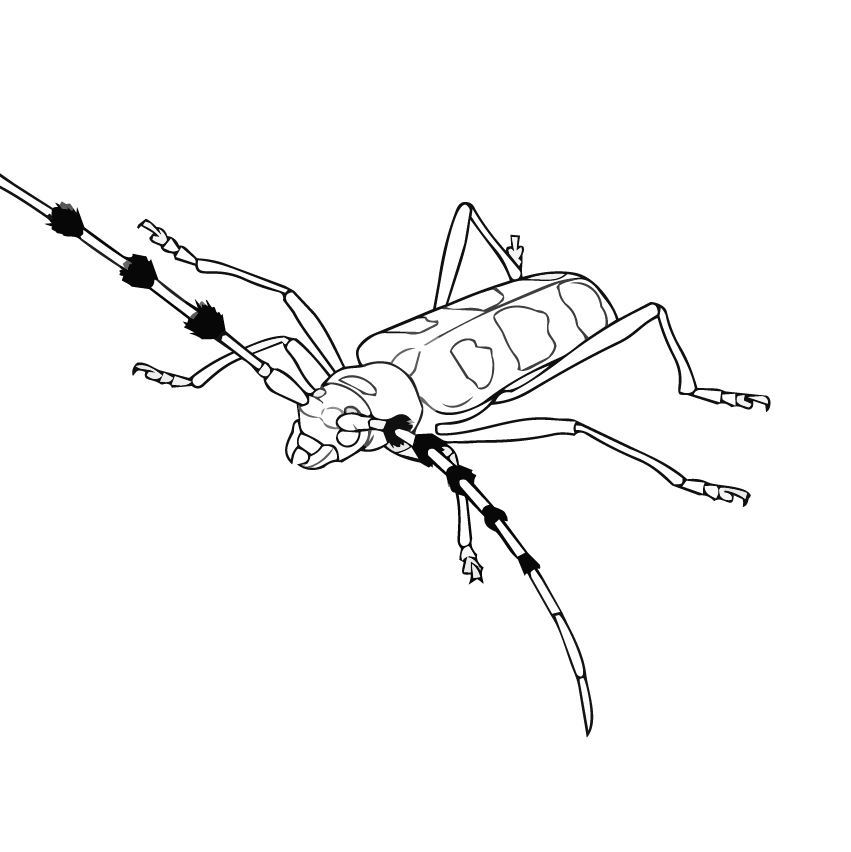
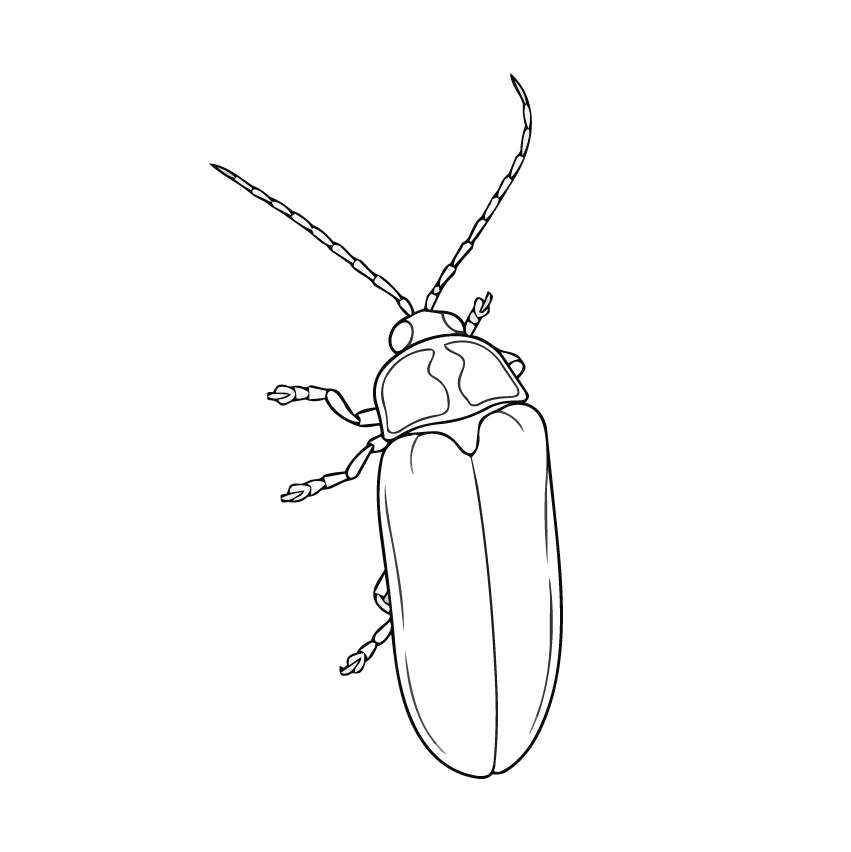
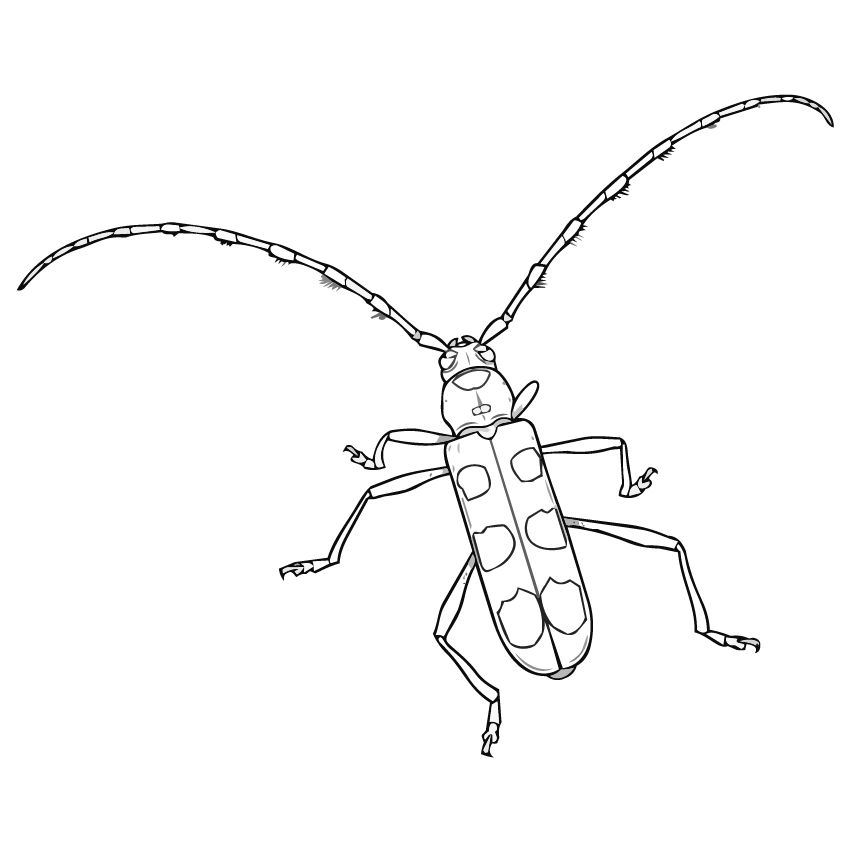
A male Rosalia batesi has grand antennae that are about twice as long as its body! Look closely at the antennae, and you will see a pretty blue and black stripe pattern with fluffy black tufts of hair at the joints. This is a very stylish and special feature that no other longhorn beetle has!
A Magical Blue That Shines Only When Alive
The most amazing secret is that you can see this beautiful blue color only while it is alive! When a Rosalia batesi dies, that lovely lapis lazuli color fades away fast. It slowly turns into a plain reddish-brown or gray. Even if you preserve it, the real beauty disappears. It is truly a miracle blue of life!
Strong Jaws
The Japanese name for longhorn beetle comes from "hair-cutting bug." It means they have jaws so sharp they could snap a human hair! The Rosalia batesi is small and cute, but its jaws are strong enough to bite your finger if you are not careful. Chewing holes through tough tree bark is easy for them!
How to Color Rosalia batesi
How to Color the Most Important "Vibrant Lapis Lazuli Blue"
Let's color the real-looking, pretty blue that makes Rosalia batesi look so cool! Instead of using just one blue marker or blue colored pencil, try softly layering light blue, cobalt blue, and a little bit of light purple. This gives you a deep, realistic lapis lazuli color! Leave the middle of the back a little light and whitish where the light hits. Make the blue darker toward the edges of the body. This creates roundness and gives your bug a great 3D look!
How to Color the Cute Black Stars
Let's make the big black polka dots on its back look sharp and cool! These black spots are shiny and black. Outline them clearly with a sharp black pencil, then color the inside strongly. If you leave a tiny bit of white paper around the black spots for highlights, it will look like bright sunlight reflecting off a hard, strong beetle shell!
Coloring the Antennae: Black Tufts and Joints
The biggest secret to making your picture look amazing is taking your time on the antennae, which are even longer than the body! Color the blue and black stripes carefully on each joint of the antennae. Pay close attention to the fluffy black tufts of hair drawn on the picture. Move the tip of your pencil quickly in small strokes. This makes it look like real, fluffy hair and turns your drawing into a cool, professional masterpiece!
Make Rosalia batesi Stand Out with a Rough Tree Trunk
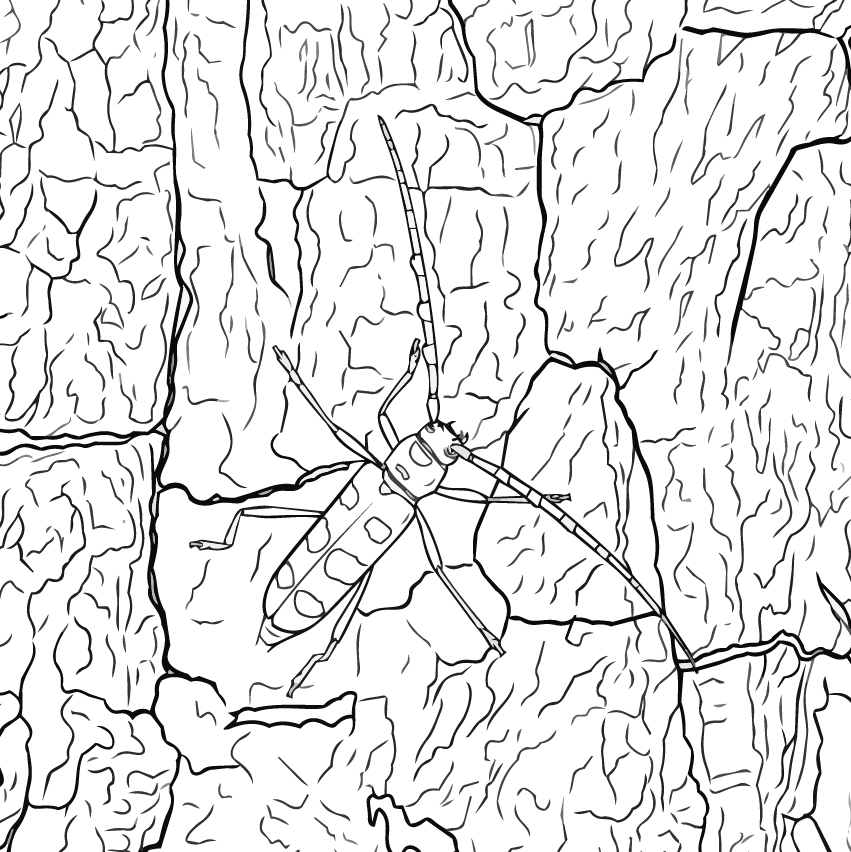
When you color an exciting picture of Rosalia batesi sitting on a big tree, the background bark is super important! Look at the deep lines and cracks going up and down the tree trunk. Use dark brown, black, and olive green with strong strokes to show the rough bark. If you color the background tree dark and heavy, the bright lapis lazuli body of Rosalia batesi in front will pop out. Your artwork will look super pretty and grand!
Express Yourself Freely to Create Your Own Original Bug!
Real Rosalia batesi are blue, but in the world of coloring pages, you can go on a big adventure using all your favorite colors! What if a Rosalia batesi was bright red? What if it had shiny golden stars? Just imagining it is so exciting! Use your great ideas and favorite colored pencils with full power. Have fun creating a wonderful, brand-new kind of longhorn beetle found nowhere else in the world!
Fun Facts About Rosalia batesi
A "Lapis Lazuli Jewel" of Japan
People say Rosalia batesi is the most beautiful longhorn beetle in Japan! It has a bright, stunning blue body with black spots. Bug experts from all over the world love how pretty it is.
The Magical Blue Color That Fades Away
It has a lovely blue color while it is alive. But if it dies, its body turns reddish-brown or gray. Water inside its body makes this pretty blue shine. That means you can only see this special beauty while it is alive!
Cool Black Fluffs on Its Feelers
Look closely at its long, cool feelers! You can see blue and black stripes. The black parts even have tufts of fluffy hair. It looks just like it is wearing fancy decorations. That makes it very unique!
It Loves Clean Forests Full of Beech Trees
You cannot find Rosalia batesi just anywhere. It can only live in deep, healthy forests with beech trees. The babies grow up eating dead beech wood. So finding this beetle is proof that a forest is rich and healthy!
Share These Rosalia batesi Coloring Pages


-
Rosalia batesi
-
Rosalia batesi 2
-
-
Rosalia batesi climbing a tree
-