Hermit crab Coloring Pages
 ~
~ 
About Hermit crab
Living in Borrowed Homes! The Name's Origin and Secret English Name
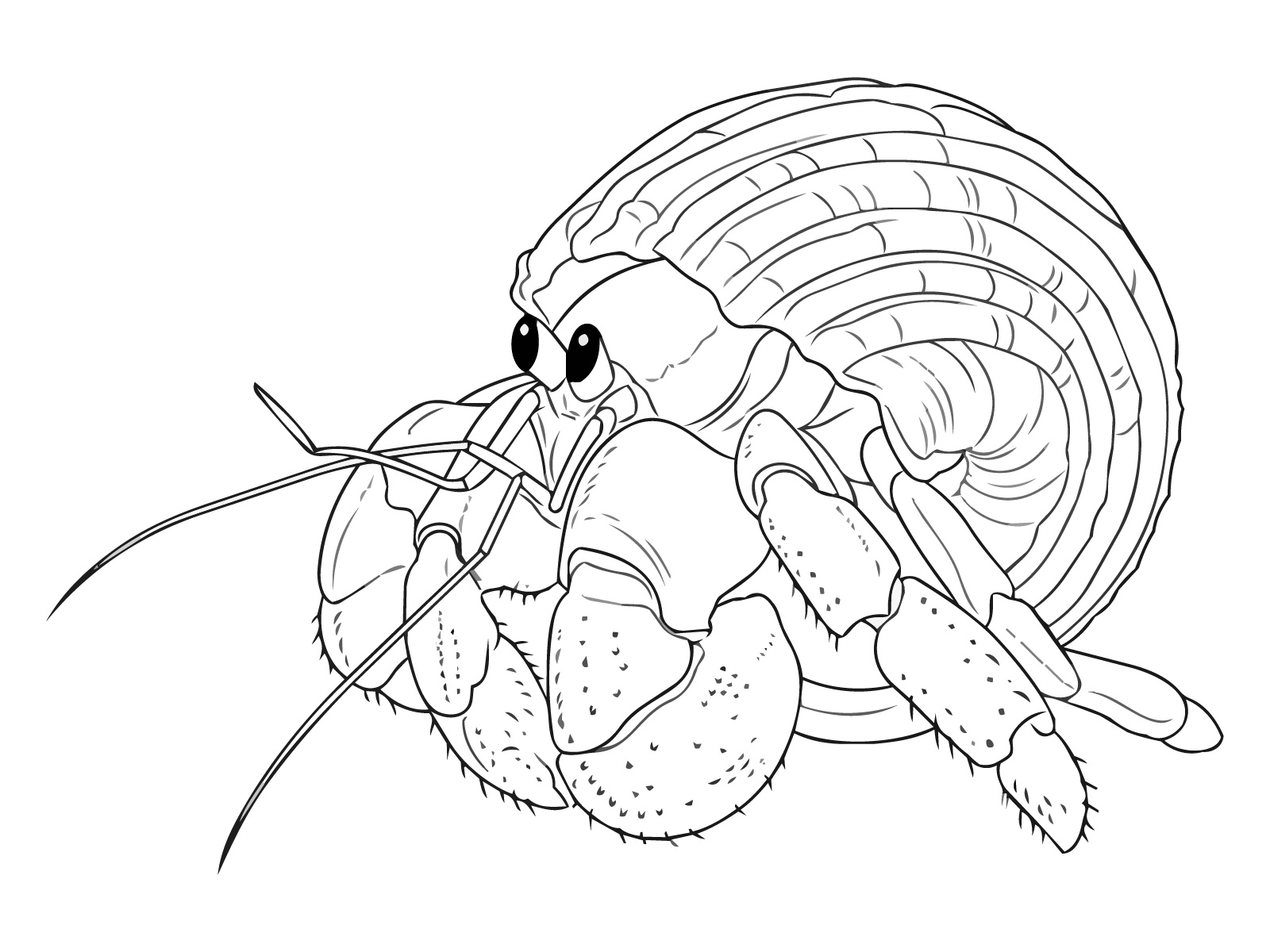
The friendly Japanese name, Yadokari, comes from how they "borrow" leftover shells as a "home." People have loved their unique look of carrying their homes on their backs for a long time. In English, they are called Hermit crab! The word "hermit" means someone who lives all alone away from others. They got this cool name because they stay tucked away inside their shells, living quietly by themselves!
Friends of Crabs and Shrimps! But Their Tummies Are Super Soft
They have big claws and lots of legs, so you might think they are crabs. But they are actually closer to shrimps and king crabs! The front half of their body, including the head, chest, and legs, is protected by a hard shell. However, the tummy hidden inside the seashell has very soft skin and no armor at all. If a Hermit crab comes out of its shell, enemies like birds and fish will eat it right away. That is why it always wears a shell that fits its body to stay safe!
Moving Homes as They Grow! Searching for Shell Houses
When a Hermit crab grows bigger, its shell becomes too small and tight. So, it moves into new, larger shells many times throughout its life! When it finds an empty shell on the beach or underwater, it uses its claws and legs to carefully check the opening size and depth. Once it knows the shell is a perfect match, it quickly swaps its tummy into the new shell to finish moving!
The Curved Tummy and Tiny Hooks Hidden Inside the Shell
The tummy hidden inside the shell is twisted to fit the spiral shape of a sea snail shell! At the tip of the tummy, there are tiny hooks. The Hermit crab grabs onto the inside of the shell with these hooks to hold on tight. Thanks to these strong hooks, it will not easily slip out of its shell, even if an enemy pulls on it or strong waves toss it around!
Different Sizes! Proud Big Claws
If you look closely at a Hermit crab's claws, you will notice that the left and right claws are very different in size! For many Hermit crabs, the left claw grows extra big, while the right claw stays small. The big claw is not just a weapon to fight enemies. When the Hermit crab feels danger and pulls deep into its shell, the big claw also acts like a sturdy door to block the entrance tight!
Land Hermit Crabs and National Treasures
Hermit crabs that live in the sea are famous, but in warm parts of Japan like Okinawa and the Ogasawara Islands, there are land Hermit crabs that live on land! These rare Hermit crabs changed over time so they can live on land as long as the air is moist. They walk around in forests near the coast and on sandy beaches. The land Hermit crabs in Japan are protected as National Monuments by the government to keep their nature safe!
Sea Cleaners! Big Eaters That Eat Anything
Hermit crabs work hard as sea cleaners! They help keep the ocean and beaches clean. They are not picky about food at all. They use their big claws to neatly tear up and eat dead fish, algae, washed-up fruit, or fallen leaves. Thanks to their big appetites for eating anything delicious, the water creatures' world stays healthy!
Strong Bonds with Sea Anemones! Helpful Best Friends
Some Hermit crabs live with poisonous sea anemones attached to their shells! The Hermit crab stays safe from enemies like octopuses thanks to the anemone's poison needles. In return, the sea anemone gets a free ride and eats leftover food dropped by the Hermit crab. This helpful relationship is called "symbiosis," and it shows us how animals work together in nature!
Mother Hermit Crab's Love for Her Eggs
When it is time to lay eggs, a mother Hermit crab safely carries many eggs on her tummy legs inside her shell! Once the eggs are ready to hatch, the mother walks down to the water's edge and shakes her tummy to the waves. Then, tiny babies pop out of the eggs and start their journey into the wide ocean all at once!
Hermit Crab Lifespan and Protecting the Earth
Even small Hermit crabs on the beach can live for a few years, and large land Hermit crabs can live for dozens of years! But lately, more Hermit crabs are accidentally wearing plastic trash or bottle caps instead of real shells. Keeping our beaches clean and protecting nature will help make sure Hermit crabs always have real shells for moving into their new homes!
How to Color Hermit crab
Choosing colors to show different textures
When you color a Hermit crab, think about the difference between its hard body and smooth shell. Using bright colors like reddish-brown, orange, purple, or deep blue on the Hermit crab's body and legs makes it look strong. For the tiny bumps on its claws and legs, try putting dots of bright yellow or white. Leaving a little blank space like this gives it a cool, hard, and bumpy look!
Making the swirly shell look round and real
Don't just color the shell on the Hermit crab's back with one color. Color it so you can feel the round swirl! Add thin shadow lines in the grooves with dark brown or dark gray. Then, color the highest bumpy parts with bright beige or cream. If you leave a bit of white paper where the sunlight hits, the shell will look shiny and shiny like a real one!
Using light and shadows on the bumpy claws and legs
To make shadows, gently add a color that is a little darker brown or black than your main color. Put shadows near the leg joints and under the belly. Changing light and dark areas at each joint makes the legs look like they are popping out! You can also color the tips of the claws pure white or light gray. This makes the claws look sharp and strong!
Tips for drawing the sandy beach and sea background
Coloring the beach or tide pool around the Hermit crab makes your picture feel like a fresh sea breeze! Color the sand and small stones near its feet using bright beige, yellow, and light gray. Mix in a little dark brown or light blue for wet sand near the waves. If you see the sea or sky, use sky blue and emerald green. It makes the world where the Hermit crab lives feel big and wonderful!
Fun tricks for art tools and creative dream shells
You can try fun tricks with different tools! With colored pencils, press softly and mix colors to make smooth shell blends. With watercolors, use more water to make the ocean look bright and clear. You do not have to use real shell colors. You can make a "rainbow shell" or a "golden star shell." Use your own fun ideas! Have fun making your very own Hermit crab world!
Fun Facts About Hermit crab
"Moving Shells" as They Grow
When a Hermit crab grows bigger, its shell gets too tight. So, it searches the beach to find an empty sea snail shell that fits its body perfectly. It grows bigger by moving into new homes again and again!
More Like a Shrimp Than a Crab!
A Hermit crab has claws like a crab, but it is actually a close relative of both shrimp and crabs! The tummy part hidden inside the shell is very soft. It is curved to the right so it can fit nicely inside the spiral shell.
Claws with Different Sizes
For most Hermit crab species, the right claw is bigger than the left one. When danger comes, the Hermit crab hides deep inside its shell. It uses this big right claw like a strong door to block the opening tightly!
Carrying a Sea Anemone for Safety!
Some types of Hermit crab attach a sea anemone with poison stingers onto their shell. The sea anemone protects the Hermit crab from enemies like octopuses. In return, the Hermit crab shares its leftover food with the sea anemone. They help each other out!
Land Hermit Crabs Living on Shore
Some Hermit crabs live in the sea, but there are also land Hermit crabs that live on dry ground. They live near damp beaches. The ones on Japan's southern islands are very special and protected as national treasures!
Share These Hermit crab Coloring Pages



-
Hermit crab
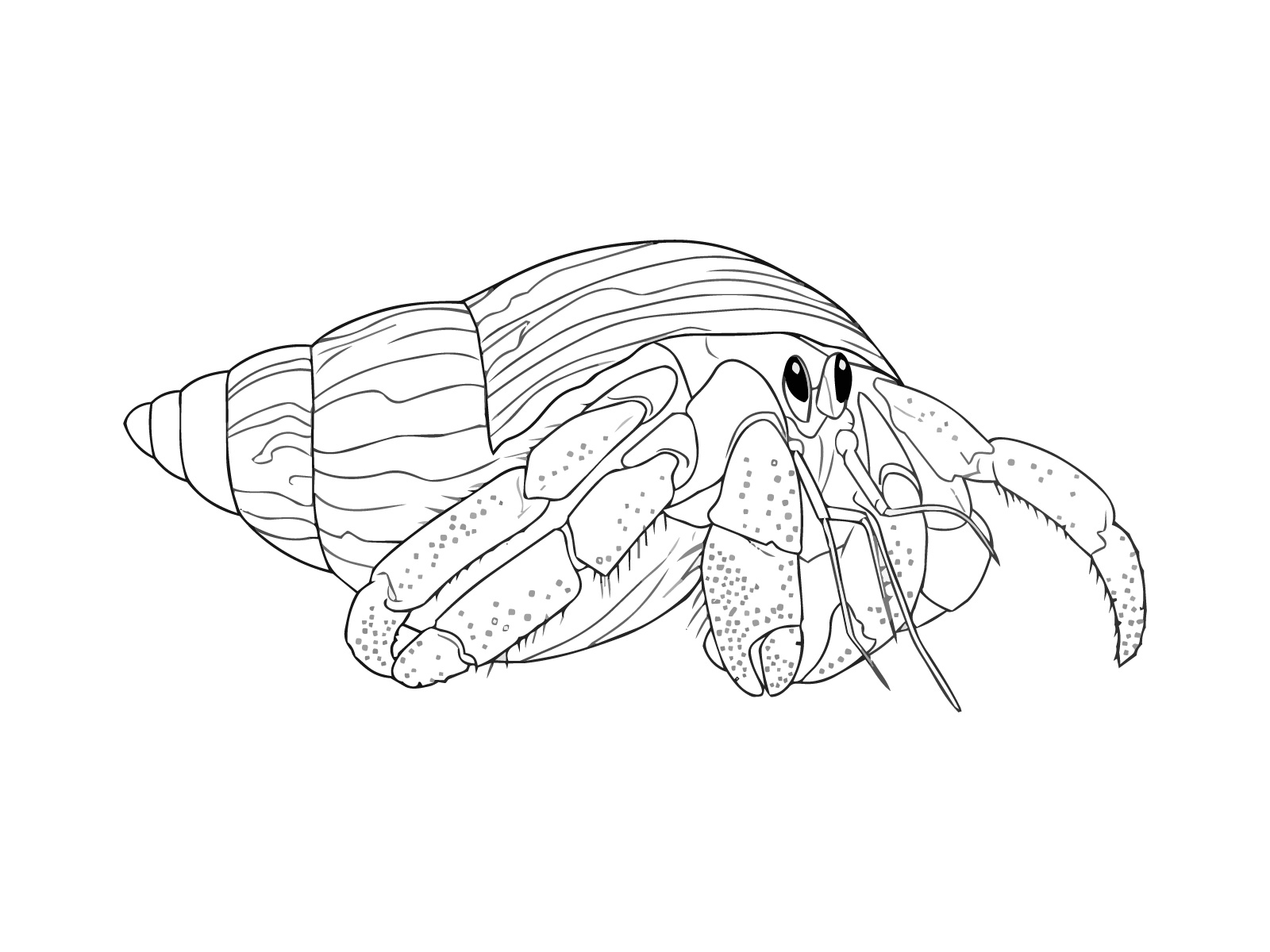
-
Hermit crab 2
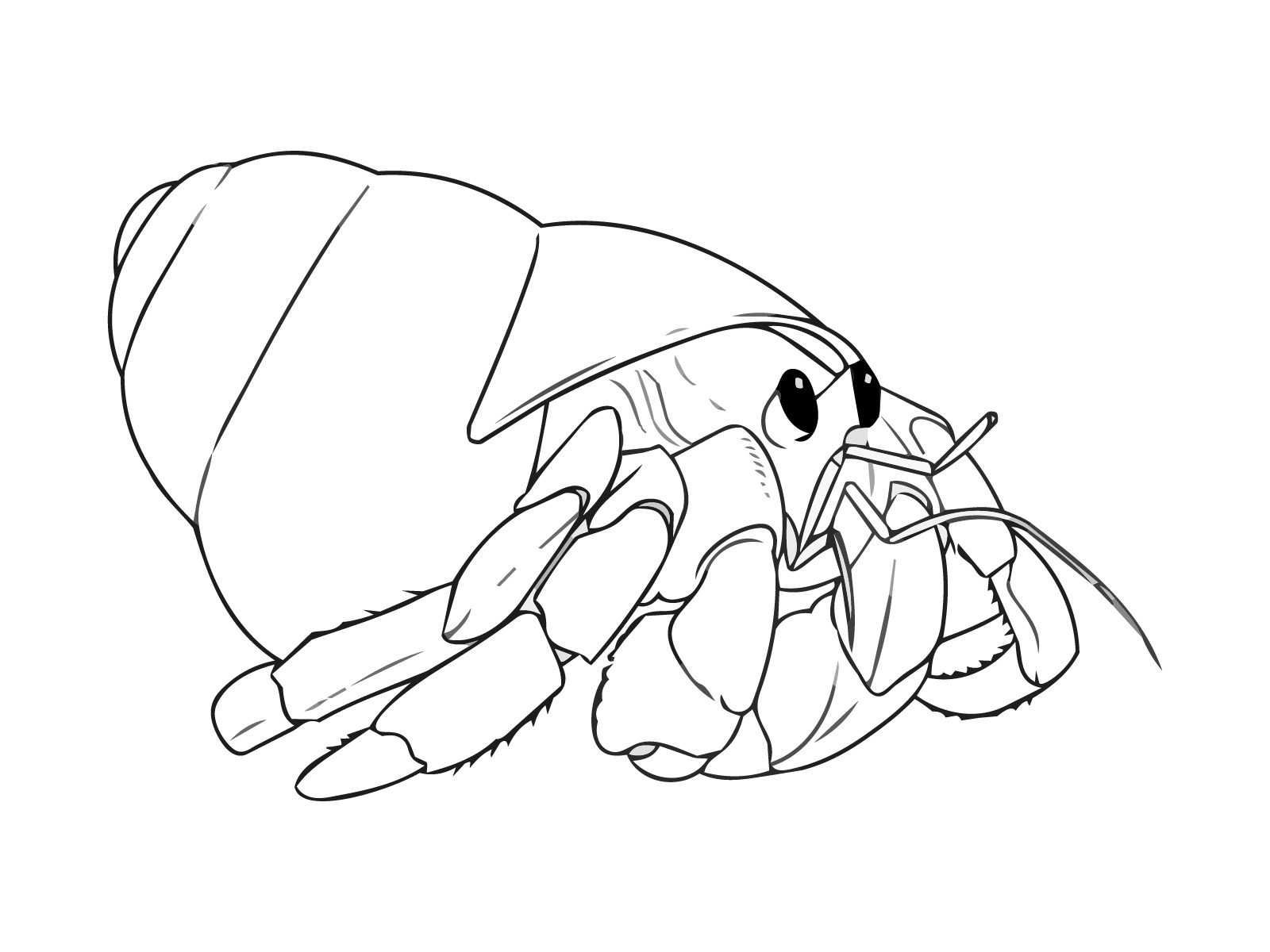
-
-
Hermit crab 3
-
Hermit crab 4
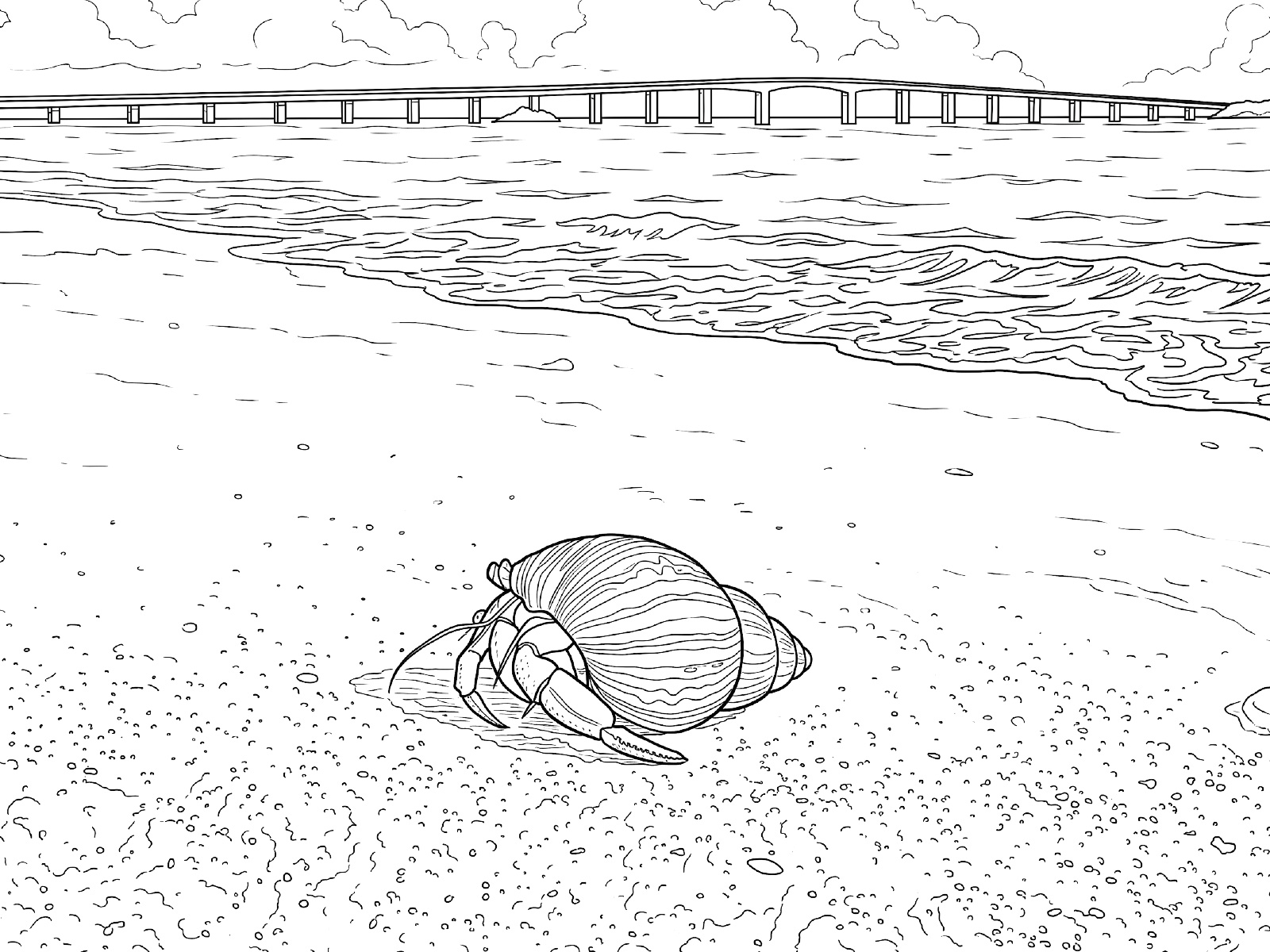
-
-
Hermit crab 5
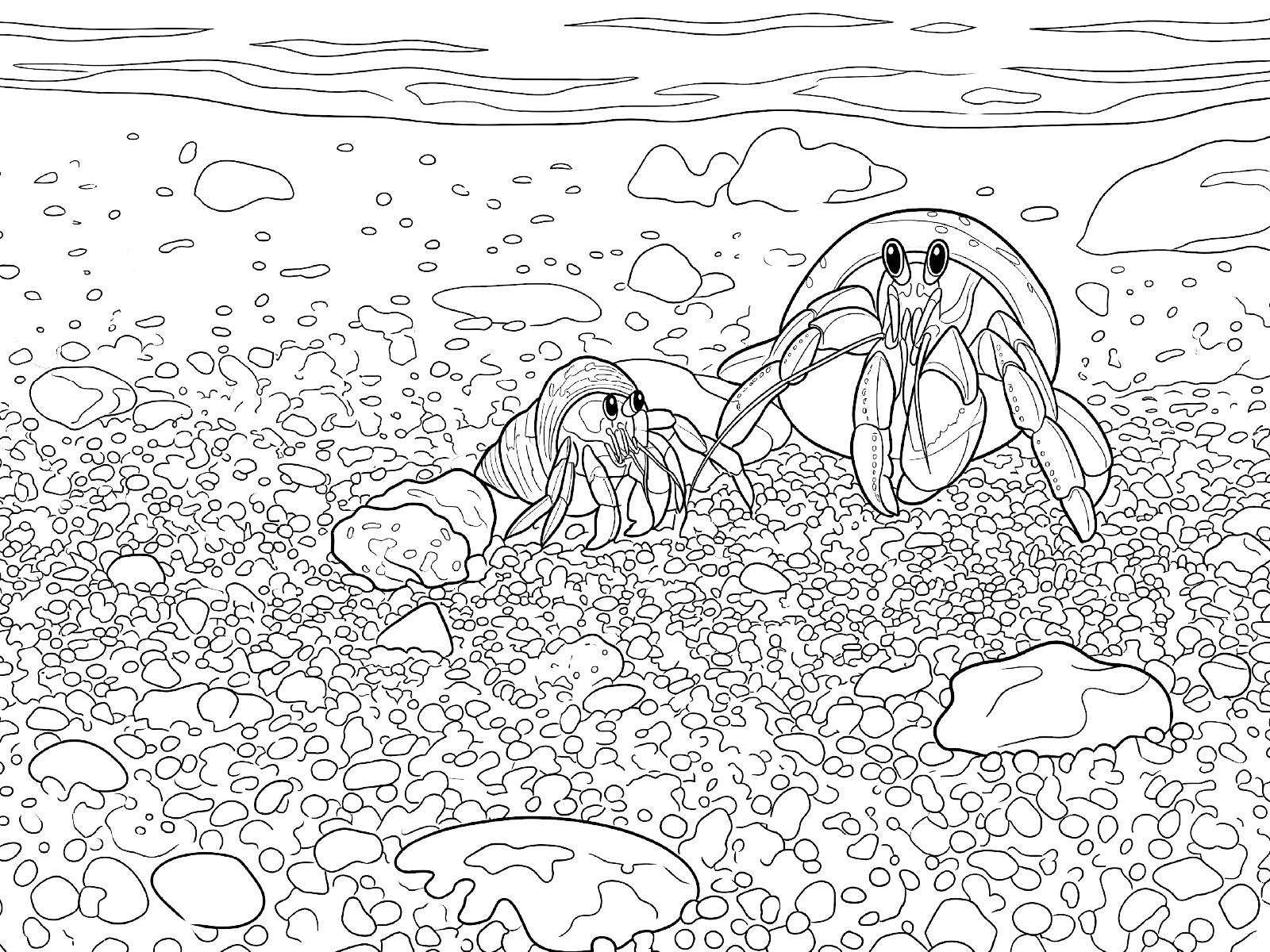
-