Chinese mantis Coloring Pages
 ~
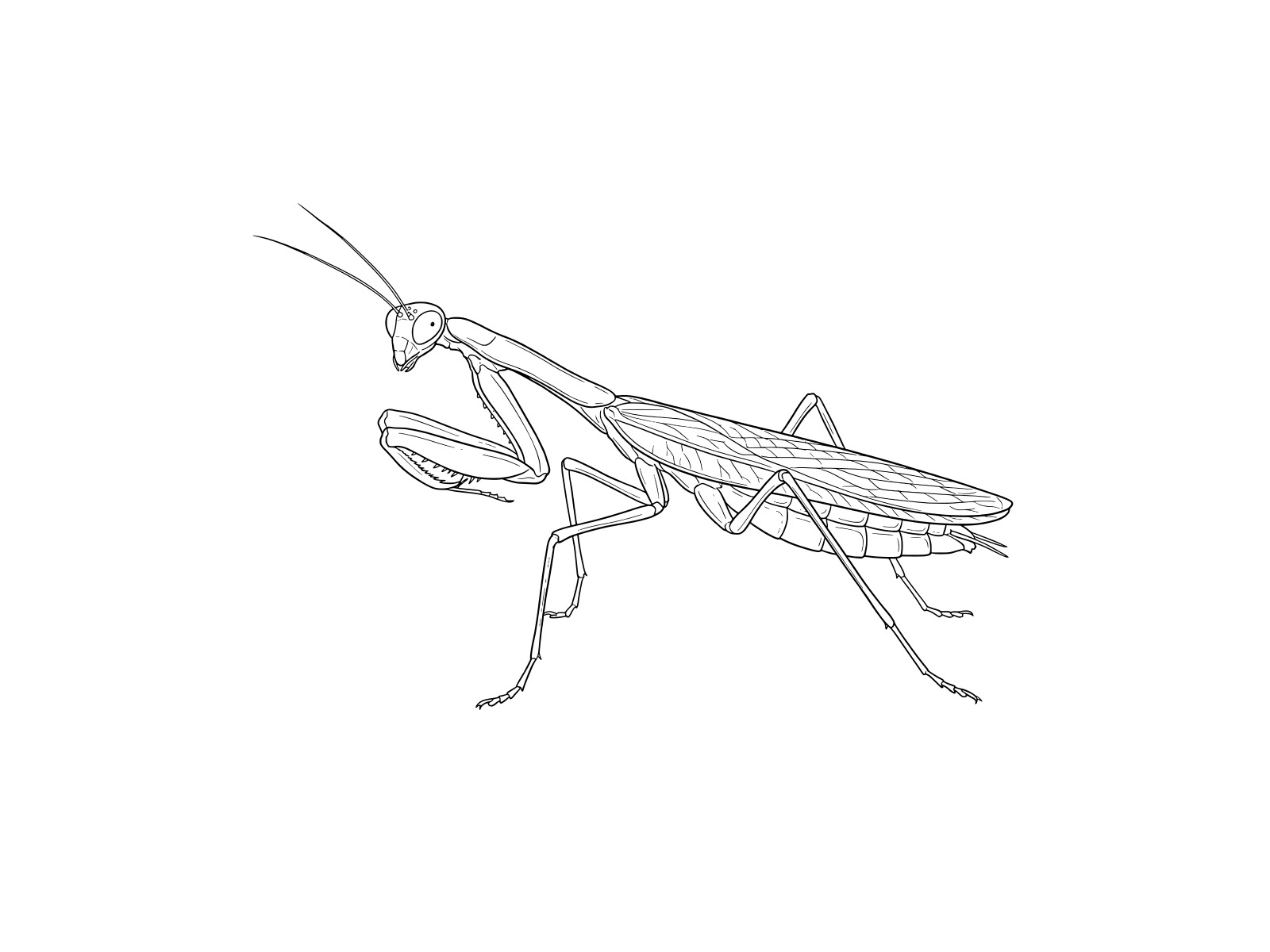
~ 
About Chinese mantis
The Mantis You Meet Most in the Grass
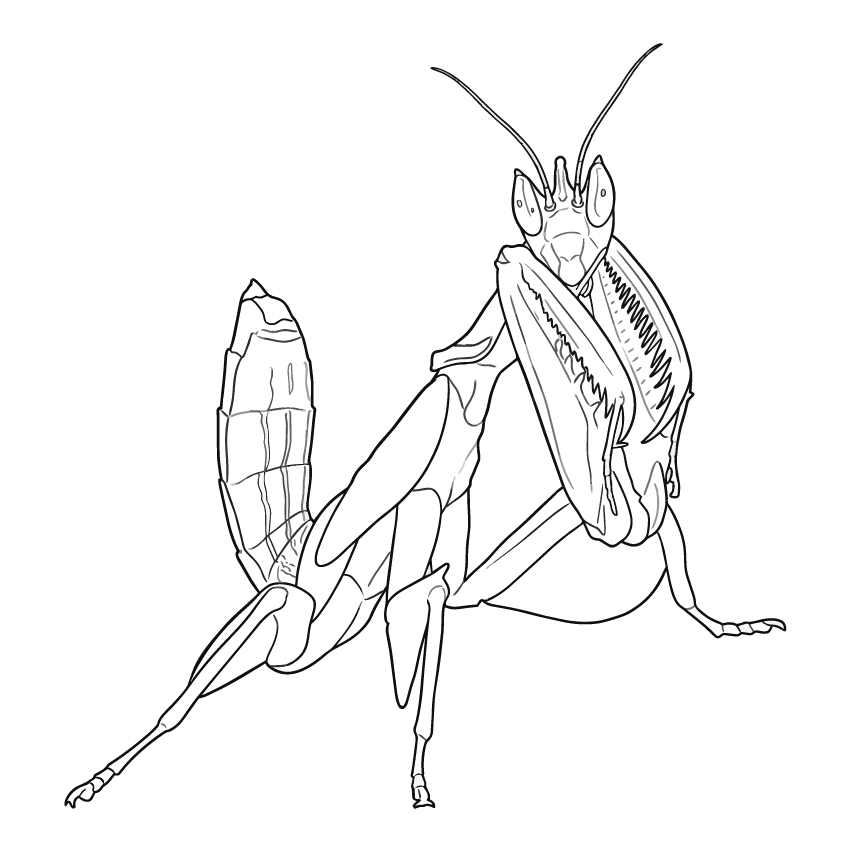
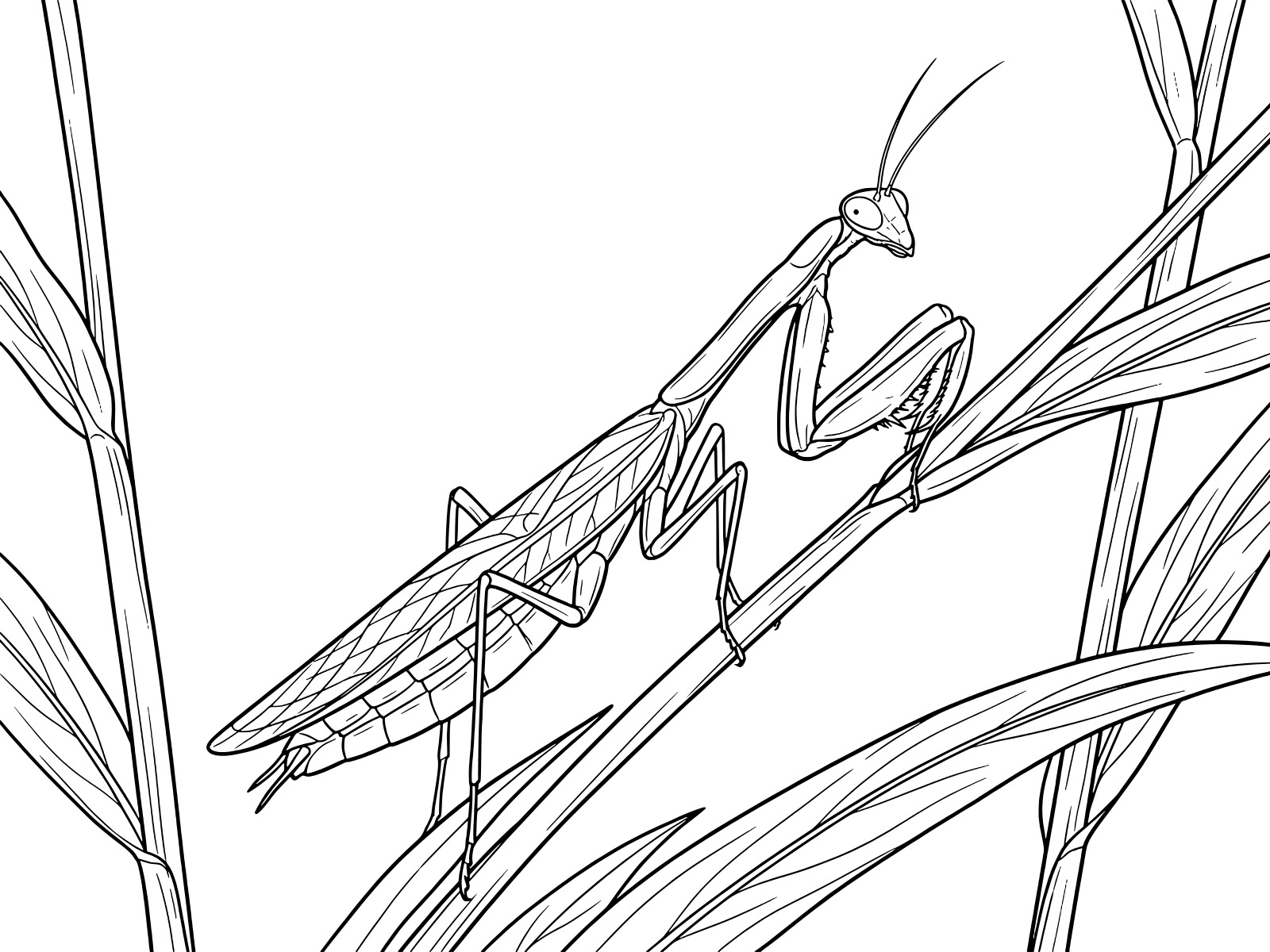
The Chinese mantis is a mantis you can find in grassy fields, farms, and parks from Honshu down to the Southwest Islands. Their body length is about 6.5 to 9 cm. Actually, its official name in picture books is just "Mantis," but people call it the Chinese mantis to tell it apart from the Japanese giant mantis.
Compared to the Japanese giant mantis, its body is a bit thinner and slimmer. It is great at blending right into the grass.
Check the Base of Its Front Legs to Tell Them Apart!
It looks almost the same as the Japanese giant mantis, but there is a clear place to check.
- Base of front legs: The Chinese mantis has a bright orange color. The Japanese giant mantis has a dull yellow color.
- Back wings: The Chinese mantis has wings that are almost see-through. The Japanese giant mantis has dark wings.
- Body shape: The Chinese mantis is thinner.
In particular, the color at the base of its front legs is the easiest spot to check. But remember, mantises do not like to be touched, so please do not catch them roughly.
There Are Both Green and Brown Ones
Some Chinese mantis have a green body and some have a brown body. They are the same kind, but their colors are different! People think it depends on how bright or wet the place was where they grew up, but no one knows for sure yet.
The funny thing is that they cannot change color on the spot like a chameleon. So, you might sometimes see a brown Chinese mantis sitting on green grass.
Also Called the "Praying Insect"
When a Chinese mantis stays still with its front legs together, it looks like it is putting its hands together to pray. That is why people also call it the "praying insect." In English, it is called a praying mantis too!
But it is not really praying. That shape is how it gets ready to catch food at any second. It looks like it is praying, but it is actually right in the middle of hunting!
Masters of Waiting
The Chinese mantis eats meat, like grasshoppers, butterflies, and flies. It does not chase them around. Instead, it stays very still on the grass and waits, then grabs nearby bugs fast with its front legs.
You can see grown-up ones from around August to November. In autumn, the female lays a long, pillow-shaped egg case on tree branches or grass, and the eggs stay inside to spend the winter.
How to Color Chinese mantis
First, Decide Between Green or Brown
Chinese mantises can be either green or brown, so a great trick is to decide which color you want first.
- If you choose green: Color everything lightly with yellow-green first, then layer green on top to make it look real. If you only use one green pencil, it might look like a toy.
- If you choose brown: Color with light tan first, then layer dark brown on top.
Don't Forget the Orange Secret
The special mark of the Chinese mantis is the orange color at the base of its front legs. If you color just this spot orange, everyone will know, "This is a Chinese mantis!" It's a small area, so sharpen your colored pencil before you start.
Don't Color the Back Wings
The back wings of a Chinese mantis are almost clear. Your coloring page will look best if you leave the inside of the wings white. Just trace the line patterns with a light color.
Make It Cooler with the Eyes and Claws
- Eyes: Leave them white and add just one black dot. This dot makes it look like it is always staring right at you!
- Inside the claws: Color the row of spikes a little darker with dark brown to make it look super powerful.
- Under the body: If you color the underside a little darker than the top, it will look round and pop out at you.
How to Color a Grass Scene
When you color grass, the trick is to not use the same green for every blade. Color the grass in front darker and the grass in back lighter to make it look deep. If you color the Chinese mantis a little darker than the grass, it will really stand out as the star!
Fun Facts About Chinese mantis
The black dots in their eyes are not pupils
If you look closely at the eyes of a Chinese mantis, you can see a black dot looking right at you. It is mysterious because it seems to follow you wherever you go, but this is not a pupil. The eye of a Chinese mantis is made of many tiny eyes grouped together, and the deep part facing you just looks black. That is why the dot seems to move and follow you when you move!
They spend the winter in an egg case
In autumn, the female makes a long, pillow-shaped egg case while blowing bubbles. Inside, there are hundreds of eggs. The bubbles harden like a sponge to protect the eggs from the cold and from enemies. The parent Chinese mantis dies before winter comes, but in spring, lots of tiny Chinese mantises hatch out all at once!
They have only one ear on their chest
The ear of a Chinese mantis is not on its head. It is on the belly side of its chest, near the base of its back legs. Plus, it does not have one on each side. It has only 1 ear in total, which is a very rare body design!
This ear listens for high sounds that people cannot hear (ultrasound). Bats flying at night use ultrasound to find insects. The Chinese mantis catches that sound and dives down fast to escape! Even with just one ear, it helps protect them from enemies.
Bugs that do not become pupae
Butterflies and beetles turn into pupae to grow into adults, but a Chinese mantis does not become a pupa. When a tiny Chinese mantis hatches from its egg, it already looks a lot like its parents!
From there, it sheds its skin again and again to grow bigger. On its last shed, it gets wings and becomes an adult. This is called incomplete metamorphosis. So if you find a tiny Chinese mantis at the start of summer, it is not a baby, but a Chinese mantis that is still growing!
Share These Chinese mantis Coloring Pages


More Praying Mantises Coloring Pages
-
Chinese mantis
-
Chinese mantis 2
-