Kiyomizu-dera Temple Coloring Pages
 ~
~ 
About Kiyomizu-dera Temple
A Main Hall Sticking Out Over a Cliff
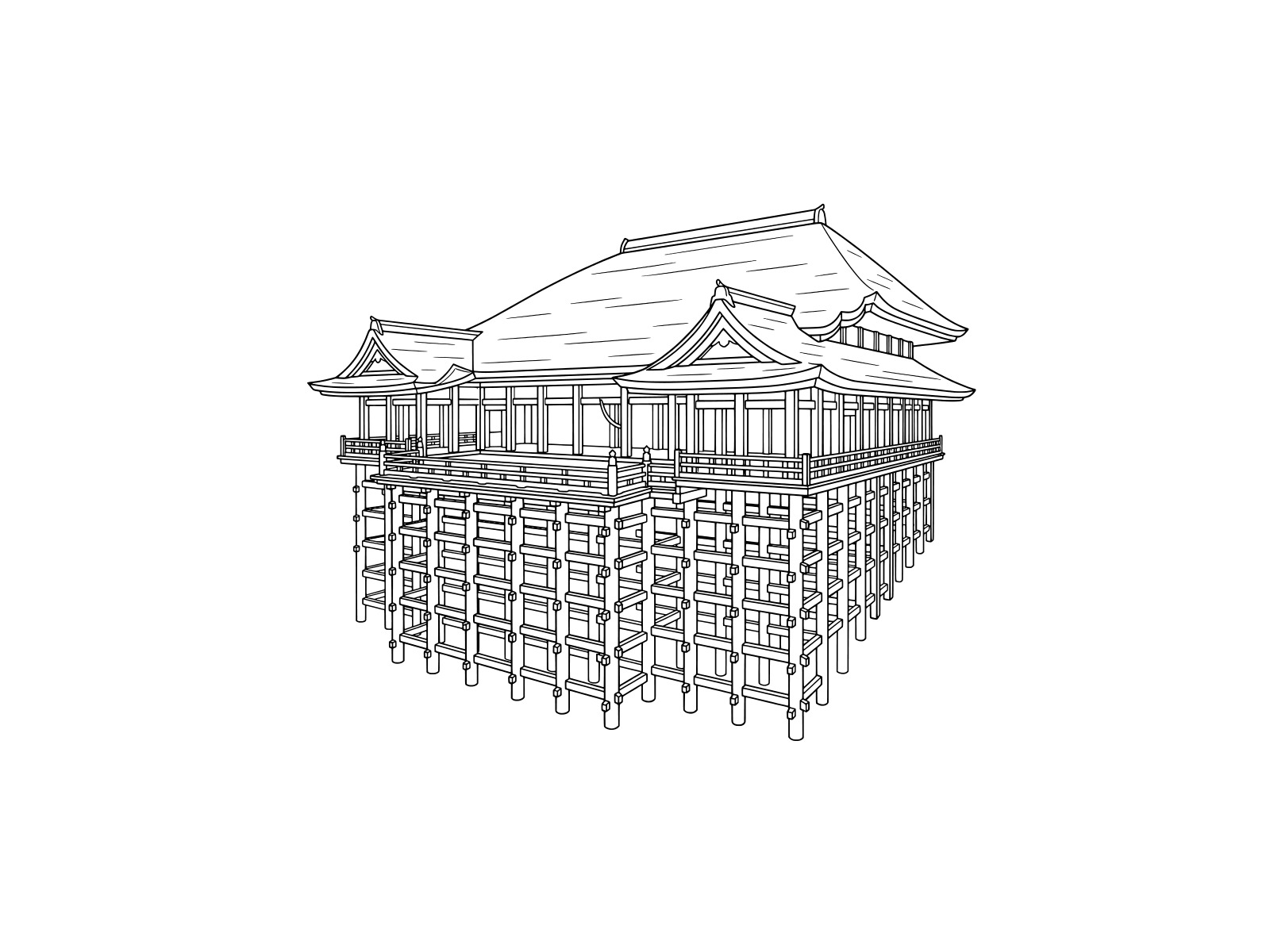
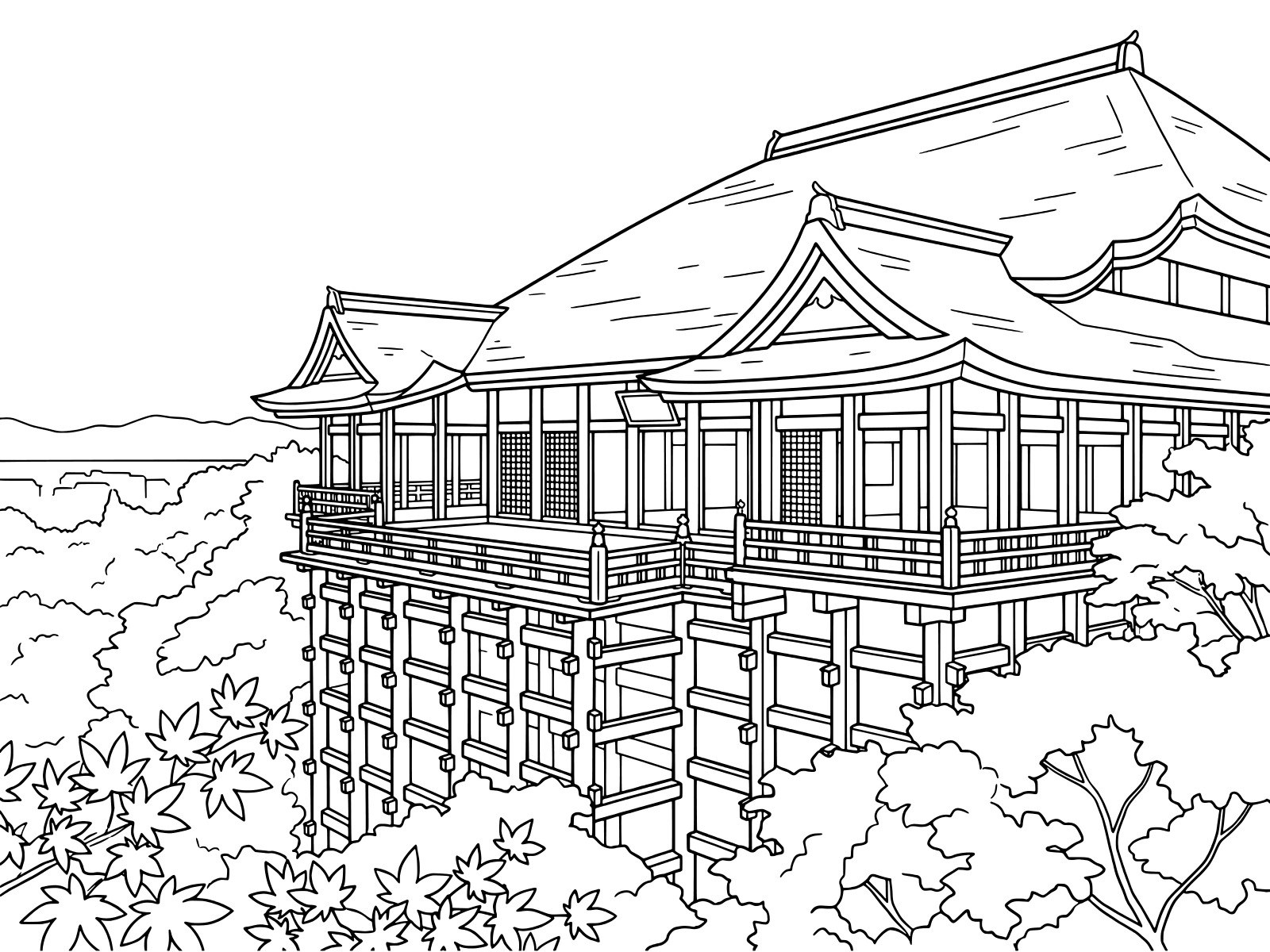
Kiyomizu-dera Temple is a famous temple in Kyoto City, Kyoto Prefecture. The most famous part is the "Stage of Kiyomizu," which sticks out from the main hall.
This stage is built over a steep cliff, about 13 meters above the ground. That is almost as high as a four-story building! The floor is huge and covers as much space as 100 tatami mats.
Supported by 139 Pillars
If you look up at the stage from below, you can see many thick pillars joined together by horizontal beams. There are 139 pillars in total! They are all made of Japanese zelkova wood, which is very hard and strong.
Here is the most amazing part. Not a single nail was used to build these pillars! Using only a smart way of joining wood together, they have supported the stage for nearly 400 years.
Building on Cliffs: "Kake-zukuri"
Building a structure over a slope using a framework of wooden pillars is called kake-zukuri. It is also called stage-style building.
It would have been much easier to build on flat land, so why did they build it over a cliff? People say it was to show the shape of the sacred mountain where Kannon lives right in this spot.
Over 1,200 Years of History
Kiyomizu-dera Temple was founded in the year 778. That is over 1,200 years ago! It was started by a monk named Enchin, and a famous general named Sakanoue no Tamuramaro helped him build it.
The main hall you can see today was rebuilt in 1633 with help from Tokugawa Iemitsu. The main hall is a National Treasure of Japan, and it became a World Cultural Heritage site in 1994.
A Roof Made of Bark
If you look closely at the roof of the main hall, you will see that it does not have square roof tiles. That is because it is covered with many layers of Japanese cypress bark!
This way of making a roof is called hiwadabuki. Between 2017 and 2020, a big repair project was done to replace the entire roof.
Otowa Waterfall and the Three-Story Pagoda
Kiyomizu-dera Temple has many other cool things to see besides the stage. Otowa Waterfall has three streams of clear water falling down. The temple got its name from this clean water!
The Three-Story Pagoda is about 31 meters tall and painted bright red, so it really stands out. When you look out from the stage, you can see this pagoda set against the city of Kyoto.
How to Color Kiyomizu-dera Temple
Color the Wood in 3 Steps
Kiyomizu-dera Temple is made entirely of wood, so using different shades of brown is the key! If you color everything with the same brown, it will look flat.
- Pillars and beams | Use the lightest brown. These parts catch the sunlight!
- Under the eaves and behind the pillars | Use dark brown. Making these dark gives it a 3D look!
- Roof | Use a brownish gray. It is made from cypress bark, so the color is different from the wood!
Pillars: Make the Back Darker
The wooden frame supporting the stage is the coolest part of this picture! For this part, color the front pillars lighter and the back pillars darker.
If you make the spaces in between really dark brown, the front pillars will pop right out at you! If you color them all with the same brown, it will just look like a grid pattern.
Color the Roof Along the Lines
You can see tiny horizontal lines on the roof, right? These show the overlapping cypress bark.
The trick is to move your colored pencil along the lines. Make the top part of the roof lighter and the bottom edge darker. This will show its big, curved shape!
Use 3 Colors for the Maples
For the maple leaves in the background picture, mix red, orange, and yellow together! If you color them all red, they will look flat.
Even on a single tree, make the outside red and the inside orange to look natural. Mix in just a few green leaves, and it will look like the season is changing!
Leave the Floor of the Stage White
The floorboards of the stage catch the sun and look bright. So leaving most of the paper white is the best way to color it! Gently adding a little light yellow-ochre is all you need.
Do the same for the railings and leave them whitish. Make the pillars below dark and the stage above light. Getting this difference right will show just how high it is!
Fun Facts About Kiyomizu-dera Temple
Wooden Frames Without Nails
Holding up the stage at Kiyomizu-dera Temple are 139 zelkova pillars. Amazingly, not a single nail was used to build this wooden frame.
The ends of the wood are carved into interlocking shapes that fit together tightly. During an earthquake, the wooden pieces move just a little bit to let the shaking pass through safely. It shows the smart wisdom of people in the past, who knew that things stay stronger when they aren't held too stiffly!
"Jumping off the Stage at Kiyomizu-dera Temple"
When someone is about to do something brave and big, people in Japan say, "It is like jumping off the stage at Kiyomizu-dera Temple!" This is mostly just a saying, but old records show that people actually jumped off it a long time ago in the Edo period.
They believed it would make their wishes come true! Of course, jumping is not allowed today. It is about as high as a four-story building, so that makes sense!
The Temple Name Comes from Water
The "Kiyomizu" in Kiyomizu-dera Temple comes from Otowa Waterfall. Three thin streams of water still flow down today, and people have treasured them as "pure water" for a very long time.
More than 1,200 years ago, a monk found this spring water and built a hall here. That was how Kiyomizu-dera Temple first started. The water was actually here before the temple!
The Roof is Made from Tree Bark
The roof of the main hall is not made of tiles. Instead, layers of cypress tree bark are stacked together. This special way of roofing is called Hiwadabuki.
The bark is peeled off living cypress trees without cutting them down. After a few years, new bark grows back and can be harvested from the same trees again! During a big restoration project from 2017 to 2020, the whole roof was completely rebuilt with fresh bark.
Share These Kiyomizu-dera Temple Coloring Pages


More Castles, Shrines & Temples Coloring Pages





-
Kiyomizu-dera Temple
-
Kiyomizu-dera Temple Autumn Leaves
-
-
Kiyomizu-dera Temple
-