Nameko mushroom Coloring Pages

About Nameko mushroom
Slippery and Shiny Is the Mark!
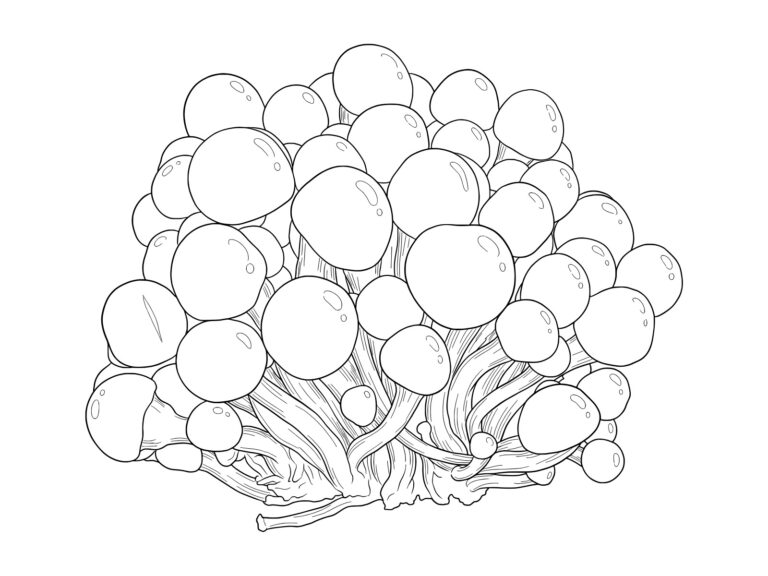
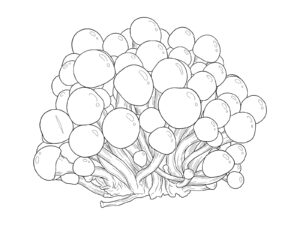
Nameko mushrooms are tiny, round mushrooms with brown caps that grow together in big clusters.
Their biggest feature is the slippery slime that covers the whole cap. They feel slimy when you touch them!
Thanks to this slime, their caps look shiny and bright.
The Name Also Comes from "Slimy"
People say the name "Nameko" came from the word "namerakko," which means slippery and smooth.
The Nameko mushroom is a mushroom that was born in Japan.
In the mountains, they grow from autumn to late autumn on fallen trunks and stumps of beech, oak, and cherry trees.
Most of Them Grow in Bottles and Bags
Almost all the Nameko mushrooms in stores are grown using sawdust cultivation, where they grow in a mix of sawdust and nutrients.
That makes up a whopping 99% of them!
Most of the ones sold in stores are small, but lately you can also find Nameko mushrooms with big caps.
Niigata Prefecture Is Number 1
According to a 2025 study, Niigata Prefecture grows the most Nameko mushrooms! Second place is Nagano Prefecture, and third place is Yamagata Prefecture.
When you think of Nameko mushrooms, you think of miso soup! People also mix them with grated radish to make "Nameko Oroshi," or put them on top of soba noodles.
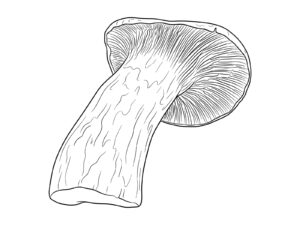
Compared to another autumn mushroom, the Matsutake mushroom, their size and shape are completely different!
Small Ones and Big Ones
Most Nameko mushrooms in stores are small ones gathered before their caps open.
Small Nameko mushrooms have round caps and lots of slime.
On the other hand, big ones with open caps are crunchy and taste great when grilled or stir-fried!
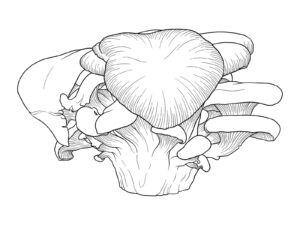
The first coloring page uses a photo as a guide. It shows a clump just like the real thing, mixing big caps and small caps together.
Dishes That Make the Most of the Slime
Nameko mushrooms are best eaten in ways that use their slippery slime!
When you put them in miso soup, the soup gets nice and thick, so it stays warm longer.
"Nameko Oroshi," which mixes them with grated radish, blends the slippery slime with the fresh taste of radish.
People also love to put them on top of soba or udon noodles!
When you cook them, put them in a strainer and give them a quick rinse with water. The secret is to not wash them too much!
How to Color Nameko mushroom
The Cap Is an Orange-Brown Color
The Nameko mushroom's cap is an orange-brown color.
Try coloring it lightly with ochre first, and then layer orange and brown on top.
The trick is to leave the small shine shapes on the cap white without coloring them in. That will make it look nice and glossy!
The Stem Is a Pale Cream Color
Color the thin stem under the cap a pale cream color or a whitish yellow.
If you add a little light brown only near the base, it will look like the mushrooms are growing together in a cluster.
Changing the shade just a little between the big caps and small caps will make your picture look fun and lively!
Miso Soup Looks Great with the Right Soup Color
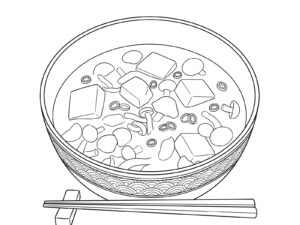
For the miso soup picture, if you make the soup a reddish brown, it will look like red miso soup! If you make it a light ochre, it will look like white miso soup.
Leave the tofu white, color the green onions green, and make the Nameko mushroom an orange-brown color.
Coloring the bowl red or black will make it look like a real Japanese meal!
Try Coloring Each Miso Soup Ingredient Differently
The miso soup picture has tofu, Nameko mushroom, and green onion inside.
Tofu is white or cream, the Nameko mushroom is an orange-brown color, and green onion is bright green.
Since all three ingredients are different colors, color the soup first and then carefully color the ingredients so each one stands out clearly!
Try coloring the pattern on the bowl with your favorite colors, too!
Fun Facts About Nameko mushroom
The Slimy Coating Is a Type of Dietary Fiber
People say that the slimy coating on the Nameko mushroom is actually a type of dietary fiber.
If you wash it too much with water, this slimy coating will wash away.
That is why dishes like miso soup, where you can eat the broth too, are perfect for the Nameko mushroom.
Are Nameko Mushrooms at the Store All Descendants of Just One Cluster?
University research found out something very interesting!
It seems almost all Nameko mushrooms sold in stores today are descendants of just a single cluster of wild Nameko mushroom found in Fukushima Prefecture in 1962.
They found this out by studying their genes.
A Mushroom Born in Japan
The Nameko mushroom is a mushroom that was born in Japan.
People in other countries did not eat it very much, but people in Japan have loved it for a long time as a gift from the autumn mountains.
When you see a Nameko mushroom in your miso soup, try to remember this coloring page!
A Gift From the Autumn Mountains
Wild Nameko mushrooms can be picked around September to November.
When people find lots of shiny, brown Nameko mushrooms growing on fallen trees in the autumn mountains, it makes them feel so happy!
However, some wild mushrooms are poisonous, so you must never pick and eat them by yourself.
Share These Nameko mushroom Coloring Pages


-
Nameko mushroom
-
Nameko mushroom miso soup
-