Metaposaurus Coloring Pages

About Metaposaurus
A Big Frog? Nope, The King of Amphibians!
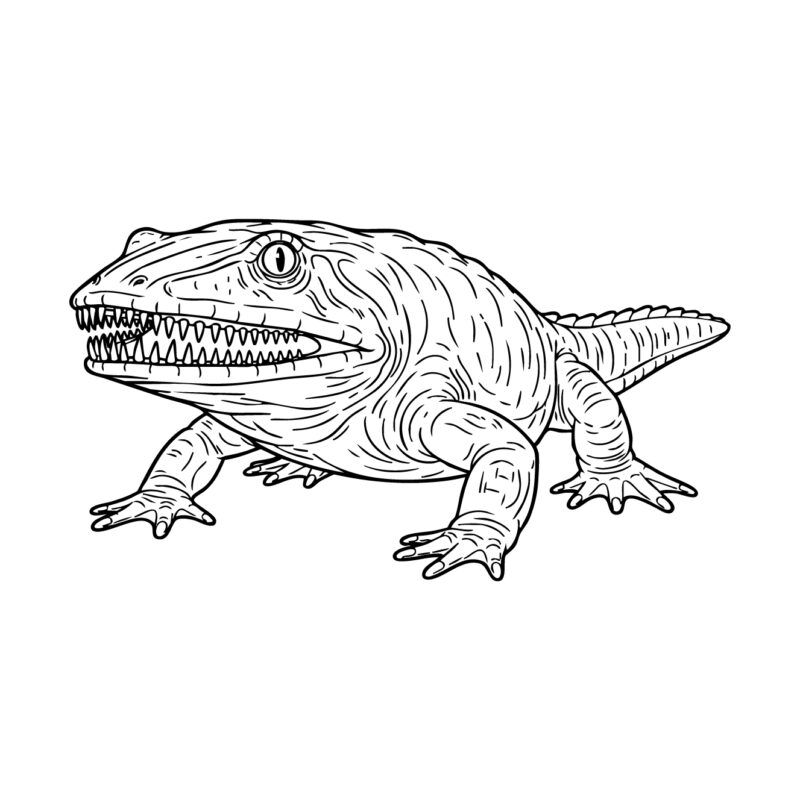
Metaposaurus was a funny-looking creature that looked like a mix between an alligator and a frog. It was an "amphibian" that lived a very long time ago, around the same time as the dinosaurs. It lived near water, like in ponds, swamps, and rivers.
When Did It Live?
Metaposaurus lived in a time called the "Triassic Period," about 230 million to 220 million years ago. During this time, dinosaurs were not very big yet, and relatives of turtles and alligators were just starting to appear.
A Really Big Body!
Compared to amphibians today, Metaposaurus was huge.
- It was about 3 meters long! That is as long as a grown-up lying down. That is super big!
- Scientists think it weighed about 150 kilograms.
A Flat Face and Sharp Teeth!
The face of Metaposaurus was super big and flat, just like a frying pan. Inside its mouth, it had many sharp teeth. It used these teeth to catch fish in the water and small animals that came close by.
Life in the Water!
Metaposaurus spent most of its time in the water. Its flat body and short legs were perfect for swimming and lying in wait for food. It hid at the bottom of big swamps and lakes, waiting quietly for prey to come by.
What Does the Name Metaposaurus Mean?
In English, Metaposaurus is written as "Metoposaurus". This name comes from two Greek words: "metopon" and "sauros". "Metopon" means "forehead" or "face", and "sauros" means "lizard". So, its name means "big forehead lizard" or "flat face lizard"! It is a perfect name for the flat face of Metaposaurus.
A Distant Relative of Frogs?
Metaposaurus belonged to a group of amphibians called "Labyrinthodonts," which are now extinct. People think that today's frogs and salamanders evolved from this group. So, Metaposaurus is a very distant relative of today's frogs!
Where Were Its Fossils Found?
Metaposaurus fossils have been found in many places around the world, like Europe, Africa, India, and North America. This gives us important clues that show how the land on Earth was connected differently in the past.
How to Color Metaposaurus
How to Choose Colors: Hiding in the Water to Catch Prey!
Metaposaurus was an amphibian that lived by the water. So, colors that help it hide in the water, mud, and plants to wait for prey are great!
- Main body color: We recommend green (dark green, dull green, olive green), brown (earthy brown, reddish brown), or gray (stony gray, bluish gray). Try combining a few of these colors!
- Belly color: If you make the belly a little lighter than the rest of the body (bright green, light brown, cream color), it will look plump and 3D!
- Eyes: Metaposaurus had keen eyes to spot prey! Coloring them yellow or orange makes them look cool and shiny. Draw the pupils clearly in black.
- Inside the mouth: Make the teeth a sharp white or slightly cream color to look real. Make the tongue red or pink to make it look alive!
- Claws: Sharp claws look strong when colored gray, black, or dark brown.
How to Make It Look 3D: Think About Shadows and Light!
This Metaposaurus has many body lines drawn on it. Use these lines as clues to add shadows! Places that get shadows:
- Deep parts of the body (wrinkles on the neck, base of the legs)
- Under the jaw and deep inside the mouth
- Base of the tail and the bottom of the body (close to the ground)
- Grooves made by wrinkles
- Coloring these spots with a slightly darker color than the main color makes it pop out in 3D!
- On the other hand, for flat parts of the face or the back where light hits easily, leave them a bit brighter or color them lighter to make them look even more 3D!
Give It a Slimy Texture!
Metaposaurus is an amphibian just like a frog! If you make its skin look wet and slimy, it will look much more real.
- If you use colored pencils, press a little lighter when coloring to blend the layers smoothly.
- If you use paint, like watercolor paints, use a bit more water. This creates a wet look with a shiny feel!
Tips for Paints, Colored Pencils, and Art Supplies!
Colored pencils: Pressing hard makes dark colors, and pressing light makes pale colors, so it is easy to show shadows and light. Layering the same color adds depth! Crayons: Coloring a bit thick gives it a bumpy feel. Rubbing with your finger lets you blend colors, too! Paint (watercolor): Using lots of water makes it thin and clear, while using less water makes it dark and bold. Painting another layer after it dries adds great depth to the color!
Tips to Enjoy Your Coloring Page!
- Express yourself freely!
- You do not have to stick to real colors. Feel free to color it however you like, thinking, "It would be fun if a Metaposaurus looked like this!" A colorful Metaposaurus is super fun, too!
- Try adding a background!
- If you draw the watery places, swamps, and plants around where Metaposaurus lived, your picture will come to life even more!
Share These Metaposaurus Coloring Pages


More Triassic Period Coloring Pages
-
Metoposaurus
-