Japanese Graduation Ceremony Coloring Pages
 ~
~ 
About Japanese Graduation Ceremony
The Meaning and History of the Japanese Graduation Ceremony: Why Is It Held in March?
A Japanese Graduation Ceremony is a special event to celebrate finishing all your school work and to receive a diploma. In Japan, March is the time for saying goodbye and starting fresh. This season has a very deep meaning.
How the Ceremony Started
The very first Japanese Graduation Ceremony happened in the Meiji period (1876) at the Rikugun Toyama School. After that, it spread to schools all over the country in the 1880s. That is how the polite and respectful style we see today began.
Why It Takes Place in March
This is because the business and school year in Japan starts in April. Long ago, the government set the official year from April to March. Schools followed this rule too. That is why March became the time to finish school. Many other countries start school in September and finish in June. So, a March Japanese Graduation Ceremony is a special custom unique to Japan.
Special Features for Each School Level
The feel of the event and what is important change as kids grow up.
Kindergarten and Preschool Graduation
-
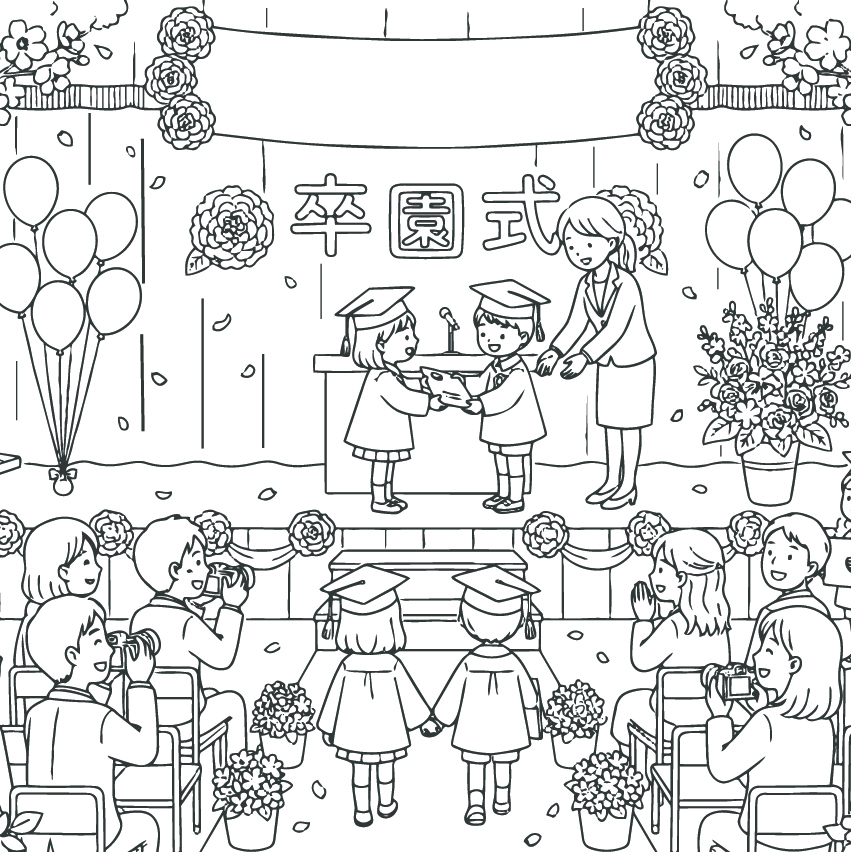
Special Features: This is a touching time that marks the end of a child's first group life. Today, more children wear graduation gowns, and rooms are decorated with pretty flowers and balloons.
-
Key Points: You will see many sweet moments. Children answer loudly when called to get their diploma and say thank you to their parents.
Elementary, Middle, and High School Japanese Graduation Ceremony
-
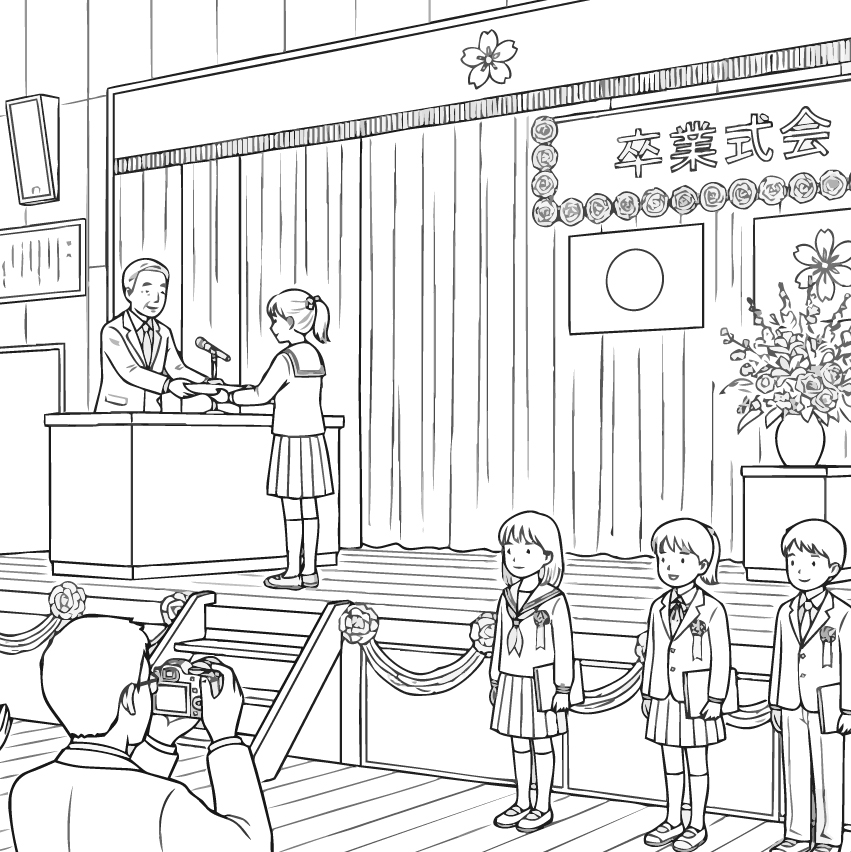
Elementary School: The elementary school Japanese Graduation Ceremony is held quietly and respectfully in the gym. Lately, many girls choose to wear traditional kimono pants called hakama.
-
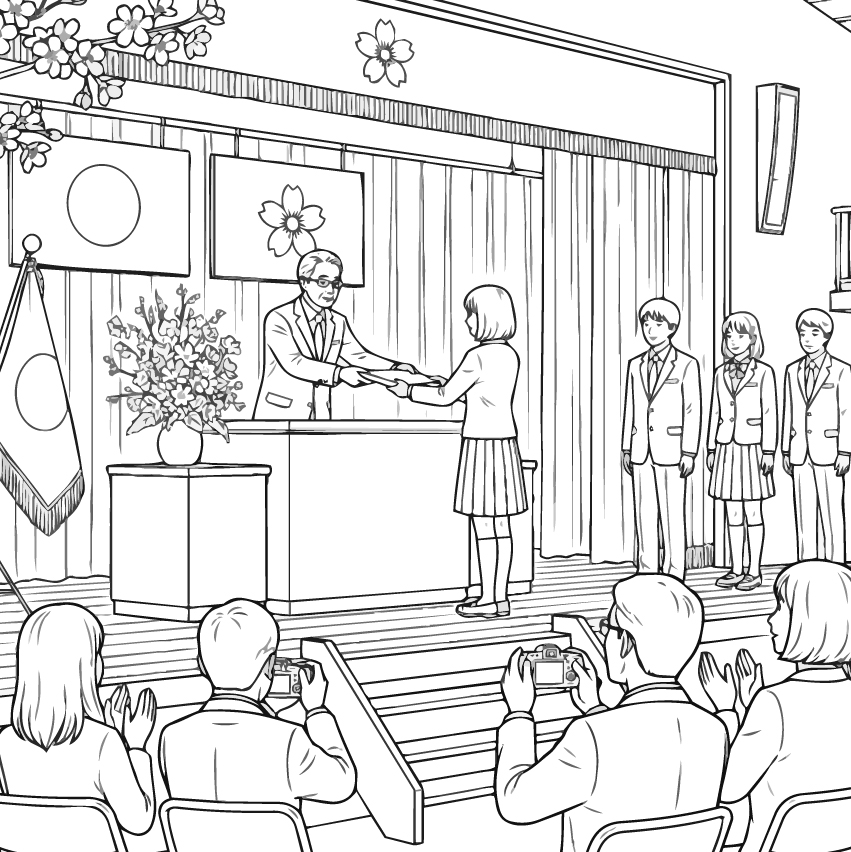
Middle and High School: These events follow strict rules to show that students are growing up and finishing basic education. The best parts are the farewell speech by younger students and the reply speech by the graduates.
University and Vocational School Japanese Graduation Ceremony
-
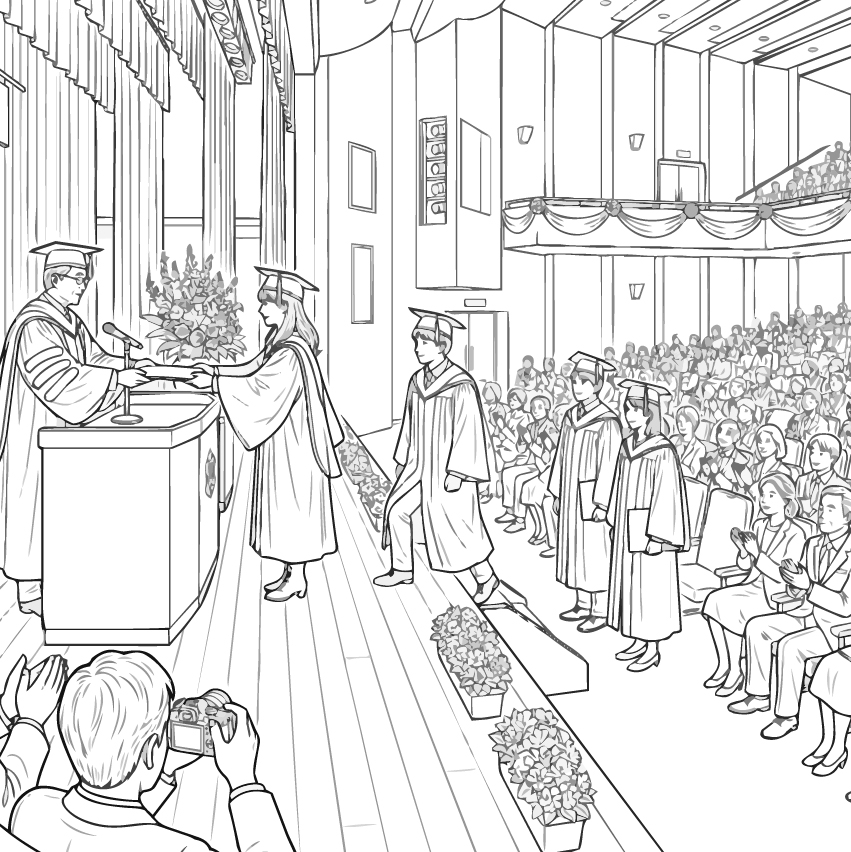
Special Features: This event is held to give students their college degrees. You will see many styles. Some wear gowns and caps, others wear colorful kimono with hakama, and some wear fancy suits.
Classic Parts of the Japanese Graduation Ceremony: Diplomas and Songs
Every Japanese Graduation Ceremony has famous traditions that have been loved for a long time.
-
Getting Your Diploma: Each person's name is called, and you walk up on stage to get your diploma. This paper shows that all your hard work at school is recognized!
-
Farewell Words and Songs: Singing together helps everyone share their feelings. Students sing old traditional songs like "Aogeba Totoshi" or popular Japanese music hits like "Tabidachi no Hi ni".
-
Goodbye at the School Gate: After the event, younger students and teachers make a path and clap for you. It gives you courage as you head toward your next adventure!
How to Color Japanese Graduation Ceremony
Here are tips to beautifully finish your Japanese Graduation Ceremony scenes, from kindergarten to university!
Coloring Cherry Blossoms and Spring Light
-
Color the cherry blossoms in the background with a blend from light pink to white. This gives them a soft spring feel.
-
Think about light coming through the window! Leave some white spots on the floor or wall. It makes your picture look bright and hopeful.
Coloring Different Clothes
-
Gowns and Suits: When you use dark navy or black, add a little blue or gray to the folds. This makes the cloth look real!
-
Diploma Holders: Most diploma tubes are dark green or black. If there are gold edges, use bright yellow to make them look fancy.
Faces and Depth in the Room
-
If you see people sitting in the crowd, color the people in front clearly. Color the people in the back lighter. This shows how big the room is!
-
Use your brightest colors like red and yellow for the stage flowers. It creates a happy, party mood!
Fun Facts About Japanese Graduation Ceremony
What the word "Graduation" means
"Grad" means "to finish," and "uation" means "studies and skills." So, graduation is proof that you have "learned all your studies" at school. That is why a Japanese Graduation Ceremony is the best award show to cheer for all your hard work.
Why do we put the diploma in a tube?
You put the diploma in that round tube. When you open the cap, it makes a nice "pop" sound, right? That tube is a special holder to keep your important diploma safe so it will not bend or get dirty. When you get it, handle it with care because it shows all your hard work!
The romantic story of the second button
There is a tradition of giving the "second button" of a school uniform to someone you like. This is because the second button is "closest to your heart." It is a special gift for your favorite person that means, "I give my heart to you."
The farewell song "Hotaru no Hikari"
People often sing "Hotaru no Hikari" at a Japanese Graduation Ceremony. But it is not a Japanese song. It comes from a Scottish folk song! Long ago, people studied by reading books using the light of fireflies and the glow of snow. This song became a way to remember those days when you studied hard.
The flower on the chest called a "corsage"
The flower worn on the chest of graduating students is called a "corsage." It holds feelings of "celebration" and "thanks." Teachers and parents who took care of you often wear them too. It is a lovely item that makes the ceremony special and bright.
Share These Japanese Graduation Ceremony Coloring Pages


More Spring Events Coloring Pages

-
Kindergarten / Preschool graduation ceremony
-
Elementary School Graduation Ceremony
-
-
Junior High School Graduation Ceremony
-
High School Students Graduation Ceremony

-
-
College Students at Graduation Ceremony
-