Nomura's jellyfish Coloring Pages

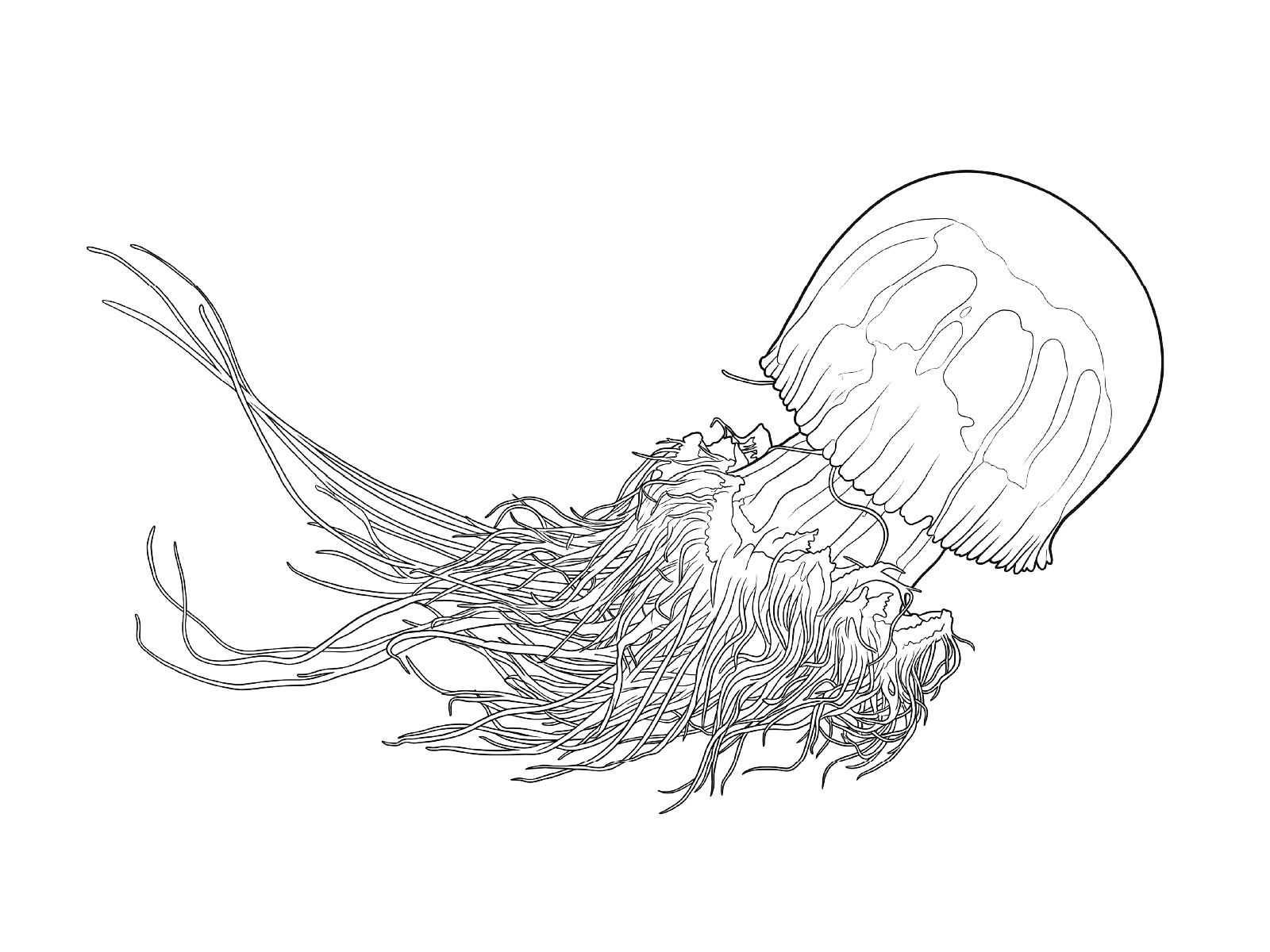
About Nomura's jellyfish
One of the Biggest Jellyfish in the World!
Have you ever seen a jellyfish swimming in the ocean? The little jellyfish floating gently in aquariums are very cute. But did you know there are giant jellyfish in the world that are much bigger than a person? Today, we are learning about Nomura's jellyfish! If you met one in the sea, it would be so big you would gasp! People all over the world know it as one of the largest jellyfish on Earth.
Where Does the Name Come From?
Its Japanese name comes from Echizen Province (near Fukui Prefecture today), where people found large groups of them long ago, and where scientists first studied them. In English, we call it Nomura's jellyfish. More than 100 years ago, in 1922, a scientist named Tetsuzo Nomura got a sample from Fukui. He studied this big jellyfish and shared it with the world. The jellyfish was named after him!
Bigger Than a Human?! Super Giant Size
The most amazing thing about Nomura's jellyfish is its huge size! When a Nomura's jellyfish grows up, its cap alone can be 1 to 2 meters across. That is big enough to hide a tall adult completely! It can also weigh 150 to 200 kilograms. It is so heavy that two or three strong adults have to lift it together!
The Secret of the Huge Dome Cap
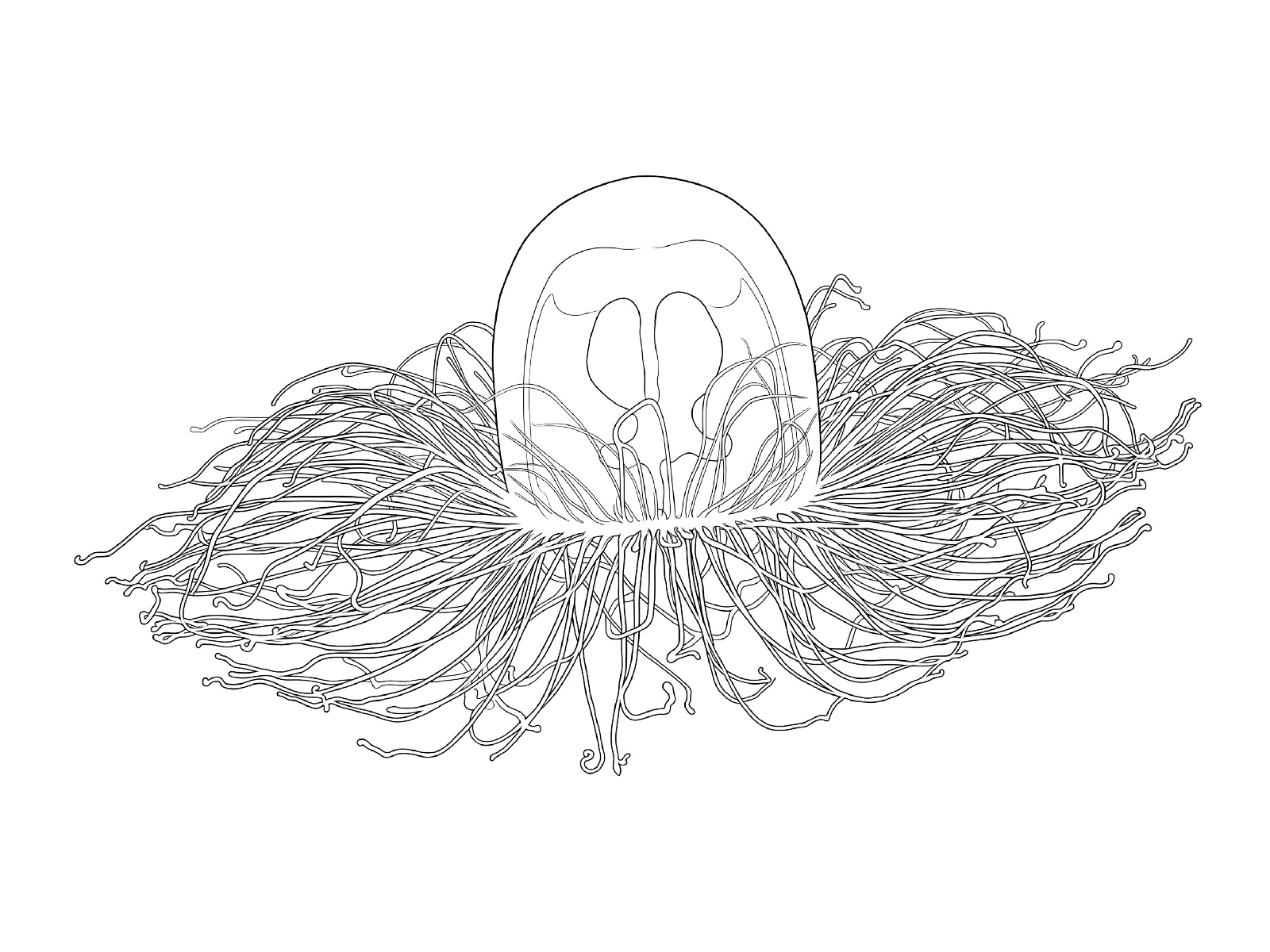
The top part of Nomura's jellyfish looks like a head, but it is called a cap. It is round, like a big wok, a parachute, or a giant dome! This cap is made mostly of clean water and collagen, so it feels squishy and bouncy. By squeezing and spreading the edge of its cap, it pushes lots of water out. That is how it swims slowly through the ocean!
Fancy Arms and Shaggy Tentacles
If you look under the cap, you will see big arms tangled together like dress frills or bunches of grapes. You will also see many long tentacles. Just like in the coloring page, these bushy arms have countless tiny mouths to suck in food. Its longest tentacles can reach several meters! It spreads them out like a net to catch its food.
What Does It Eat to Get So Big?
Nomura's jellyfish is super big, but what does it eat to grow to 200 kilograms? You might think it eats big fish, but it does not! It eats tiny plankton floating in the water that are too small to see. It sucks in lots of water and plankton all day long through tiny holes in its arms. That is how it keeps its big body fed!
Where Does It Come From? A Long Ocean Trip
Nomura's jellyfish does not start its life near Japan. It is born in warm, shallow seas near China and Korea, called the Yellow Sea and East China Sea. As it grows bigger, it rides strong ocean currents like the Kuroshio and Tsushima currents. It swims on a long trip all the way to the seas around Japan! In some years, hundreds of millions of Nomura's jellyfish visit together!
Trouble for Fishermen! Giant Jellyfish Power
When many Nomura's jellyfish swim to Japan, it gets very tough for local fishermen. Dozens of 200-kilogram Nomura's jellyfish can get trapped in fish nets all at once. They are so heavy that they can break the big nets or squish the fish inside! They are true giants of the sea.
Does It Sting? The Jellyfish's Poison
Does Nomura's jellyfish have a sting? Yes! It has tiny poison needles on its tentacles and arms. It uses them to catch food and stay safe. Its poison is not as dangerous as the most deadly jellyfish, but it still hurts! It feels like a quick electric shock and makes your skin red and puffy. If you see Nomura's jellyfish in the sea, never touch it!
Can We Eat It?! Neat Ways to Use It
Nomura's jellyfish is big and causes trouble for fishermen, but scientists are finding cool ways to use its giant body! People dry it to make tasty Chinese food, or take collagen from it for creams and medicine. They can even crush it up to make rich food for farm plants. Isn't it neat how people turn a giant problem into something useful?
How to Color Nomura's jellyfish
How to Choose Colors: Light Brown and Ocean Gradients
Let's talk about choosing colors to make your Nomura's jellyfish look real and pretty. Real Nomura's jellyfish have a clear white or soft pinkish-cream body, with a light brown or beige color on the edge of the cap and the complex mouth arms. Try using light cream or soft pink for the main cap. Then use reddish-brown, dark brown, or orange for the messy mouth arms and tentacles. If you color the ocean background with cobalt blue or emerald green, the pale body of your Nomura's jellyfish will pop out nicely!
How to Make the Giant Dome Cap Look 3D
The cap is the biggest part of your Nomura's jellyfish. If you color it flat with just one color, it will look flat. To make the round dome look 3D, leave the top shiny part white without coloring it! That makes a great highlight. Then, gently add light gray, soft sky blue, or pale purple toward the bottom edge and inside shadows. This will make your giant cap look round, soft, and full of water!
Tips for Coloring the Messy Arms and Lines
When you look at the coloring page, you can see lots of fine mouth arms and tentacles under the cap. To color these cool lines well, sharpen your colored pencil! Add shadows in the tight gaps with dark brown or deep brown. Then put bright beige or orange on the frills in front. Using dark colors in the back and light colors in front makes the rich layers look big and fluffy!
How to Show a Squishy Look with Light and Shadow
To give your Nomura's jellyfish that soft, squishy look full of water, play with light and dark colors! Try hiding a little bit of soft sky blue or light purple inside the cap folds and where tentacles cross over. Mixing cool blues and purples into warm browns and pinks makes it look magical. It will look like light is shining right through the jellyfish at an aquarium!
Tips for Art Tools and Ocean Fun
If you use colored pencils, press lightly and color in gentle circles. This makes smooth, soft colors for your Nomura's jellyfish. Only press hard when you draw the thin tentacle lines! If you use watercolors, add extra water to make soft colors. Blend colors while they are wet to make a dreamy jellyfish that looks real. You can also make a rainbow art jellyfish or add bubbly water drops and tiny fish in the deep sea. Have fun finishing your very own special coloring page!
Fun Facts About Nomura's jellyfish
One of the largest jellyfish in the world, even bigger than a person
Nomura's jellyfish is one of the biggest jellyfish in the world. Its top part can grow to over 2 meters wide and weigh 150 to 200 kilograms! It is much larger than a grown-up, so you would be amazed by its giant size if you saw one in the ocean.
Its Japanese name comes from "Echizen" in Fukui Prefecture
The Japanese name "Echizen Kurage" comes from a big jellyfish that was found and studied long ago off the coast of Echizen, which is the old name for Fukui Prefecture.
Traveling on ocean currents from far away
Baby Nomura's jellyfish are born mostly in the seas near China and South Korea. They grow super fast by eating tiny fish and plankton while floating in the water. Then, they travel to Japan on a big ocean stream called the Tsushima Current.
A yummy food with a fun, crunchy feel
Did you know that Nomura's jellyfish can actually be eaten? It is used in yummy dishes like Chinese food. When its thick body is preserved in salt, it gets a fun, crunchy texture that tastes great in salads and other meals!
Dangerous to touch! Long tentacles with poison
Nomura's jellyfish has many tentacles under its body. They have tiny poisonous stingers to stun their prey. If you see one in the sea, never touch it! When they get caught in fishing nets, they are so heavy that they can tear the nets, so fishermen think they are real troublemakers.
Share These Nomura's jellyfish Coloring Pages


More Jellyfish Coloring Pages

-
Nomura's jellyfish
-