Sea walnut Coloring Pages

About Sea walnut
Just like a samurai helmet! Name origin and English name
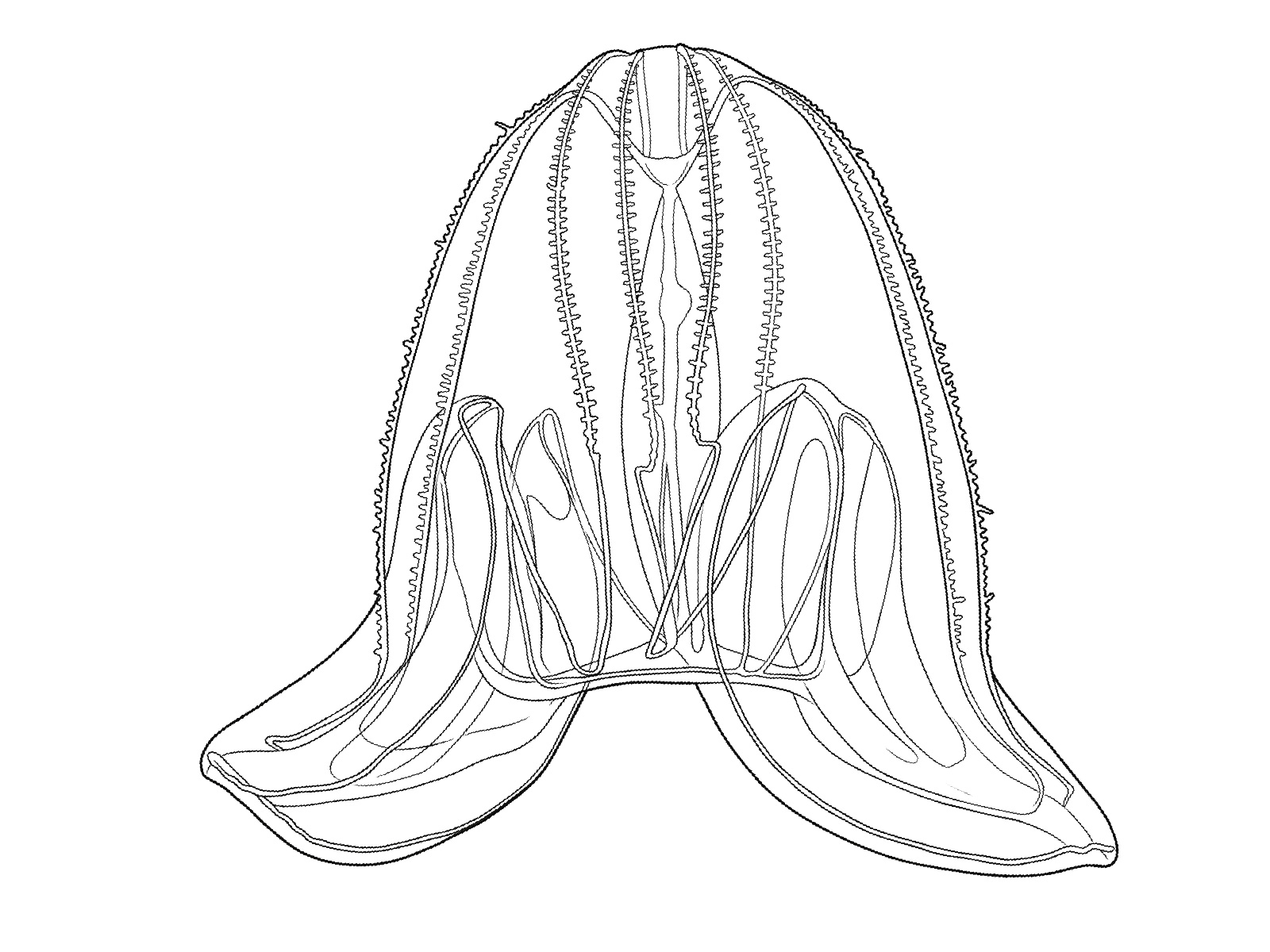
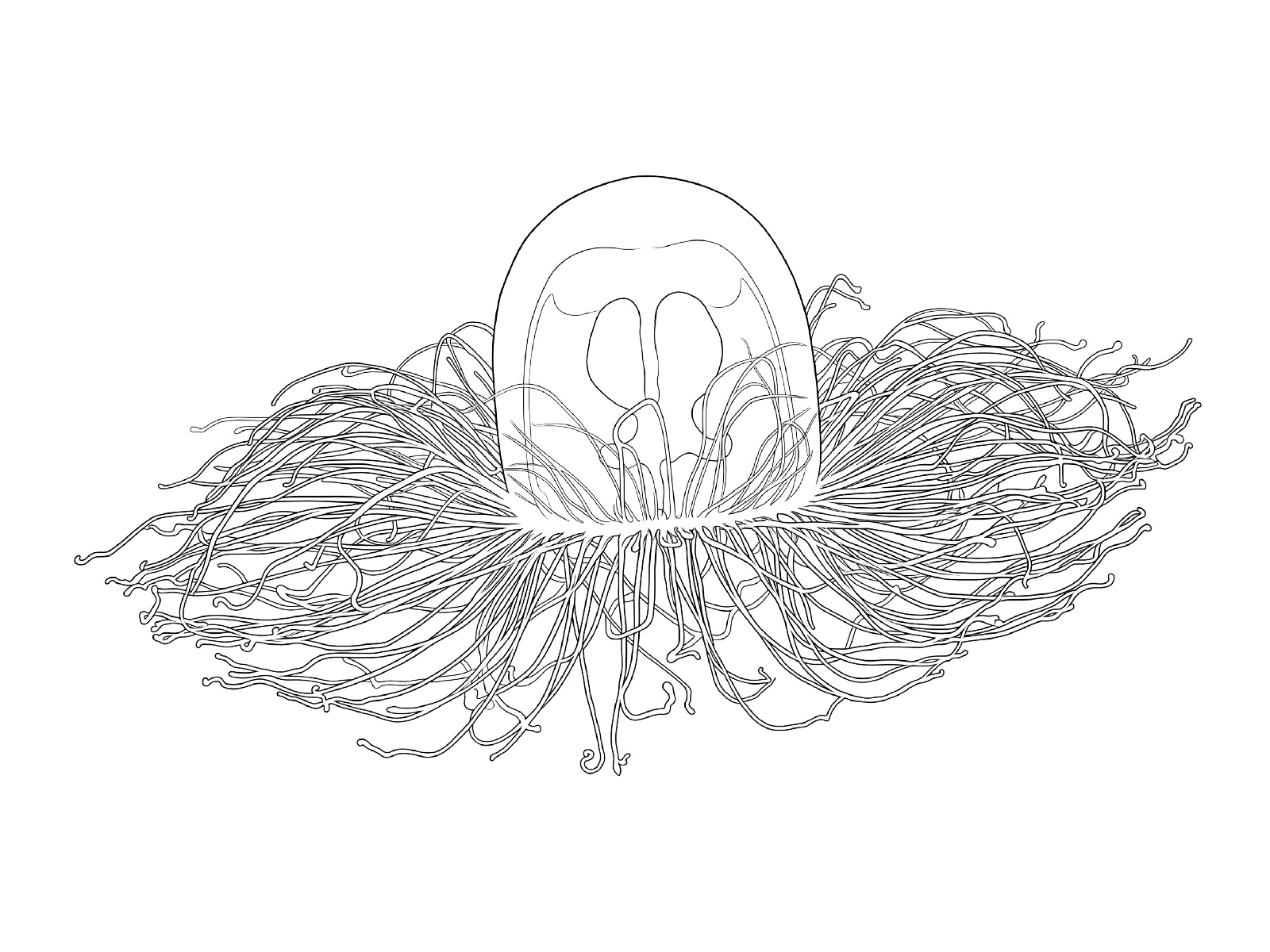
The striking name "Kabuto kurage" comes from the fact that its body shape looks just like a helmet that protected samurai warriors. When you look at it from the side, it has a rounded helmet-like shape, and the bottom part fans out lightly. In English, it is often called a Lobate comb jelly. "Comb" means a tool you use to brush your hair. It got this name because it has comb-like parts on its body.
Different from normal jellyfish!? A harmless comb jellyfish
When you hear the word jellyfish, you might think of painful poison stingers. But the Sea walnut is actually part of a completely different group called comb jellies! It has no poison stingers at all. If you touch one with your hand, it will not sting you at all, and it is totally safe. People call it a jellyfish because it looks clear and floats gently in the water, but it is really a gentle creature from a totally different family!
Shining in rainbow colors! 8 comb rows on its body
The best thing about the Sea walnut is how its body sparkles in seven rainbow colors when it swims. It has eight lines running down its body, packed with tiny hairs. By flapping these tiny hairs in order, it pushes the water to swim. When light hits these hairs, it bounces back like a prism and looks like a pretty rainbow! It is not glowing with electricity, but shining by reflecting light. That makes it so magical, doesn't it?
99 Percent water!? A see-through, squishy body
Most of the Sea walnut's body is made of water. Believe it or not, about 99 percent of its body is water! That is why its whole body is see-through and jiggles just like jelly. When it swims in the water, it looks just like the water itself is alive! Its body is so clear that you can see right through to its stomach and the water tubes inside. What a pretty, clear body it has!
How big is it? A handy egg-sized body
The Sea walnut is about 5 to 10 centimeters long. That is just big enough to fit in a grown-up's hand! It is the perfect size for floating in the ocean where it was born. It has a cute, round shape that looks like an egg or a little eggplant. Many people love to watch it swim and sparkle like a rainbow in aquariums!
Snap them right up! Eating with big, flap-like arms
Sea walnut has large, sleeve-like folds on its jaw side. As it swims, it gently opens these big sleeves to wrap up small plankton and water to catch them. The caught food goes to the mouth in the middle of its body to be digested.
Where can you meet them? Quiet ports and coasts all across Japan
Sea walnut is a familiar creature that you can often see in quiet bays, harbors, and along coasts all over Japan. On calm days with gentle tides, lots of Sea walnut can float together near the surface of the water. You can also see them in jellyfish exhibits at aquariums, where they shine in rainbow colors under the lights for you to watch closely.
Floating Masters! They Glide Along Using Tiny Cilia
Regular jellyfish open and close their caps to move forward. But Sea walnut doesn't move its cap. Instead, it swims by waving tiny hairs lined up on its 8 comb rows! These tiny hair movements are super clever. It can go forward, back up, or turn around easily. Moving so smoothly through the water, it is a real swimming master, just like it has many little motors!
A fleeting and beautiful cycle of life
The Sea walnut has a very delicate body. It has a short lifespan of just a few months to about half a year. In the ocean, bigger fish or other kinds of jellyfish might eat it. But it is a hermaphrodite, which means one Sea walnut has both boy and girl parts. So, even all by itself, it can lay eggs and make babies! It may look fragile, but it is really strong at keeping its life going.
Observe and learn! The wonders of living things' light and structure
How Sea walnuts glow in rainbow colors and how they swim with small hairs are super exciting topics for scientists! They are like living teachers that show us how light works. They also show us how amazing nature is. When you color this coloring page, you can learn all about them and love science even more!
How to Color Sea walnut
How to Color Rainbow Blends That Really Shine
The coolest part of this coloring page is the eight zipper-like lines (comb rows) running down its body. This is where Sea walnut shines the brightest! Try using bright colors like red, orange, yellow, green, light blue, and purple to make a rainbow blend from top to bottom. Make sure your colored pencil is sharp. Gradually change and layer the colors along the zig-zag pattern. Doing this will create a magical glow, just like a real Sea walnut casting prism light!
How to Use Highlights and Light Shadows for a Clear Body
Sea walnut's body is mostly water, so it is see-through. It is important not to color the whole body too dark. Try leaving the middle and wide parts plain white. This shows the white paper underneath as highlights! Then, add soft touches of very light sky blue or pale purple only along the outer edges and around the lines inside its body. Leaving plenty of white space will instantly bring out its squishy, see-through look!
Tips for Showing 3D Folds and Inner Lines
This picture of Sea walnut shows many delicate lines and fluttery flaps on the bottom. To make these inner parts pop, add thin shadows with a slightly darker light blue or light gray in the spots behind overlapping lines. This creates depth between the front folds and the inside parts. Your Sea walnut will look 3D instead of flat!
Coloring Tips for Different Tools
If you use colored pencils, press lightly and layer the colors gently. This makes a soft blend that looks like water. If you use crayons or pastels, smudge the colors softly with your fingertip. This creates a dreamy, glowing look. If you use watercolors, mix plenty of water into your blue or purple paint. Let the colors bleed gently to show the clear jellyfish floating in the sea!
Color a Dark Sea to Make Rainbow Light Pop
The best way to make the rainbow light of Sea walnut stand out is to color the background dark! Try filling in the space around Sea walnut with deep navy blue, black, or dark blue. A dark sea background makes the clear body and rainbow comb rows look like they are glowing in the dark. You can also draw small bubbles floating up using yellow or light blue. This will bring your deep-sea artwork to life!
Fun Facts About Sea walnut
A Unique Shape Like a Samurai Helmet
The name Sea walnut comes from its clear, round body. It looks just like the "Kabuto" helmets samurai wore long ago! As it floats and sways in the sea, it looks very graceful and cute.
The Secret of the Rainbow Comb Rows
A Sea walnut has 8 lines running down its body. These lines are packed with tiny hairs called comb rows. When it waves these hairs to swim, light bounces off them. Its body shines in rainbow colors, just like festive lights!
A Safe Sea Creature with No Poison
It has "jellyfish" in its Japanese name, but it is in a different group called comb jellies. It does not have poison needles like box jellyfish do. Because of this, it has no poison that can hurt humans at all.
A Magical Power to Glow in the Dark
Along with shining in rainbow colors, a Sea walnut can make its own green or blue light in the dark ocean. When waves bump or shake it, it glows softly and magically in the dark.
Opening a Huge Mouth to Swallow Food Whole!
A Sea walnut has a very big mouth for its body size. As it floats along, it looks for tiny plankton and other jellies to eat. When it finds them, it opens its huge mouth wide and swallows them whole!
Share These Sea walnut Coloring Pages



-
Sea walnut
-