Japanese sea nettle Coloring Pages

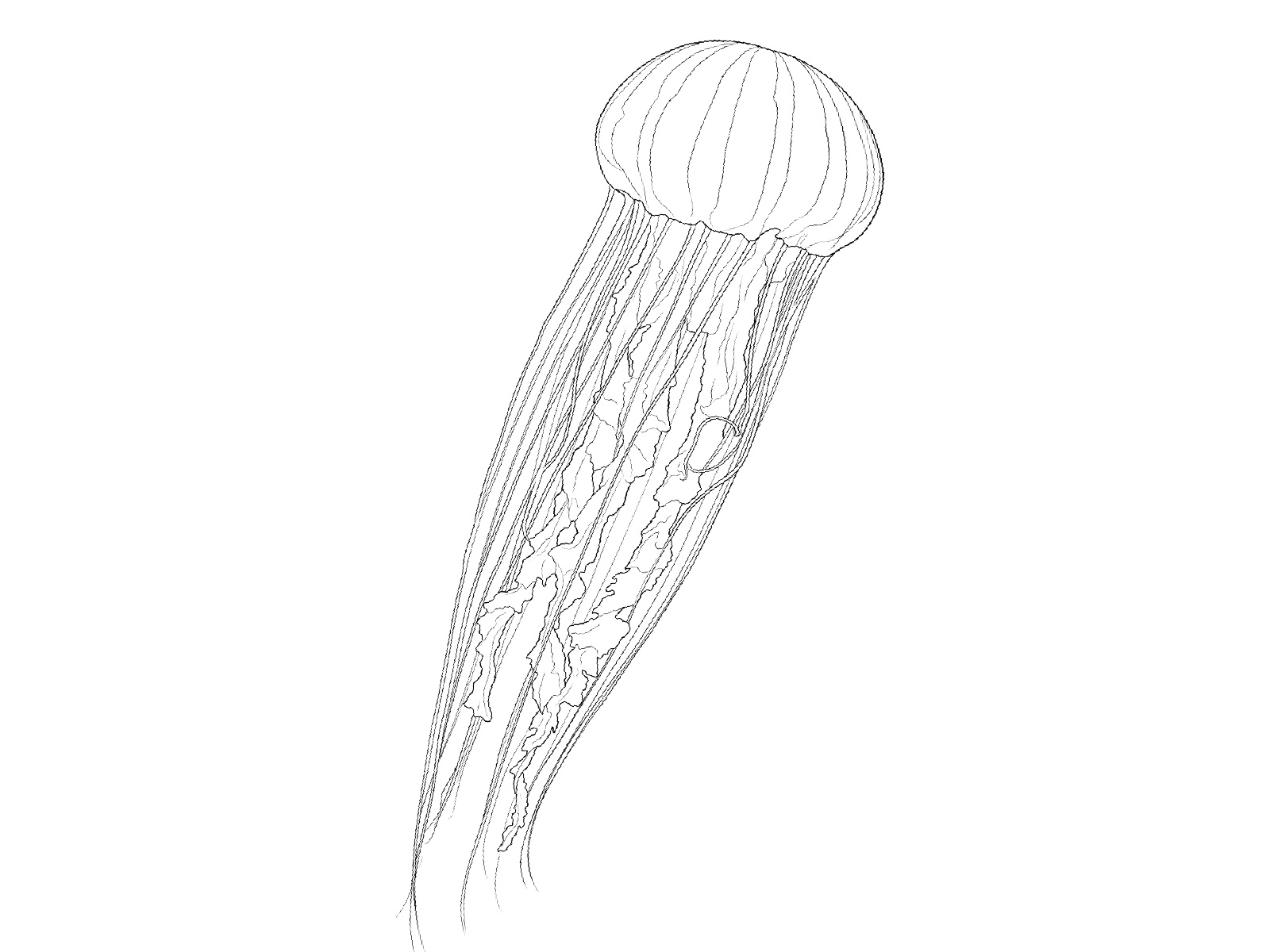
About Japanese sea nettle
A beautiful red and white jellyfish swaying in the water!
The Japanese sea nettle gently floats and sways in the sea. It is a jellyfish with a beautiful contrast of red and white! You can often see them along the coast all over Japan. Their elegant swimming style is very popular at aquariums too. They are so pretty you can't stop looking, but they are also famous for having very strong poison!
Name origin and English name! Red-brown stripes and Japanese sea nettle
The Japanese name comes from the bright red patterns on top of its cap. In English, it is called the Japanese sea nettle. "Sea nettle" means a stinging plant in the sea. It got this name because a sting hurts with a sharp tingle, just like touching a nettle plant!
Ninjas used it too?! The secret of the "Achoo Jellyfish"
The Japanese sea nettle has a funny old nickname: the "Achoo Jellyfish"! Tiny poisonous needles stay on its tentacles even after it dries out. If that powder gets into your nose, you will sneeze like crazy! Long ago in the ninja days, legends say ninjas used this Japanese sea nettle powder as a "sneezing powder" to beat their enemies!
The secret of the cap's pattern! 16 red stripes
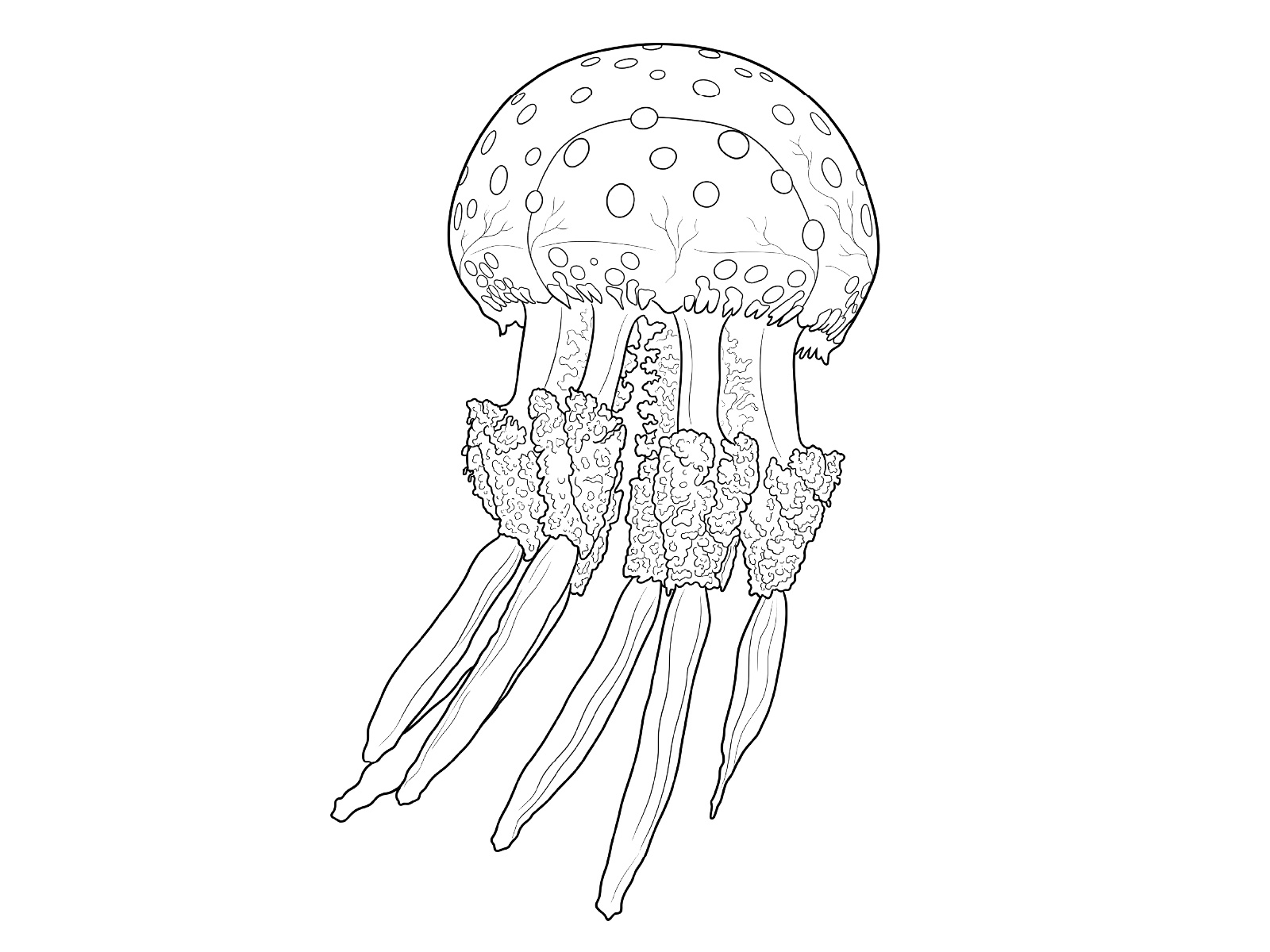
The coolest feature of the Japanese sea nettle is the pattern on its bowl-shaped cap. 16 reddish-brown stripes stretch from the center to the outside, just like rays of sunlight spreading out! Thanks to these stripes, you can easily tell it apart from other clear jellyfish in the sea.
Size and shape like a parachute
The cap of a Japanese sea nettle grows to about 10 to 20 centimeters wide, about the size of an adult's palm! It is shaped like a rounded bowl or a parachute. It swims slowly through the water by squeezing and spreading its cap open and shut.
Fluttering ribbons! 4 big oral arms
If you look under the cap, you can see frilly ribbons hanging down from the center. These are called oral arms, and there are 4 of them in total! They wave gracefully like frills on a dress or ribbons. They have an important job: carrying caught prey to the mouth!
Stretches over 1 meter! Super long tentacles
From the edge of the cap, many thin, long tentacles grow like hair! There are more than 56 of them, and long ones can dangle down 1 to 2 meters or more! They spread their tentacles like a net in the sea and wait for small creatures to swim by.
A sharp sting! Capsules with strong poison
The long tentacles are packed with tiny capsules of poison needles. When prey like fish or shrimp touch a tentacle, spring-like needles pop out to inject poison! If a person gets stung, it hurts terribly like an electric sting and turns red and puffy. So if you see one in the sea, never touch it!
Don't touch it even if it washes up on the beach!
In the summer, waves can wash the Japanese sea nettle up onto the sandy beach. Even if it looks dead, the poison capsules in the tentacles are still alive! If you touch them, the poison needles will pop out and sting you. If you find a dried jellyfish on the sand, be careful not to touch it or step on it!
A floating sea hunter! What does it eat?
The Japanese sea nettle looks like it is just floating around, but it is actually a great meat-eating hunter! It uses its strong poison to numb and catch tiny plankton, small fish, and shrimp in the sea. Amazingly, it even swallows other kinds of jellyfish whole if they are smaller than itself!
How to Color Japanese sea nettle
How to Choose Colors: Bright Red-Browns and Clear, See-Through Colors
Picking the right colors is super important to make your Japanese sea nettle look real and pretty! For the stripes on its cap and the base of its tentacles, try using bright red, reddish-orange, or red-brown (brick color). On the other hand, the body is full of water and see-through. So, gently layer light pink, cream, or soft purple while leaving some white paper showing. This will make a lovely jellyfish floating in clear water!
How to Color the Cool Stripes Spreading Out on the Cap
Here is a trick for coloring the lines spreading out on the cap! Sharpen your colored pencil really well first. Draw neat lines along the stripes from the center outward, using red-brown or dark pink. Between the stripes, leave light pink or the white of the paper. This makes it look shiny, rounded, and see-through, like light is passing right through it!
Tips for Coloring the Frilly Arms and Long Tentacles
You can make the frilly arms and long tentacles under the cap look different by changing how you color them! For the big arms in the middle, gently add a little dark purple or red-purple in the shadows where they overlap like frills on a dress. This gives them a soft, full look. For the thin tentacles hanging down, draw quick, thin lines in reddish-orange or red along the marks. This makes them look like they are swaying smoothly in the water!
Using Light and Shadow to Make It Look Squishy and 3D
To make the bowl-shaped cap look squishy, think about light and shadow. Here is a pro trick: leave a round white spot on the highest, roundest part of the cap without coloring it at all! Then, lightly add a tiny bit of soft light blue or light gray to the shadowed areas, the inside curve of the cap, and along the edges. Doing this makes the round, soft, see-through body pop right out!
Finish Your Picture by Drawing a Deep Sea World!
When you finish coloring your Japanese sea nettle, draw the ocean world in the white spaces around it! If you color the background in deep navy or blue, the red and white Japanese sea nettle will stand out brightly. It will look like a magical aquarium! You can also draw round water bubbles popping up and sunbeams shining down from above using light blue and yellow. This will make your picture come alive even more! Have fun making your very own ocean world!
Fun Facts About Japanese sea nettle
Red Stripes and Long Tentacles
The Japanese sea nettle has a big special feature: about 16 reddish-brown stripes that spread out on its cap. Under the cap, it has 40 to over 50 long, thin tentacles. The longest ones can grow over 2 meters long!
A Funny Nickname: The "Achoo Jellyfish"
When a Japanese sea nettle washes up on the beach and dries out, its tentacles turn into fine dust in the wind. If this dust gets in your nose, it makes you sneeze super hard! That is why people call it the "Achoo Jellyfish."
A Secret Ninja Weapon Legend
A famous warlord named Sanada Yukimura (Sanada Nobushige) had a legend about him. He gave this dried Japanese sea nettle powder to his ninjas. Ninjas threw it at their enemies' faces as a ninja tool to stop enemies with sneezing and eye pain!
Ouch! Strong Poison with a Bad Sting
The Japanese sea nettle has many tiny poison needles on its tentacles. If you touch them, you will feel a shock of sharp pain and get red bumps. Even if it is dead on the beach, the poison needles can still shoot out! So you must never touch one.
A Beautiful Star at the Aquarium
Even though it is dangerous and poisonous, it looks so magical and elegant swimming in aquarium tanks. Its long tentacles float softly in the water. Many aquariums in Japan show them, and their slow, peaceful swimming makes everyone happy.
Share These Japanese sea nettle Coloring Pages


More Jellyfish Coloring Pages

-
Japanese sea nettle
-