Rhinoceros Coloring Pages
 ~

About Rhinoceros
Huge Bodies! The Second Largest Animal on Land!
Have you ever seen a Rhinoceros at the zoo? A Rhinoceros is the second largest land animal after the elephant. When they grow up, they get super huge! They can be 3 to 4 meters long and weigh 2 to 3 tons. That is as heavy as 2 or 3 small cars! Their big, solid bodies look just like walking fortresses. They are so cool!
Their Name Means Nose Horn!
The word "Sai" in Japanese comes from an ancient Chinese character. In English, they are called Rhinoceros, but many people affectionately call them Rhino for short. This word comes from Greek! "Rhino" means nose and "ceros" means horn. So it literally means "an animal with a horn on its nose!"
It Is Not Bone!? Horns Made of Hair and Nails!
The best symbol of a Rhinoceros is the magnificent horn on its nose. But guess what? Unlike deer or cow horns, this horn is not made of bone at all! It is packed tightly with keratin. That is the exact same thing your hair and nails are made of! So if a horn breaks in a fight, it has a neat trick. It slowly grows back, just like your nails do!
The Secret of Their Thick, Armor-Like Skin
The skin that protects a Rhinoceros is super thick and tough. It is like the armor worn by knights long ago! The skin is about 1.5 to 5 centimeters thick. It protects them from sharp thorns in the bushes and claws of predators. They also have deep folds in their skin near their joints. Thanks to these folds, they can bend their legs easily and move smoothly even with such thick skin!
Skin Care Time! Their Favorite Mud Packs
A Rhinoceros has very tough skin, but it has a weak spot. The skin inside the folds is soft, so bugs can bite them easily. Because of this, a Rhinoceros gets into ponds or swamps almost every day to cover itself in mud. They love this mud pack! The dried mud acts like a shield against pests and mosquitoes. It also works as sunscreen to protect their skin from the bright sun. Mud baths are the best skincare for a Rhinoceros!
Super Ears and Nose Cover for Poor Eyesight!
If you look closely at a Rhinoceros, you will see its eyes are very small for its giant body. Actually, a Rhinoceros has poor eyesight. They can only see things that are close to them clearly. But instead, their ears and nose are amazing! They can spin their ears around like radar to catch tiny sounds far away. They can also smell scents in the wind to find enemies and friends easily!
5 Kinds of Rhinoceros in Africa and Asia
There are 5 kinds of Rhinoceros in total living in the world! Two kinds live in Africa (White Rhinoceros and Black Rhinoceros), and three live in Asia (Indian Rhinoceros, Javan Rhinoceros, and Sumatran Rhinoceros). Rhinoceros species in Asia, like the Indian Rhinoceros, have 1 horn. But African ones have 2 horns lined up on their nose! It is fun to compare them because their skin folds and horn counts are different.
Telling Them Apart by Lips! White and Black Rhinoceros Secrets
You cannot tell the African White Rhinoceros and Black Rhinoceros apart by body color. Instead, you can tell by the shape of their lips! A White Rhinoceros has wide, flat lips to eat short grass on the ground easily. A Black Rhinoceros has pointed, nimble lips to pick leaves and twigs off trees. Here is a fun story! Some say the name "White Rhinoceros" came from a mistake. People misheard the Afrikaans word "weit" (meaning wide) as the English word "white"!
Fast Despite Being Huge! They Run as Fast as a Car!
You might think a Rhinoceros is heavy and walks slowly. But when they run for real, they are surprisingly fast! When they speed up on their thick, strong legs, they can run at over 50 kilometers per hour! That is as fast as a car driving through town. Over short distances, they can run much faster than human athletes!
Protecting Them from Poachers! An Endangered Species Story
A Rhinoceros is big and strong, but all 5 kinds in the world are in danger of disappearing now. They are endangered species. This is because bad people called poachers hunt them for their horns to make medicine and decorations. Their forest homes are also being cut down. Now, people all around the world are working hard to protect the Rhinoceros from poachers so they can live safely!
How to Color Rhinoceros
Pick real colors: Gray like the wild and brown like a mud bath
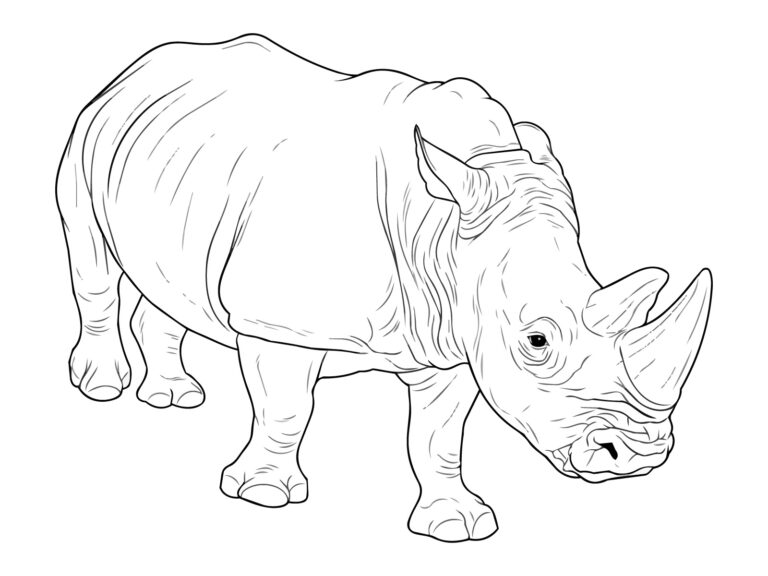
When you color Rhinoceros's body, pick colors that look like a real wild animal! The best basic colors for Rhinoceros are gray, dark gray, or a brownish tint. After you color the whole body gray, add some ocher, dark brown, or light brown around the feet and skin folds. This makes Rhinoceros look like it just enjoyed its favorite mud bath! You can also color light pink or cream color under the tummy and inside the neck folds as a secret trick. This creates soft skin and makes Rhinoceros look super real!
Use light and shadows on thick skin folds for a 3D look
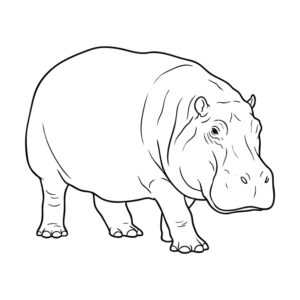
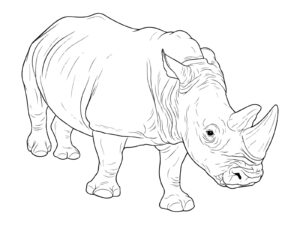
On this Rhinoceros coloring page, you can see lots of sharp fold lines and muscle lines. Use these lines to make a cool 3D effect! On the round back and the biggest part of the thigh, soft-touch some light gray or light yellow. The trick is to leave a little white paper showing for highlights! On the other hand, color the inside of the skin folds, the shadow under the tummy, and between the legs with dark black or dark brown. This makes Rhinoceros look strong, heavy, and pop right out!
Cool tricks for powerful horns and a brave face
The horn on Rhinoceros's nose stands out the most. It is an important part to show off its power! Color the tip of the horn with bright beige or light gray. Then, blend dark brown or black near the base and shadows to make a gradient. This makes the sharp, well-used horn look so cool! Color the small cute eyes completely with deep black. Add light gray along the folds around the eyes. Now you have a gentle yet brave expression for Rhinoceros!
Fun ways to color a parent and baby Rhinoceros
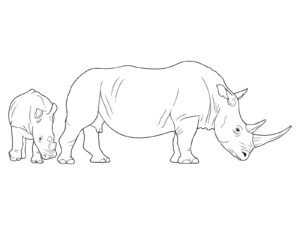
If your coloring page has a mother Rhinoceros and a baby Rhinoceros together, color them a bit differently! For the mother Rhinoceros, use dark gray or muddy dark brown to show how strong she is in the wild. For the cute little baby Rhinoceros in front, mix in a lighter gray or skin tone with a little pink. This shows its soft skin and makes the baby look super cute!
Draw the savanna land and background for a powerful picture
When you finish Rhinoceros, draw the nature of Africa or Asia in the background! Color the ground under its feet with warm yellow or orange soil. Add short green grass and big rocks around it. This brings the savanna feel to life! For the sky, color a bright sky blue or a vivid sunset orange. Use your own great ideas to make a powerful Rhinoceros coloring page!
Fun Facts About Rhinoceros
The Horn Is Made of Keratin, Just Like Nails and Hair!
The Rhinoceros has a cool horn, which is its biggest feature. But it is not a bone! It is made of a hard stuff called keratin, just like human hair and nails. So even if it breaks in a fight or an accident, it will slowly grow back just like your nails.
Heavier Than a Car! An Amazingly Huge Body
The Rhinoceros is the second biggest land animal after the elephant. It weighs more than a car (about 1 to 3 tons)! It looks like a giant moving rock. It usually moves slowly, but it can run as fast as a car at 50 kilometers per hour.
A Full-Body Mud Pack to Stop Sunburn and Bugs
The skin of the Rhinoceros is very thick and strong. But bug bites and strong sunlight can still hurt it! That is why it covers itself in lots of mud at the water. The mud acts like a mask that protects its skin.
Poor Eyesight, but Great Nose and Ears!
The Rhinoceros cannot see very well. Sometimes it will not notice you until you stand close by. Instead, its sense of smell (nose) and hearing (ears) are super strong. It can catch smells and sounds from far away on the wind.
Different Lips for Different Food: White Rhinoceros and Black Rhinoceros
Famous types of Rhinoceros include the White Rhinoceros and Black Rhinoceros. The White Rhinoceros has wide, flat lips so it can eat grass on the ground easily. The Black Rhinoceros has a clever, pointed upper lip to pick leaves off trees and bushes easily.
Share These Rhinoceros Coloring Pages


-
Rhinoceros
-
Rhinoceros Parent and Child
-