The Pyramids and Sphinx of Giza Coloring Pages
 ~
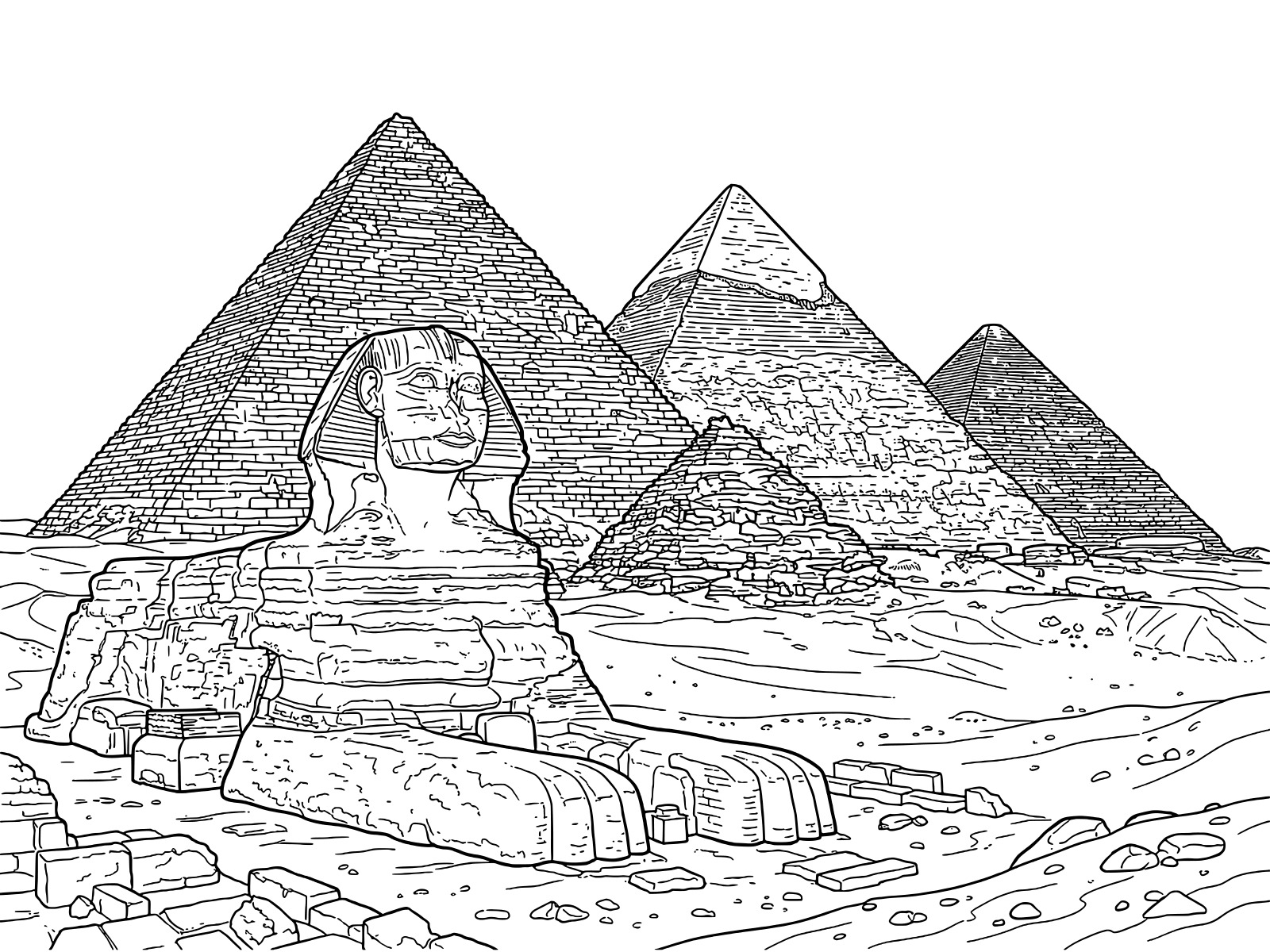
~ 
About The Pyramids and Sphinx of Giza
3 Pyramids Standing in the Desert
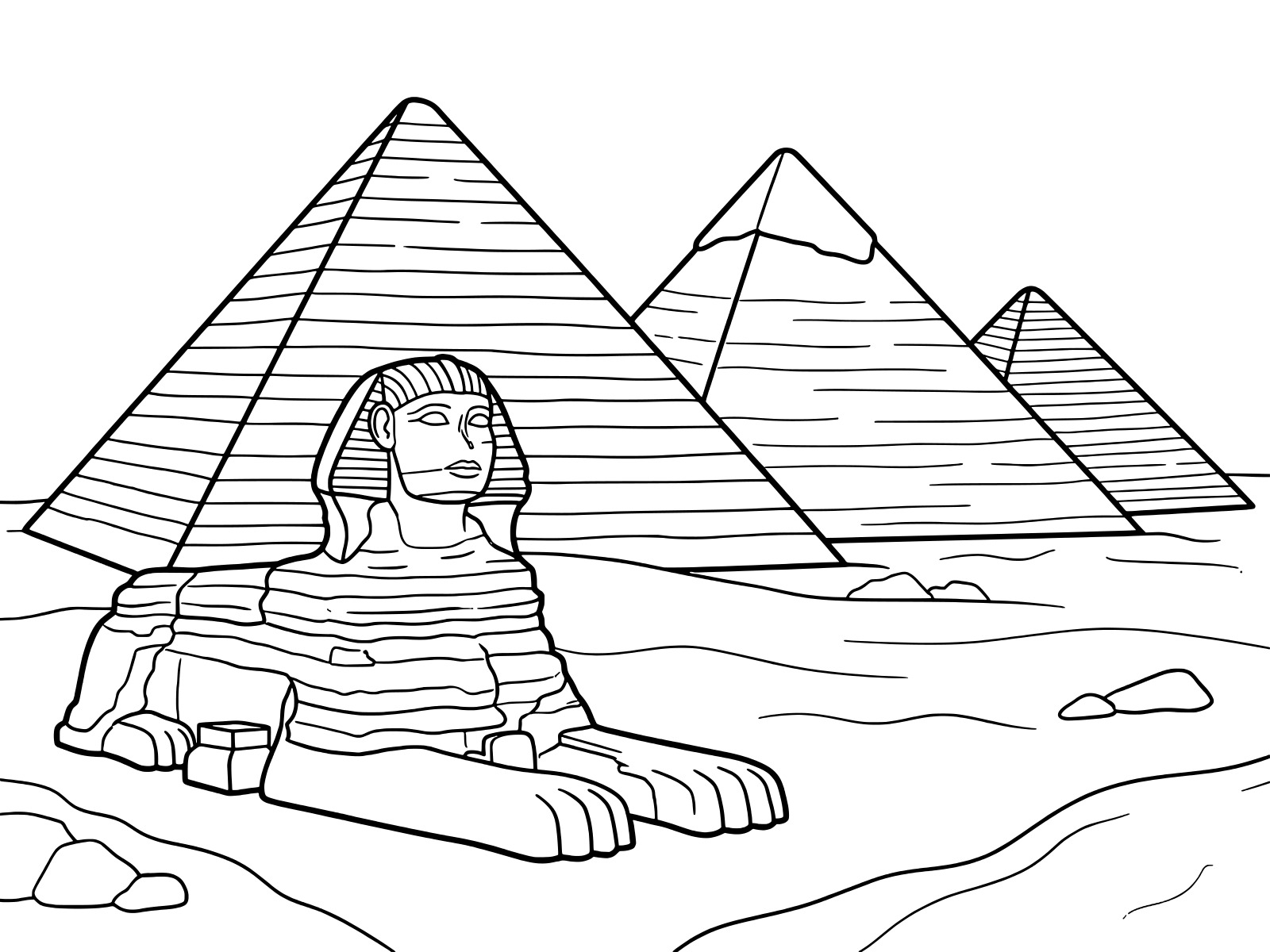
In Giza, Egypt, 3 big pyramids stand side by side. They are right near the capital, Cairo, at the edge of the desert.
The largest one is the Pyramid of Khufu, the next is Khafre, and the smallest is the pyramid of Menkaure. They were built around 2500 BC. That was 4,500 years ago!
How Big is the Pyramid of Khufu?
When it was first built, the Pyramid of Khufu was 146.6 meters tall! That is almost the same as a 40-story building. Over many years, the top crumbled a bit, so now it is 138.5 meters tall.
Each side of the base is 230 meters long. It is so big that a whole school playground could fit inside!
Made of 2.3 Million Stones
About 2.3 million stones were used to build this pyramid! On average, each stone weighs 2.5 tons. That is about the weight of two small cars.
Back then, there were no cranes or trucks to move and stack all these heavy stones. Even today, no one knows for sure how people built it!
The Sphinx is Made from One Giant Rock
In front of the pyramids, you can see a statue with a lion's body and a human face. This is the Great Sphinx.
It is about 73 meters long and about 20 meters tall. The amazing thing is that it was not built from stacked blocks. It was carved out of one huge rock that was already there! It is one of the largest single-rock sculptures in the world.
The Only Surviving Wonder
Long ago, people chose the "Seven Wonders of the Ancient World." They picked seven amazing structures, like the Hanging Gardens and the Colossus of Rhodes.
But the Pyramid of Khufu is the only one left today. The other six were destroyed by earthquakes and wars.
Its Name as a World Heritage Site
This pyramid area became a World Cultural Heritage Site in 1979.
Its registered name is "Memphis and its Necropolis." It includes the Pyramids and Sphinx of Giza, as well as pyramids in nearby places like Dahshur. So, it is actually not registered under the name "Pyramids!"
How to Color The Pyramids and Sphinx of Giza
Use Three Colors for the Sand
If you color the desert with just one color, it will look flat. Try using three colors: ocher, light brown, and orange.
If you make far-away parts light and near parts dark, it will look deep! Move your colored pencil along the lines of the sand to make the wavy dunes pop out.
Change Colors for Each Side of the Pyramid
This is the most important part for the pyramid! Triangles look very different on the sunny side and the shadowy side.
Make the bright side light ocher, and make the shadow side dark by layering brown. Do not blend the line between the two sides; keep it clear! This will make it look 3D right away.
Keep the Stepped Lines Visible
The sides of the pyramid have lines that show stacked stones. Do not color over these lines!
Color lightly between the lines, and leave the lines white or a light color. If you color everything dark, the steps will disappear and it will look like a plain triangle.
Look at the Sphinx's Headdress
The Sphinx wears a striped headdress that hangs down the back. People think it was blue and gold in real life long ago!
Now the color is faded and it looks like plain stone. But if you color the stripes in alternating colors on your coloring page, it will look super cool! Even if the face and body are the same color as the sand, changing the headdress color makes the main character stand out.
Leave the Sky White or Color It Light Blue
The sky in Egypt is usually very clear, so leaving it white looks the neatest!
If you want to add color, put light blue only at the very top. If you make it lighter as it goes down, the desert will look huge!
Fun Facts About The Pyramids and Sphinx of Giza
It Was the Tallest in the World for 3,800 Years
When the Pyramid of Khufu was built, it was 146.6 meters tall. Amazingly, no other building beat this record for over 3,800 years.
It is said that Lincoln Cathedral in England finally became taller when its tower was finished in 1311. Isn't it amazing that a building made 4,500 years ago stayed the world's tallest for thousands of years?
The Builders Were Not Slaves
Long ago, people thought that "slaves were forced to build The Pyramids and Sphinx of Giza." But this idea is no longer believed today.
The remains of a village where workers lived were found right near the pyramids in Giza. There were ovens for baking bread, places to care for hurt workers, and neatly lined-up houses. This shows that the kingdom gave them food and a place to stay. Records also show that bread and beer were given as pay.
Where Did the Sphinx's Nose Go?
If you look closely at the face of the Great Sphinx, its nose is missing. No one knows for sure why this happened.
The story that "Napoleon's army shot it with a cannon" is famous. But drawings made before Napoleon arrived already showed no nose. So, people think that story is not true. Did wind break it over many years, or did people destroy it? It is still a mystery today.
The Pyramids Used to Be Smooth
The Pyramids and Sphinx of Giza look like stepped stone today. But when they were brand new, the outside was smooth.
They were covered with white stone and polished until shiny. People think they sparkled brightly in the sunlight. Later on, people took those stones away to build other things. That is why we can see the steps inside now. Only the top of Khafre's pyramid still has those smooth stones today.
Share These The Pyramids and Sphinx of Giza Coloring Pages


More World Landmarks Coloring Pages
-
The Pyramids and Sphinx of Giza
-
Great Pyramids of Giza and Sphinx Advanced
-