Scallion (Green Onion) Coloring Pages
 ~

About Scallion (Green Onion)
Scallion (Green Onion) Gets Delicious in Winter
Scallion (Green Onion) is a winter vegetable that you cannot do without in Japanese cooking.
When it gets cold, Scallion (Green Onion) stores up sweetness inside, so winter Scallion (Green Onion) is sweet and tender.
It is super useful! You can put it in hot pot or sukiyaki, grill it, or chop it up to put on top of soba noodles and miso soup.
There are two kinds of Scallion (Green Onion): long Scallion (Green Onion) where you eat the white part, and leaf Scallion (Green Onion) where you eat the green leaves.
This coloring page shows Scallion (Green Onion) with long white parts.
The White Part and the Green Part
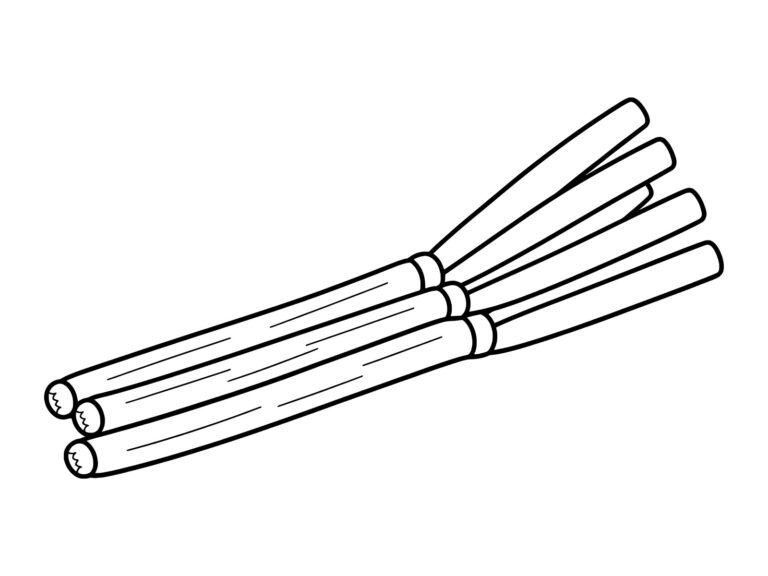
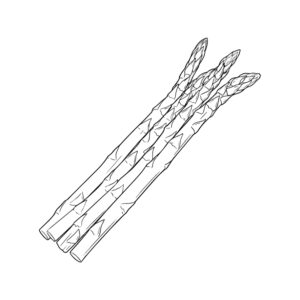
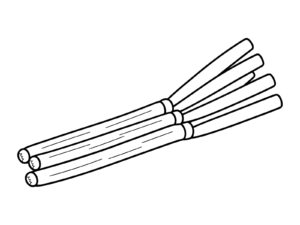
The first coloring page shows three Scallion (Green Onion) stalks lined up.
Near the root, it is shaped like a long white tube, and the top splits into green leaves.
Between the white and green parts, it is a little yellowish-green.
The inside of the green leaves is hollow, just like a straw.
At the bottom tip, you can see where the roots were cut off.
Piling Up Dirt to Grow Them White
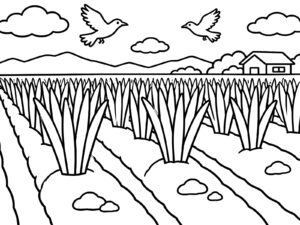
The second picture is a Scallion (Green Onion) field in winter.
The rows of dirt are piled up like little mountains, going all the way to the back.
As Scallion (Green Onion) grows, farmers pile dirt over the base again and again.
This is called earthing up.
The part underground gets no sunlight, so it stays white and grows long instead of turning green.
That is why you can only see the green leaves on top of the rows, while the white parts are hidden in the dirt.
A Scallion (Green Onion) Dinner Feast
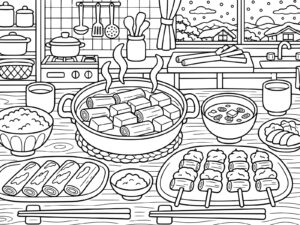
The third picture shows a cozy winter dinner with lots of Scallion (Green Onion) dishes.
The pot in the middle is negima pot, filled with tuna and long cuts of Scallion (Green Onion).
In front, there is nicely toasted grilled Scallion (Green Onion) and negima chicken skewers with meat and Scallion (Green Onion) lined up.
Sliced Scallion (Green Onion) floats in the miso soup, too.
Behind them is the kitchen, and snow is falling outside the window.
The Scallion (Green Onion) Flower is Called Negibozu
If you leave Scallion (Green Onion) in the field, a round cluster of flowers grows at the tip of the stem in spring.
Lots of tiny flowers group together to look like a shaven head, so it is called a negibozu (onion boy).
Once the negibozu grows, the stem gets hard and is not good to eat anymore.
Instead, lots of black seeds grow after the flowers, so you can grow the next Scallion (Green Onion)!
How to Color Scallion (Green Onion)
From White to Green, Step by Step
For the white part of the Scallion (Green Onion), leave a lot of the white paper as it is.
If you add a little light gray or light yellow-green to the bottom edge, it will start to look like a round tube!
The secret to the spot where white meets green is to put yellow-green in the middle and change to green little by little.
For the green leaves, it is great to use bright green near the root and dark green at the tips!
Use Lots of Dirt Colors for the Scallion (Green Onion) Field
For the soil on the ridges in the second page, let's mix and color with dark brown and light brown.
If you make the top of the ridges bright and the bottom of the grooves dark, you can really see how the dirt mounds up!
If you color the Scallion (Green Onion) leaves with a bluish green, it will look just like a winter field!
The Nice Toasty Color of Grilled Scallion (Green Onion)
For the grilled Scallion (Green Onion) in the third page, put light brown on the white parts, and use dark brown just for the grill marks.
The tuna in the Negima hot pot will look yummy in a reddish-purple red, and the soup stock in light yellow!
If you change the sunset outside the window from orange to purple, it will feel just like a winter evening!
Scallion (Green Onion) in Miso Soup: Have Fun with Small Rings
For the sliced Scallion (Green Onion) floating in the miso soup on the third page, if you color the outside dark green and the inside yellow-green, the small rings will look so cute!
Let's color the miso soup light brown.
For the Scallion (Green Onion) and chicken skewer, it is fun to color the meat brown and the Scallion (Green Onion) with white and yellow-green, one after the other!
Fun Facts About Scallion (Green Onion)
White in Kanto, Green in Kansai
The way people eat Scallion (Green Onion) is different depending on the area.
In the Kanto region, people often eat long Scallion (Green Onion) called Naga-negi, also known as Nebuka-negi, where you eat the white part.
In the Kansai region, people prefer Ha-negi, where you eat the green leaves, and Kujo-negi from Kyoto is very famous.
Ha-negi is grown without mounding soil around it.
The Slimy Stuff Inside the Leaves
When you cut the green leaves of Scallion (Green Onion), you might find a thick, slimy gel inside.
This is made naturally by Scallion (Green Onion), so it is completely safe to eat!
When you put it in hot pots or miso soup, it adds a smooth, sweet flavor.
A Great Winter Hot Pot Helper Alongside Chinese Cabbage
In winter hot pots, you often see Scallion (Green Onion) and Chinese cabbage together.
Both are delicious winter vegetables that get sweeter in the cold weather.
Famous Scallion (Green Onion) Growing Areas
Fukaya-negi from Saitama Prefecture and Shimonita-negi from Gunma Prefecture are famous long Scallion (Green Onion) varieties.
Shimonita-negi is short and thick, and it gets super soft and sweet when cooked.
People say both taste best when harvested in the cold winter, so they are very popular as winter gifts!
Share These Scallion (Green Onion) Coloring Pages


More Vegetables Coloring Pages
-
Scallion
-
Winter Green Onion Field
-
-
Grilled scallions and negima nabe
-
-