Japanese carpenter bee (Xylocopa appendiculata) Coloring Pages

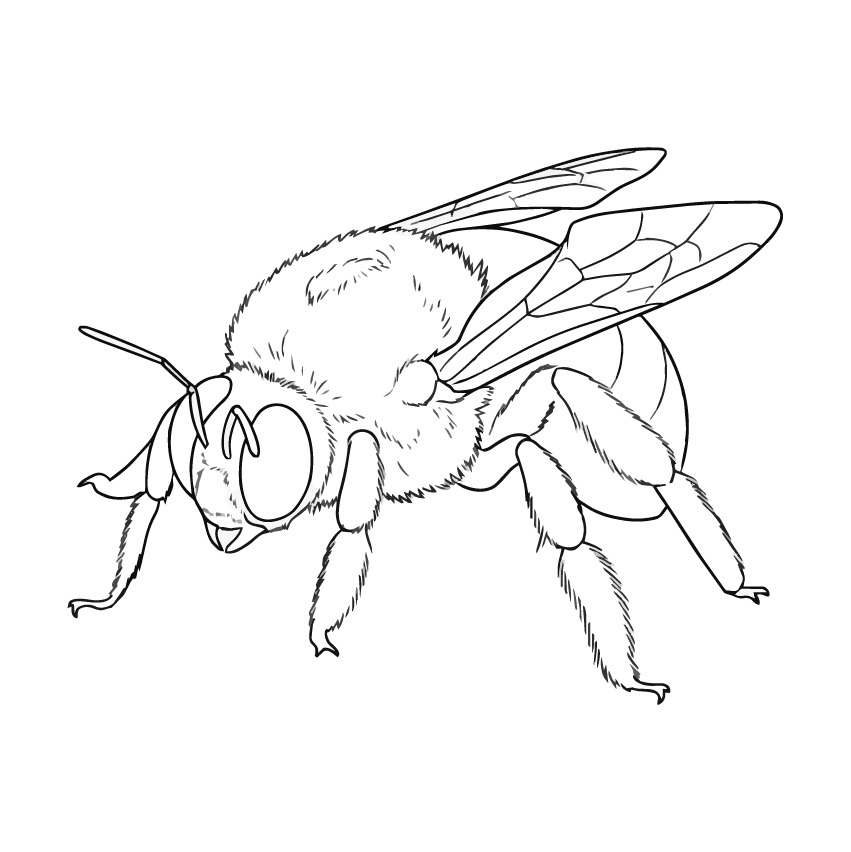
About Japanese carpenter bee (Xylocopa appendiculata)
A Flying Stuffed Toy? The Japanese carpenter bee (Xylocopa appendiculata)
In spring, have you ever seen a big, pitch-black bee flying near wisteria flowers with a loud buzz? That is the Japanese carpenter bee (Xylocopa appendiculata). It looks strong, but it is actually a very calm and gentle bee!
What Is It Called in English?
In English, it is called a "Carpenter bee."
-
"Carpenter" means a person who builds things out of wood.
-
It got this name because it is great at digging neat, round holes in wood to make its nest!
Check Out How It Looks!
The Japanese carpenter bee (Xylocopa appendiculata) has a special look that is different from other bees.
-
Its most special feature is the fluffy yellow fur around its chest.
-
Its belly is shiny black, and its whole body is nice and round.
-
It is about 2 to 2.5 centimeters long. That is pretty big for a bee!
It Is Actually Very Gentle
It makes a loud sound when it flies, so some kids might feel scared. But the Japanese carpenter bee (Xylocopa appendiculata) is very quiet and peaceful.
-
Boy bees do not have stingers at all, so they will never sting you.
-
Girl bees have stingers, but they almost never attack humans on their own.
-
Even if one comes close to you, you will be fine if you just leave it alone!
Where Does It Live?
You can find the Japanese carpenter bee (Xylocopa appendiculata) in many places all over Japan.
-
It loves places with lots of flowers, like gardens, parks, and near woods.
-
It makes its nest by digging holes in dead wood or bamboo fences all by itself.
When Can You See It?
It stays busy and active during the warm seasons.
-
You can see it from around April to October.
-
Lots of them gather in spring when the wisteria flowers bloom.
-
During the winter, adults sleep inside holes in trees to stay warm.
What Does It Eat?
The Japanese carpenter bee (Xylocopa appendiculata) lives on flower nectar and pollen.
-
It loves many flowers, like wisteria, azaleas, and sunflowers.
-
Because its body is heavy, you can watch it hold tightly onto flowers while drinking nectar with all its might.
A Unique Way to Drink Nectar
When it is hard to get into the front of a flower, the Japanese carpenter bee (Xylocopa appendiculata) sometimes uses a trick. It makes a hole at the bottom of the flower to steal the nectar!
-
That is a clever way to get its food!
It Is Great at Hovering!
It is very good at "hovering," which means floating in one spot in the air.
-
In spring, a boy bee hovers in the air to guard its area while waiting for a girl bee to fly by.
-
Boy bees have big eyes and a white spot in the middle of their faces.
A Strong Family Bond?
In many bee families, worker bees take care of the babies. But the mother Japanese carpenter bee (Xylocopa appendiculata) lays her own eggs and makes "pollen balls" for her babies to eat.
-
The baby bees grow up in a cozy home filled with their mother's love!
How to Color Japanese carpenter bee (Xylocopa appendiculata)
How to Choose Colors: Make the Contrast Stand Out!
Looking at your picture, you drew the fluffy fur of the Japanese carpenter bee (Xylocopa appendiculata) so nicely! Let's color it to bring out this soft look.
Basic Body Colors:
-
Chest Fur: Use bright yellow or golden yellow here. This is the most noticeable part, so coloring it brightly will make it look super cool.
-
Tummy and Legs: Color them deep black or dark gray. Before making it solid black, mix in a little blue or purple to give it a shiny look.
Colors for Small Parts:
-
Wings: The wings of the Japanese carpenter bee (Xylocopa appendiculata) are a bit dark and see-through. Try coloring them lightly with light gray, or a color that looks brownish when light hits it.
-
Eyes: Color the big, round eyes with black or dark brown to make your Japanese carpenter bee (Xylocopa appendiculata) look strong.
How to Add 3D Depth: Show Off the Round Body!
The Japanese carpenter bee (Xylocopa appendiculata) has a nice round body, so let's use shadows well.
Where to Add Shadows:
-
Lines on the Tummy: Color a little darker near the lines of each section. This will make the tummy look round and plump.
-
Bottom of the Body: Make the lower part of the tummy closer to the ground darker. This gives it a nice, heavy feel.
Where to Keep Light:
-
Leave the highest part of the yellow chest fur a little lighter! This shows off how soft and fluffy the fur is.
Tips for Texture: Draw the Fur Strand by Strand!
This picture has lots of fine fur lines drawn around the body.
-
Sharpen your colored pencils well and try adding fur one thin line at a time.
-
If you carefully color the yellow chest and the fur on the legs, it will look just like a soft stuffed toy!
Advice for Each Coloring Tool!
Colored Pencils:
-
Layer a little bit of orange over the yellow. This adds depth to the fur and makes it look 3D. For the black parts, press harder in some spots and lighter in others to show shiny reflections.
Crayons:
-
Put down a thick layer of yellow, then scratch it gently with a toothpick to make fur lines. This cool trick is called "scratching"!
Hints to Enjoy Your Coloring Page!
Try Drawing Wisteria Flowers!
-
Wisteria flowers are the favorite of the Japanese carpenter bee (Xylocopa appendiculata). Try adding lots of purple flowers around it. The purple of the wisteria and the yellow of the Japanese carpenter bee (Xylocopa appendiculata) look great together!
Draw the Sky in the Background!
-
Coloring the background light blue is a great idea to show it buzzing around happily.
Express Yourself Freely!
-
You can use your favorite colors to turn it into a "Legendary Golden Japanese carpenter bee (Xylocopa appendiculata)." Your imagination will bring your picture to life! Have fun and color freely!
Fun Facts About Japanese carpenter bee (Xylocopa appendiculata)
Looking stylish in a yellow vest
The carpenter bee you often see in Japan is officially called the "Japanese carpenter bee (Xylocopa appendiculata)". Just like its Japanese name suggests, it has fluffy yellow hair on its chest, even though its body is completely black. It almost looks like it is wearing a yellow vest!
They are actually super gentle
People are often scared of them because of their big bodies and loud "buzz" sound. But they are actually very "gentle". They almost never attack humans on their own. People say they won't sting you unless you grab them with your hand.
Boy bees don't have stingers!?
In spring, you might see a Japanese carpenter bee (Xylocopa appendiculata) hovering in the air. Most of those are boys. Actually, boy Japanese carpenter bee (Xylocopa appendiculata)s "do not have" poison stingers. Only the girls have stingers. The boys are safe bees that will never sting you.
Building nests just like a carpenter
The Japanese carpenter bee (Xylocopa appendiculata) makes its nest by digging holes in dead trees or the pillars of old houses. They can make round holes in hard wood all by themselves. That is why they are called "carpenter bees" in English. Their jaws are really strong!
Stealing flower nectar?
When a flower is too small for its big body to fit its head inside, the Japanese carpenter bee (Xylocopa appendiculata) sometimes bites through the bottom of the flower to drink the nectar from the side. Getting nectar without carrying pollen like this is called "nectar robbing". They have a little bit of a sneaky side too!
Share These Japanese carpenter bee (Xylocopa appendiculata) Coloring Pages


More Bees & Ants Coloring Pages
-
Yellow-bosomed carpenter bee
-
Yellow-carpenter-bee 2
-