Great horned owl Coloring Pages

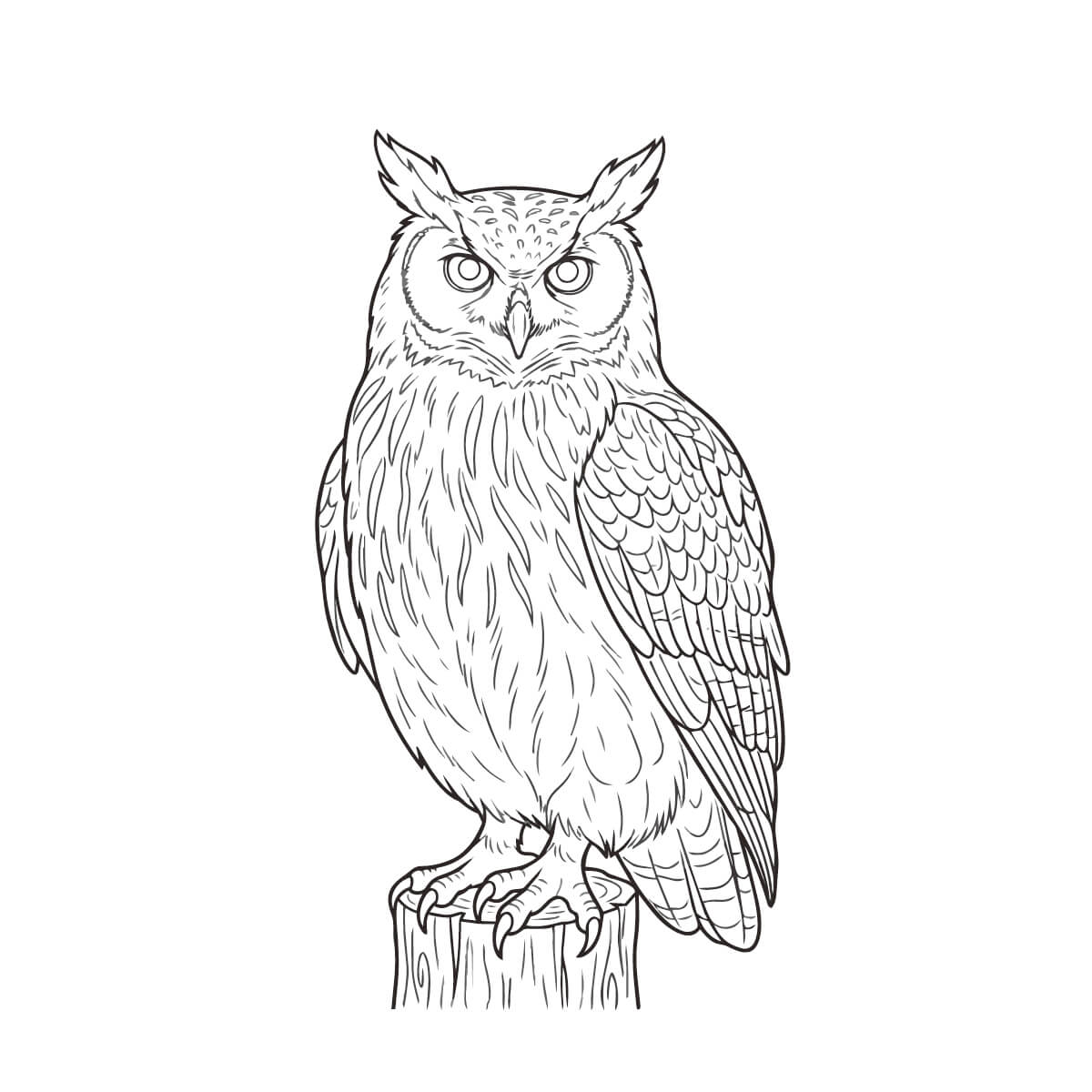
About Great horned owl
The strongest hunter of the night forest! Great horned owl
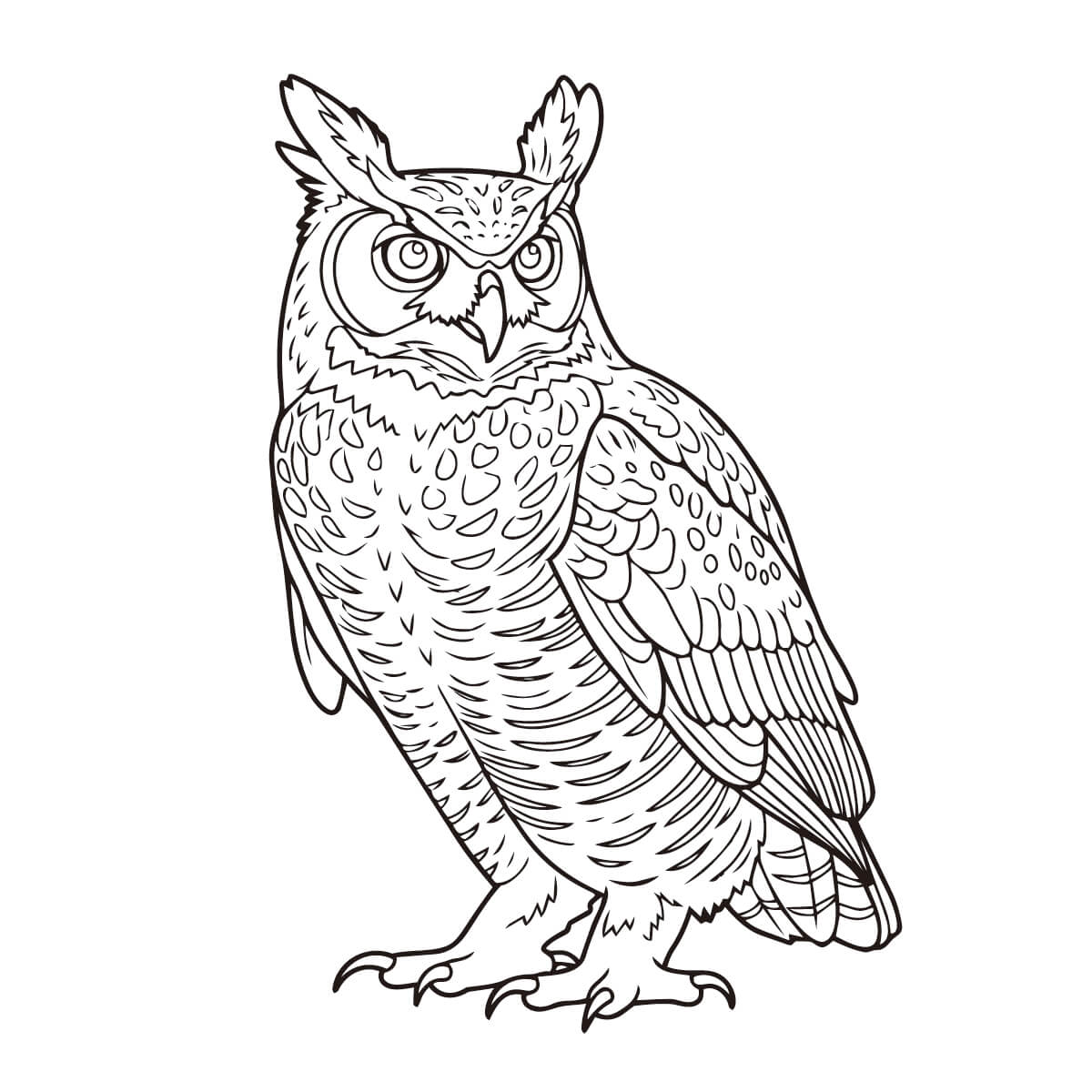
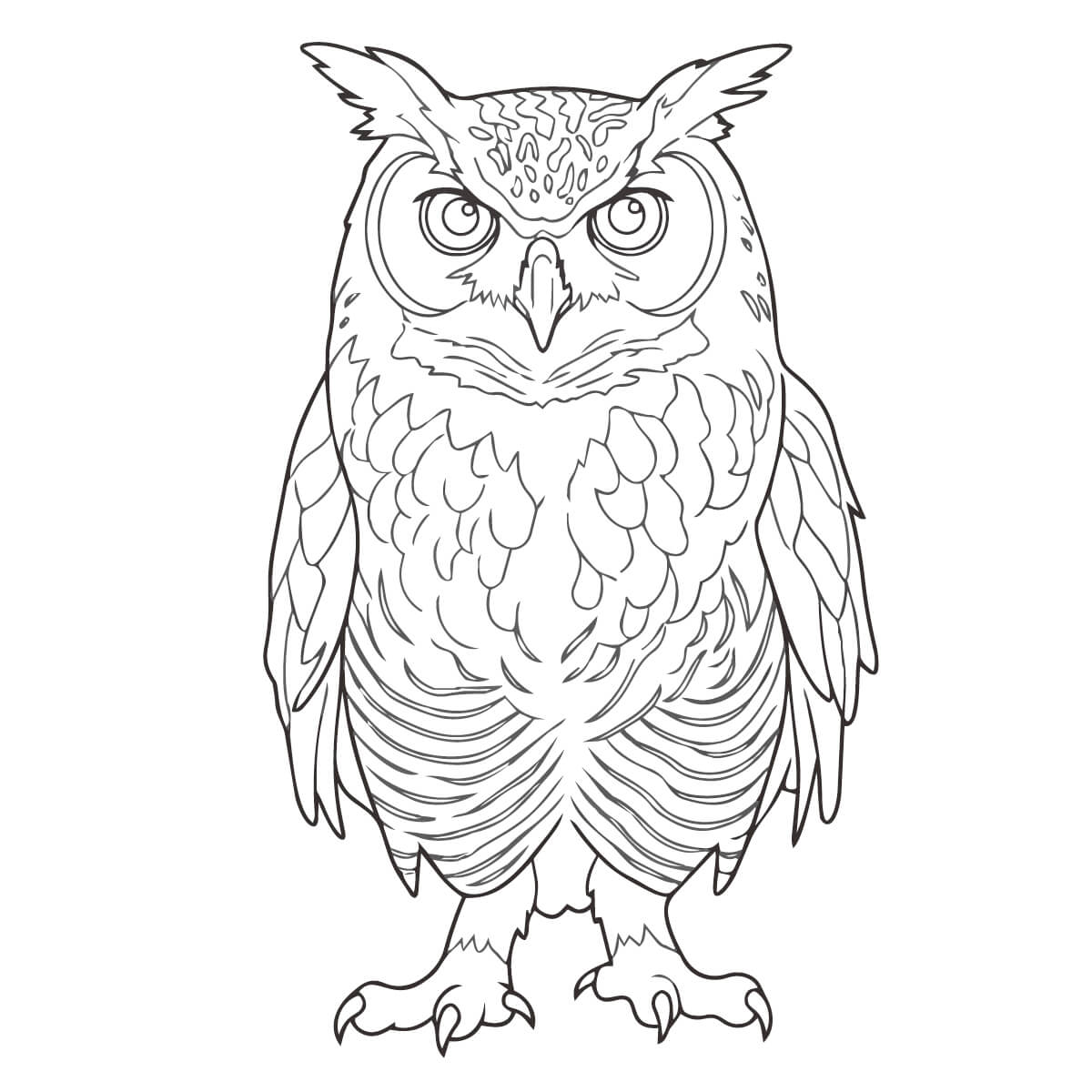
The Great horned owl is a very big and powerful owl that lives in a wide area from the Arctic to South America. You can see it in many different places, not just in forests, but also in deserts and wetlands. It is special because it has decorative feathers on its head called "ear tufts" that look just like ears. It is nocturnal, which means it starts moving around at night. It is a cool bird that uses its sharp claws and beak to hunt, and people even call it the "Tiger of the Air"!
Features of the Great horned owl
The Great horned owl has many amazing body features to help it survive in harsh nature.
- Cool ear tufts: These are feathers that stick up on top of its head. They are not ears, but the owl uses them to show how it feels and to blend into the trees around it. Its real ears are hidden inside the feathers on the sides of its face.
- Sharp claws and strong legs: Its claws for catching prey are very thick and sharp. It has some of the strongest grip power of any bird, and it is powerful enough to catch animals even bigger than itself.
- Silent wings: The surface of its feathers is very soft, and the edges of its wing feathers are jagged, so it makes almost no sound when it flies. This lets it sneak up softly behind its prey without being noticed.
- Big yellow eyes: To spot prey clearly even in the dark night, its eyes are very big and a pretty yellow color. Its eyes are fixed and cannot move, so it turns its neck up to 270 degrees to look around instead.
Where does it live?
The Great horned owl is a very tough bird, so it lives in many different places. You can find it in deep forests with tall trees, in deserts with cacti, and even in parks near towns where people live. It does not build nests from scratch. Instead, it raises its chicks by borrowing or taking over old nests that other birds finished using.
Are its ears in different places?
The left and right ear holes are placed at slightly different heights on purpose. Thanks to this, sound reaches the right and left ears at slightly different times, so it can figure out exactly where its prey is!
How to Color Great horned owl
How to Choose Colors
When you color your Great horned owl coloring page, try using "hide-and-seek colors" that help it blend into the forest!
- Body Color: Try mixing brown, gray, black, and white. Making it look like a tree trunk makes it hard for enemies to find. Leave the belly a little white and add horizontal stripes to make it look real.
- Eyes: The main highlight is bright yellow! If you color around the eyes a little black, it will look cool and sharp.
- Feathers on the Legs: The Great horned owl has fluffy feathers all the way down to its toes. Color these brown and white just like its body.
Let's Make It Look Fluffy!
Owls have very soft feathers, so try different coloring styles to show how they feel.
- Color with Short Lines: Move your colored pencil quickly to draw lots of short lines. This gives it a fluffy, feather-like feel.
- Draw Patterns: If you draw small "V" shapes all over its body using black or dark brown, it will look cool and powerful like a wild bird.
Try Creative Backgrounds
Think of a night forest! You can draw a big full moon in the background, or color a starry sky with dark blue and purple. If you draw it sitting on a tree, make the bark look rough. That will make your Great horned owl stand out even more!
Fun Facts About Great horned owl
Can't look around?! The secret of their eyes
We humans can look to the side just by moving our eyeballs without moving our faces, right? But the eyes of the Great horned owl are "shaped like tubes" and fixed tightly to their skull, so they can't move their eyeballs at all.
Their necks turn all the way around
Instead of moving their eyeballs, their necks are super soft and flexible. Believe it or not, they can turn their heads about 270 degrees to both the right and the left! This lets them quickly check on prey or enemies behind them just by turning their face, without moving their body.
Not cold even on snowy days
Thick feathers cover them all the way to the tips of their toes. These act like socks to keep their body heat from escaping in cold winters, and that's the secret to how they can stay active even in freezing weather.
How dads and moms share the work
Warming the eggs is mostly the mom's job, but the dad works super hard during that time! He works hard to bring food for the mom, too. They also have a gentle side that takes great care of their family.
Share These Great horned owl Coloring Pages


-
Great horned owl 1
-
Great horned owl 2
-
-
Great Horned Owl 3
-