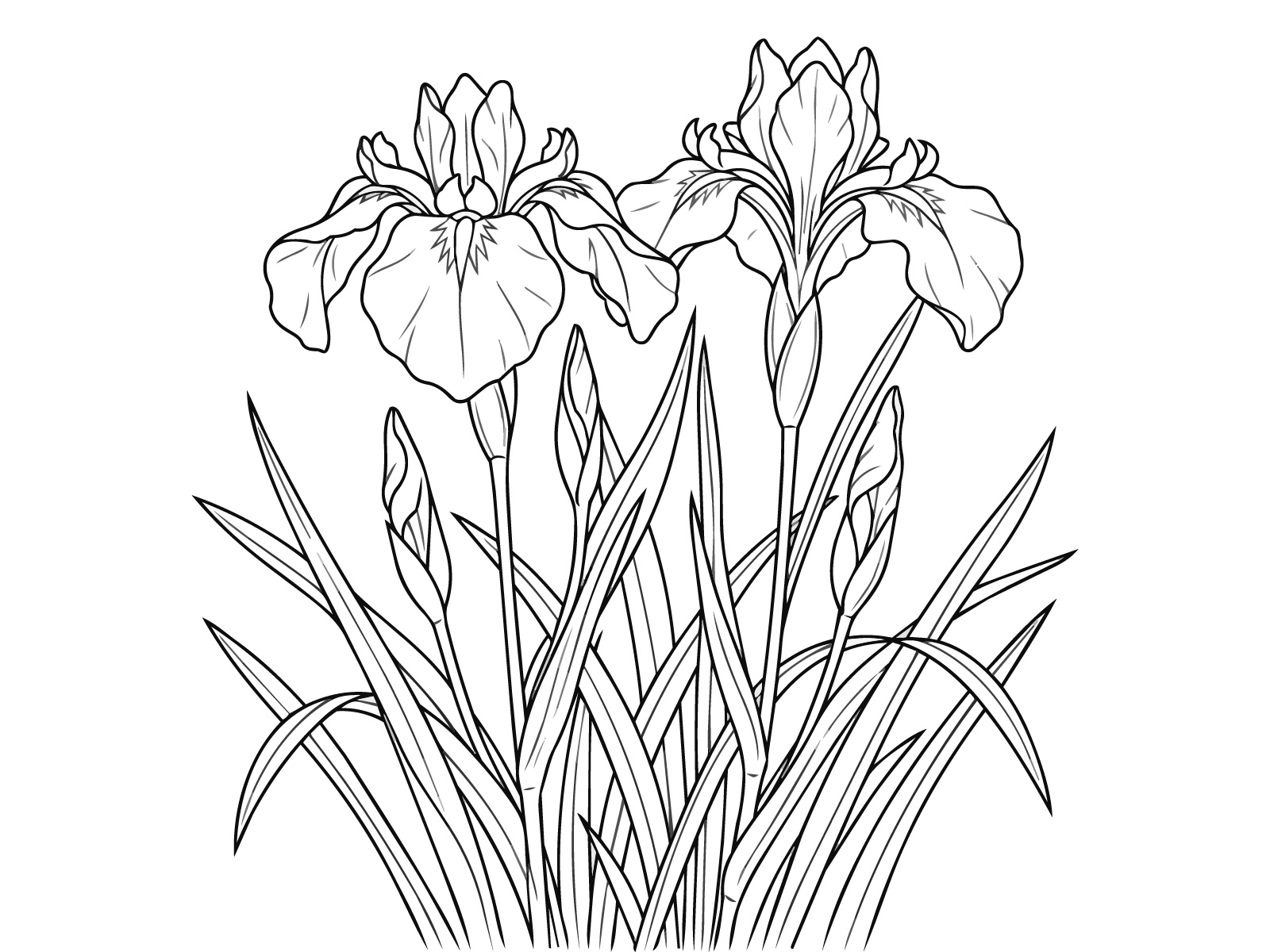
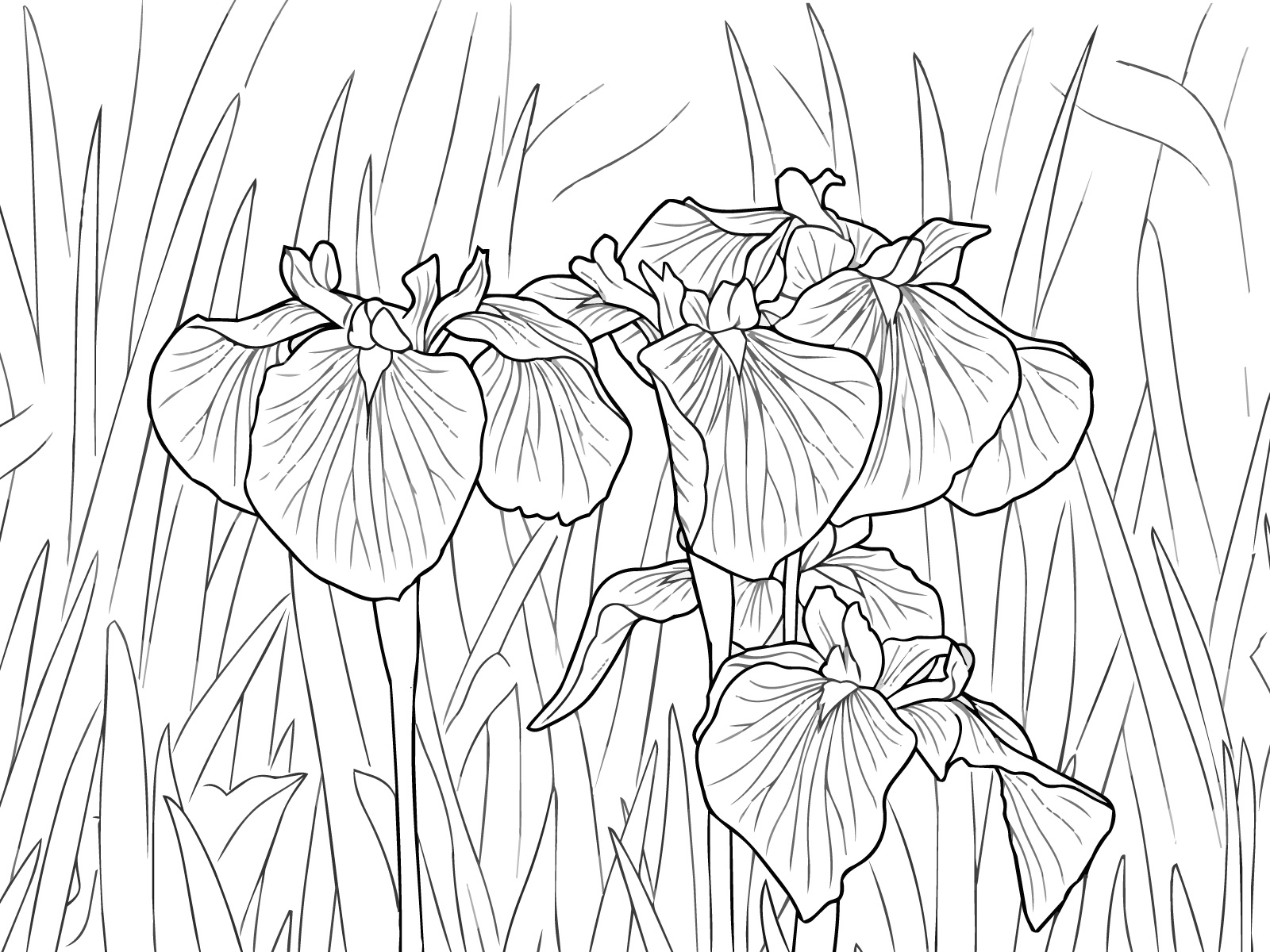
Japanese iris Coloring Pages
 ~
~ 
About Japanese iris
A Beautiful Flower Born in Japan That Colors the Rainy Season
Japanese iris is a plant that grows big, elegant flowers during the rainy season when it rains a lot. Along with hydrangeas, many people love it as a flower that shows off June in Japan. In the gentle rain, bright purple and white flowers stand up tall and bloom. They are so pretty that they make you feel happy and fresh.
Where the Name Comes From and How to Say It in English
The Japanese name comes from its leaves. They look just like sweet flag leaves used for special bath toys on Children's Day, but this plant grows pretty flowers. Sweet flag only gets plain, small flowers. So they are actually completely different plant friends!
In English, it is called "Japanese iris". "Iris" comes from Iris, the goddess of the rainbow in Greek myths. You can see how people all over the world love Japanese iris as a beautiful iris friend born in Japan!
When Can You See It? Bloom Time
Japanese iris blooms best for about one month from late May to late June. It matches the rainy season perfectly! Each flower shrinks after about three days. But new buds swell up and bloom one by one from the same stem. That is why you can enjoy a beautiful field of flowers for a long time.
Where Does It Bloom? Growing Places
It is not underwater all the time like lotus flowers or water lilies. But it really loves wet places with lots of water. People grow many of them in iris gardens across Japan, near temple ponds, and in wetlands. Japanese iris loves sunny spots with clean water best of all!
How to Spot the Difference from Friends (Ayame and Kakitsubata): The Yellow Center
Japanese iris has good plant friends named "Ayame" and "Kakitsubata" that look almost the same. But here is a cool secret! You can tell them apart fast just by looking closely at the flower center at the bottom of the petals!
-
Japanese iris: It has a clear yellow pattern sign at the bottom of the petals.
-
Kakitsubata: It has a neat white pattern at the bottom of the petals.
-
Ayame: It has a fine net pattern at the bottom of the petals.
The coloring page art here shows long shapes in the middle of the petals, too! That is the yellow sign that proves it is a Japanese iris. Now you know this fun trick, so you are a flower expert, too!
Wow! A Long History with Thousands of Types
A long time ago, Japanese iris started as a wild flower in Japan. People spent hundreds of years since the Edo period to make it fancy! Now there are over thousands of types. They fall into three big groups based on shape and color.
-
Edo style: Made in Edo (Tokyo). They have strong, neat shapes that pop out even from far away in gardens.
-
Ise style: Grown with care in Mie. The petals hang down low like soft cloth. They look fancy and neat.
-
Higo style: Made in Kumamoto to look at inside rooms. The flowers are super huge, cool, and grand!
The flowers on your coloring page come in many shapes. Some have many petals stacked up, and others look cool and light. That shows all the cool friends made over this long history!
Flower Language of Japanese Iris
Japanese iris has wonderful flower meanings that fit its straight, pretty look. The most famous ones are "Happy News", "Elegance", and "I Trust You". Finding this flower in the rainy season brings good luck and makes you feel excited, like good news is on its way!
How to Color Japanese iris
Petal Colors and Color Blending Magic
Japanese iris petals spread out big and wavy. The secret is to make them look nice and soft!
-
Pick your flower colors: Classic dark purple or blue-purple looks super cool. Soft pink or pure white looks lovely too.
-
Try color blending: Try coloring darker toward the outer edges. Make the bottom of the petal a bit lighter or leave some white. This makes your flower look soft, open, and pop right out!
Tips for Neat Lines on the Petals
The picture shows lots of delicate lines on the Japanese iris petals.
-
Follow the lines: Move your colored pencil quickly along these lines as you color.
-
Add more detail: First, color the whole flower light purple. Next, sharpen a darker purple or blue pencil. Then, trace over each line carefully. The thin, delicate petals of the Japanese iris will stand out and look amazing!
Hidden Mark! Don't Forget the Yellow Sign
This is the most important part when you color a Japanese iris!
-
The middle pattern: Color the thin triangle spot at the bottom of the petal with bright yellow or golden yellow. The yellow pops against the purple petals. Everyone will look at it and say, "That is definitely a Japanese iris!"
How to Color Sharp Leaves and Stems
Japanese iris leaves grow straight up toward the sky like cool swords.
-
Color straight up: When you color the leaves and thin stems, slide your pencil quickly in long straight strokes going up.
-
Use different greens: If there are lots of leaves in the background, use light yellow-green for the leaves in front. Use dark green or blue-green for the leaves in the back. This makes the flower look like it is standing tall in a real field of leaves!
Color Buds and Backgrounds to Set the Mood
-
How to color buds: For closed buds, color them yellow-green. Add just a tiny bit of purple at the tip. It shows that the flower is ready to bloom!
-
Rainy season background: You can leave the background white to make the flower stand out. Or, you can shade softly with light blue or lavender around the flower. This gives it a gentle rainy day feel and turns your page into lovely art!
Fun Facts About Japanese iris
How to tell it apart from the iris and rabbit-ear iris
The Japanese iris, iris, and rabbit-ear iris look very similar, don't they? The easiest way to tell them apart is the pattern at the base of the petals. The Japanese iris has a bright yellow pattern at its base. This is the easiest sign to help you spot it.
It is different from the "shobu" put in the bath!
The "shobu" put in sweet flag baths on Children's Day is actually a totally different plant from the Japanese iris. The bath "shobu" is in the arum family and has plain green flowers. But the Japanese iris is in the iris family, and it blooms with big, beautiful flowers!
A historic flower that became a huge hit in the Edo period
The Japanese iris was originally a wild flower that grew in Japan's fields and mountains. Many gardeners bred new types back in the Edo period. It became super popular, and people created many unique, lovely types in places like Edo, Ise (Mie), and Higo (Kumamoto).
Strong enough to grow outside of the water
The rabbit-ear iris must grow completely in water. But the Japanese iris loves damp soil, and you can even grow it in drier spots like a garden bed! If you give it plenty of water, it will bloom with pretty flowers right in your garden or pot.
Share These Japanese iris Coloring Pages


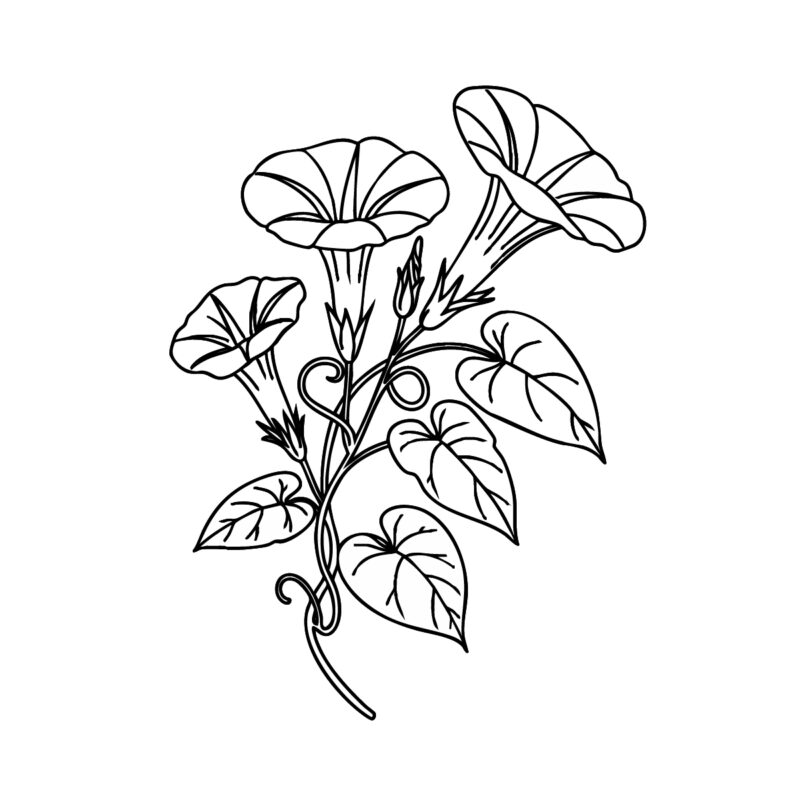
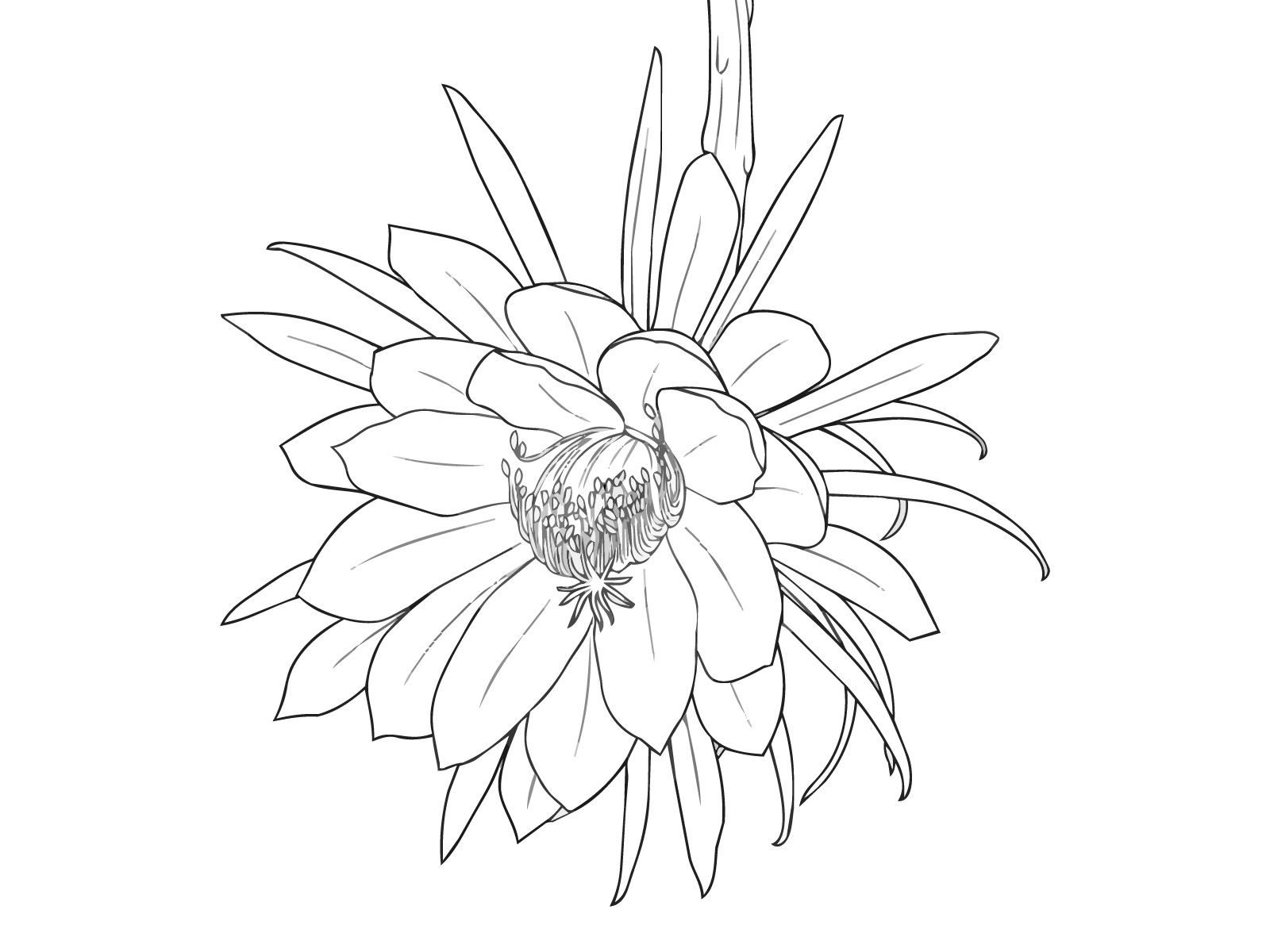
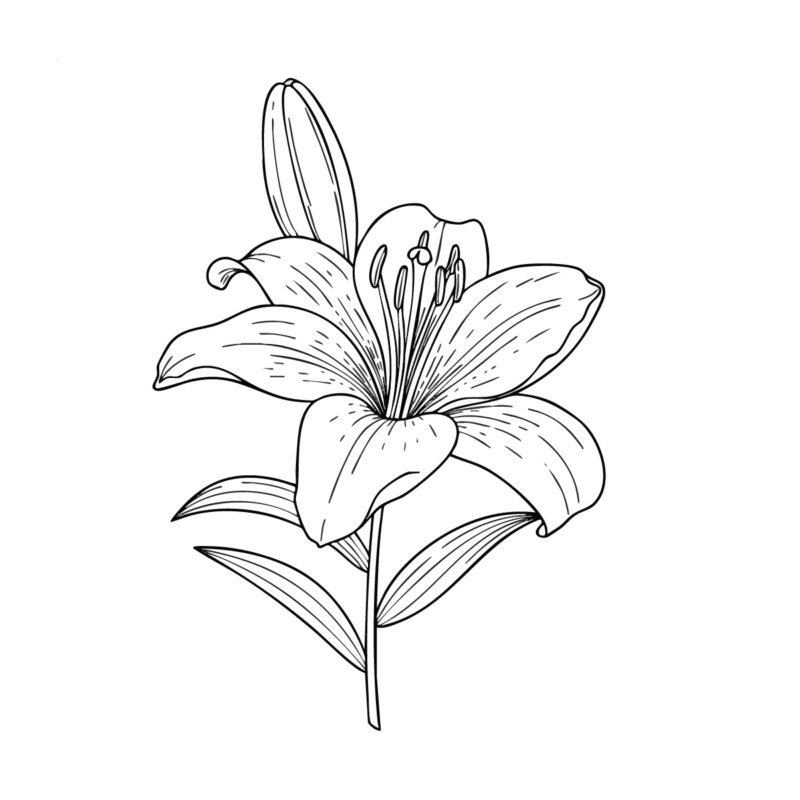
-
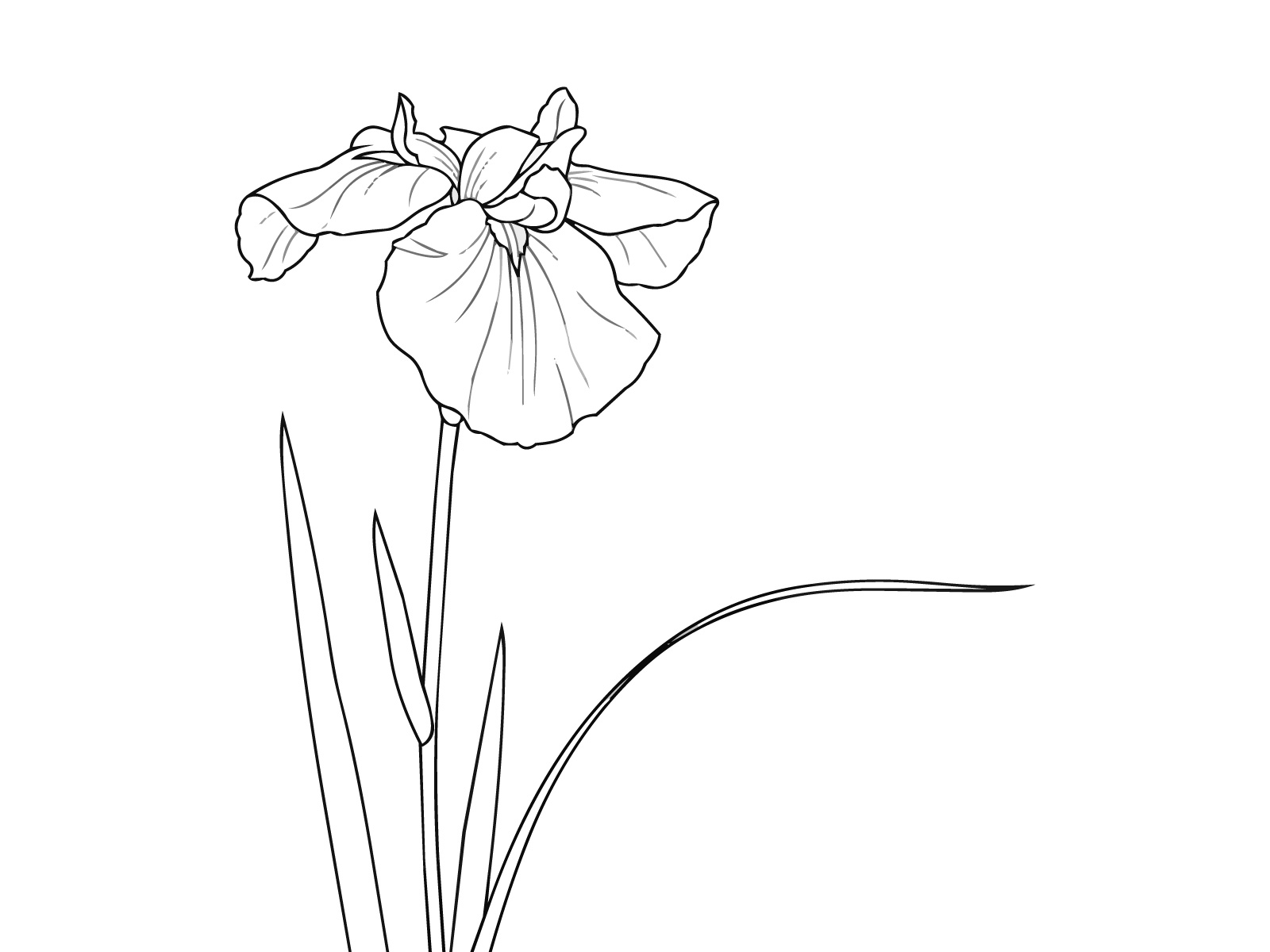
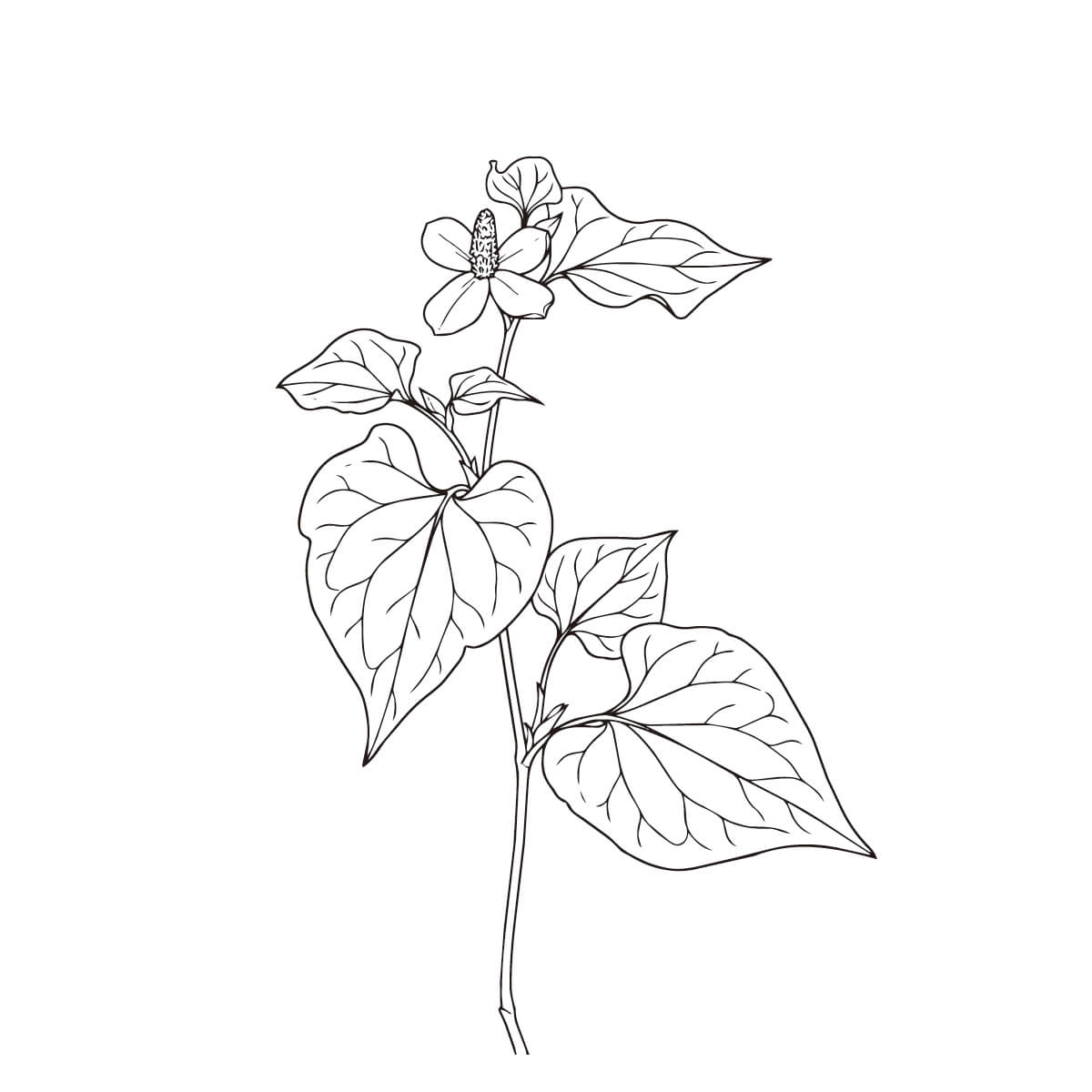
Japanese Iris (1 flower)
-
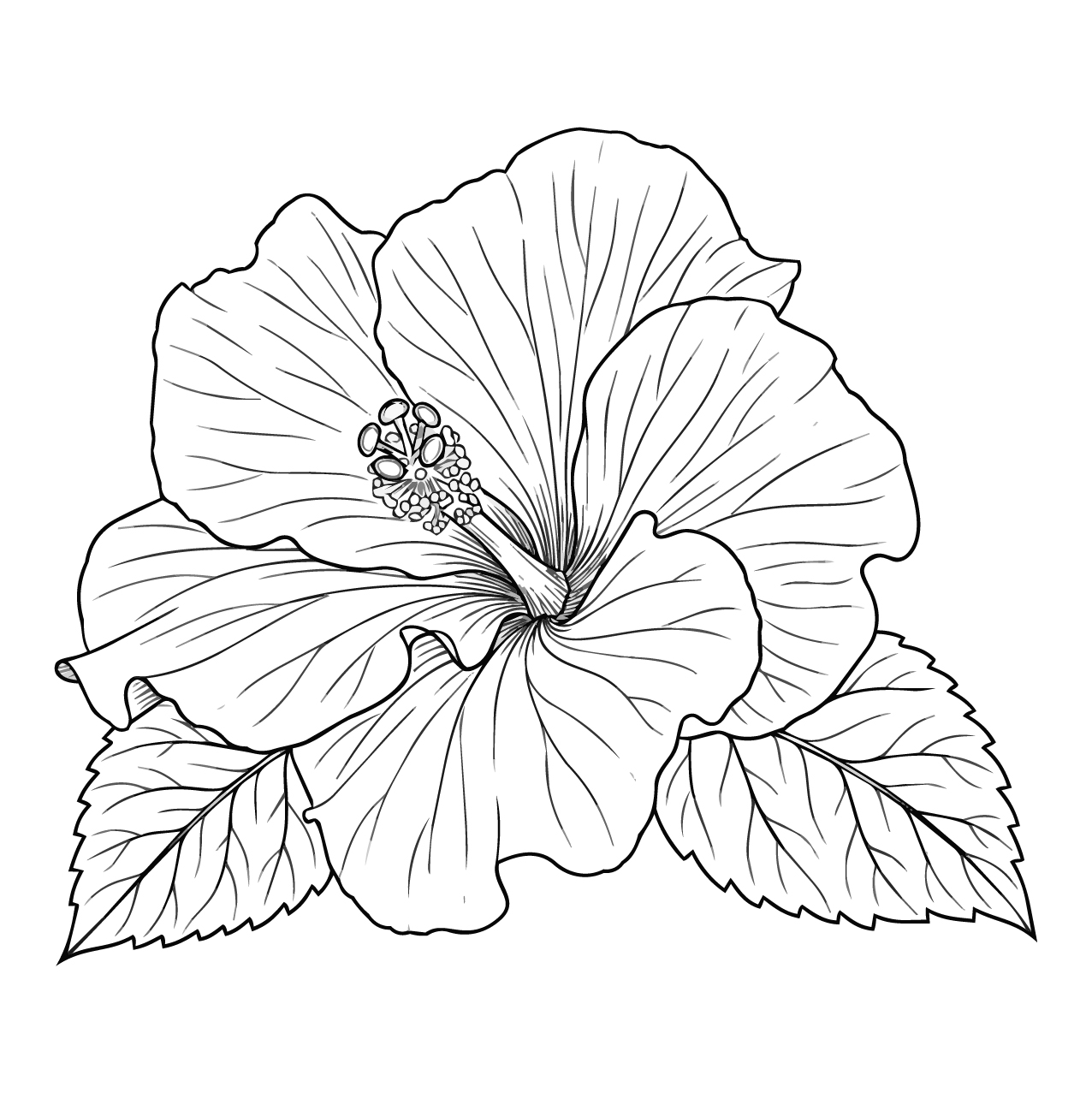
Iris ensata (2 flowers)
-
-
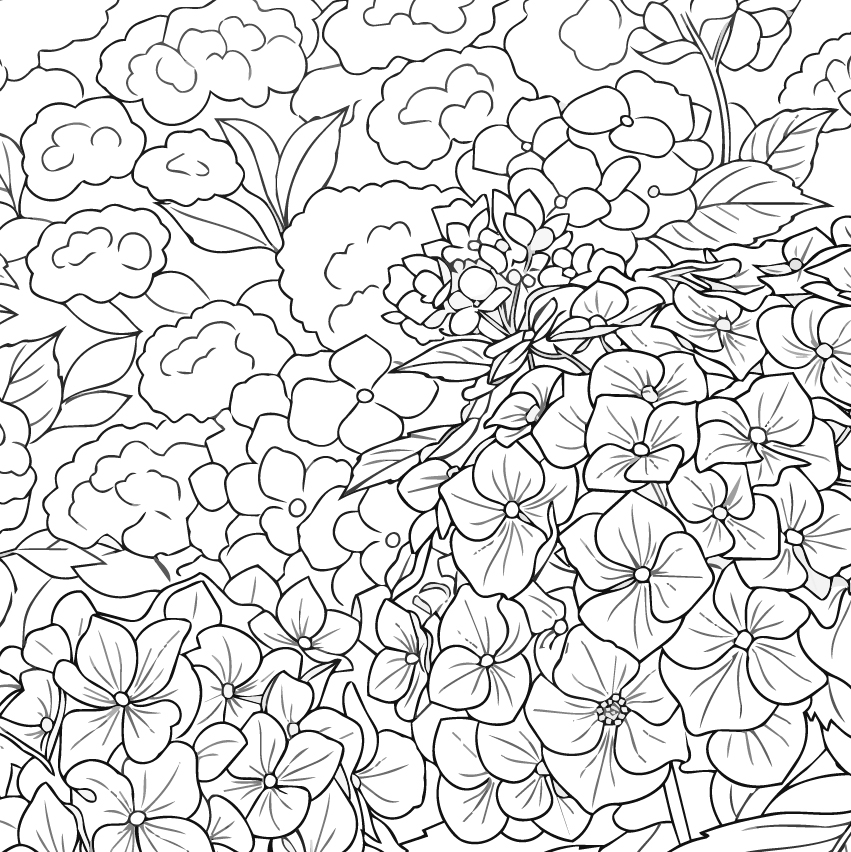
Multiple Japanese Irises
-