Phoenix Hall of Byodoin Temple Coloring Pages
 ~
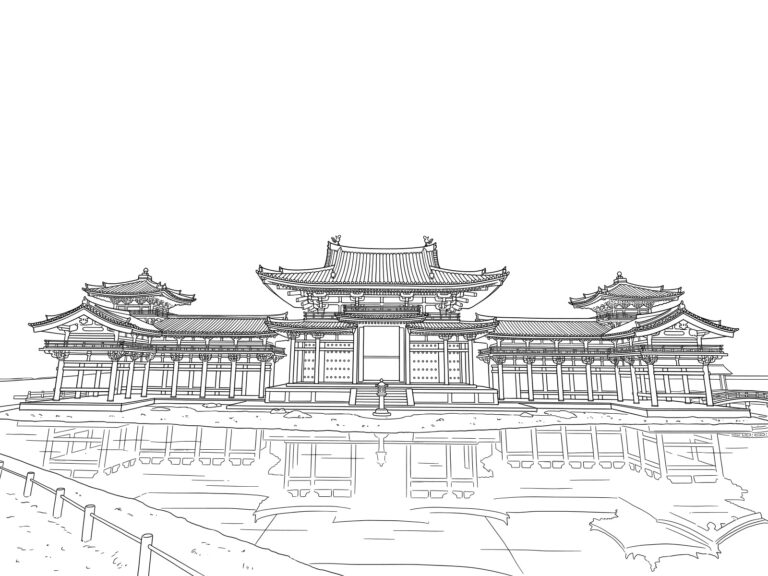

About Phoenix Hall of Byodoin Temple
The Temple on the 10-Yen Coin! Phoenix Hall of Byodoin Temple
Phoenix Hall of Byodoin Temple in Uji City, Kyoto, is the building shown on the 10-yen coin you use every day. If you look closely at a 10-yen coin in your wallet, you can see the hall shaped like a bird spreading its wings. It might just be the building seen by the most people in Japan!
Nearly 1,000 Years Ago! Built in the Heian Period
Phoenix Hall of Byodoin Temple was built in the year 1053, about 970 years ago. It was built by Fujiwara no Yorimichi, the most powerful noble at that time. This spot was originally a villa for his father, Fujiwara no Michinaga, but Yorimichi rebuilt it into a temple. It has never burned down and still stands today just as it was in the Heian period.
Birds on the Roof! Two Phoenixes
If you look closely at the top of the roof, you will see statues of two imaginary birds called phoenixes. There is one on the left and one on the right, facing each other. It came to be called "Phoenix Hall of Byodoin Temple" because of these phoenixes and because the whole building looks like a bird spreading its wings. People started calling it this in the Edo period. When it was first built, it was called "Amida Hall."
The Center and the Wings on Both Sides
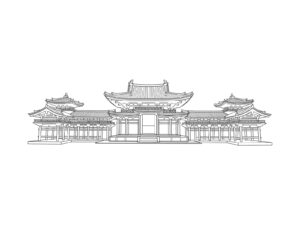
Phoenix Hall of Byodoin Temple is made of four connected buildings. There is the Central Hall in the middle, the North Wing Corridor and South Wing Corridor stretching out on the sides, and the Tail Corridor going out from the back of the Central Hall. The wing corridors are not for people to walk through. They are decorations to make the temple look beautiful. That is why you cannot walk through them inside.
Another Phoenix Hall of Byodoin Temple Reflected in the Pond
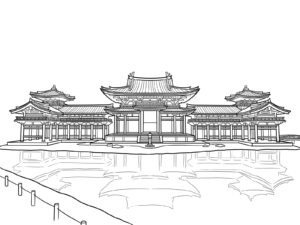
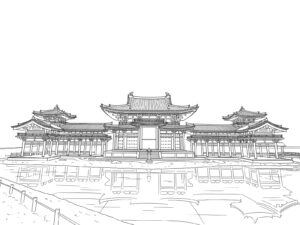
In front of the hall, there is a pond called Aji-ike Pond. On days with no wind, the water reflects Phoenix Hall of Byodoin Temple perfectly. People dug this pond to create a picture of the Buddhist paradise on earth. Holy writings say that "the Buddha of Paradise lives on a pond," so they created a view just like that.
A Great Golden Buddha Inside
Inside the Central Hall, a golden Buddha named Amida Nyorai sits quietly. It was made by Jocho, the most famous sculptor of Buddha statues in the Heian period. The wooden lattice on the front is designed so you can see the Buddha's face even while standing outside.
It Is a World Heritage Site
In 1994, Byodoin Temple was named a World Heritage site as one of the "Historic Monuments of Ancient Kyoto." Uji is a town next to Kyoto City and is also famous for growing green tea. Many people like to drink Uji tea on their way home after seeing Phoenix Hall of Byodoin Temple.
How to Color Phoenix Hall of Byodoin Temple
The building is vermilion. The roof is bluish gray
The pillars and walls of Phoenix Hall of Byodoin Temple are vermilion! Try coloring them a bright reddish-orange. The roof is made of tiles, so a bluish gray is just right. If you make a clear difference between the colors of the roof and the building, it will look just like a real photo!
The Phoenixes on the roof and the top of the towers are gold
The two Phoenixes on the roof and the balls on top of the left and right towers are gold. If you layer a little brown or orange over yellow, it looks heavy like real metal! Changing the color just for these parts makes the whole picture look super cool and sharp.
Leave the round metal fittings on the doors white
The round dots lined up on the center doors are metal fittings. After you color the doors vermilion, leave only these circles white without coloring them. That way, the metal fittings will pop out! If you color over them completely, you will lose this fun detail.
Do not color the space between the pillars black
The spaces between the wing corridor pillars look dark in photos. But it is better not to color them solid black! If you color them lightly with light gray or light blue, people can tell there is space inside, and the building will look 3D.
Change the pond's color from top to bottom
For the pond in front, it is great to change the colors little by little: use blue farther away, and a greenish color closer to you! The secret to the building reflected on the water is to use lighter colors than the real building. If you color them with the same dark shade, you will not be able to tell which one is the real one!
Leave the white gravel mostly uncolored
White gravel covers the ground between the building and the pond. We recommend leaving it mostly uncolored and adding just a tiny bit of light gray. When you leave white areas, the vermilion building looks even brighter!
Fun Facts About Phoenix Hall of Byodoin Temple
There is a Phoenix on Japanese Bills Too
The Phoenix Hall of Byodoin Temple itself is on the 10-yen coin. And on the 10,000-yen bill, you can see the phoenix statue from the roof of Phoenix Hall of Byodoin Temple. That means you might have two things from Byodoin Temple right inside your wallet!
It Was Built in a Year People Thought "The World Would End"
People in the Heian period believed that a scary time called Mappo would start in the year 1052. They thought the Buddha's teachings would lose their power. Fujiwara no Yorimichi turned his villa into a temple in that exact year. He built a paradise on Earth maybe because he felt so worried about the future.
People Started Calling It "Phoenix Hall of Byodoin Temple" in the Edo Period
When it was first built, its name was "Amida-do". People started using the name Phoenix Hall of Byodoin Temple after big repairs around the year 1670. It is a rare building that got a new name almost 900 years after it was made!
You Cannot Walk Through the Wing Corridors
The wing corridors stretching to the left and right look like grand hallways. But people cannot actually walk through them. The floors are too low and the ceilings are too low, so you cannot pass through inside. They were made just to look beautiful, which is very rare for a building!
Share These Phoenix Hall of Byodoin Temple Coloring Pages


More Castles, Shrines & Temples Coloring Pages
-
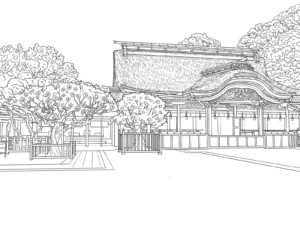
Dazaifu Tenmangu Shrine
Difficulty:~ -
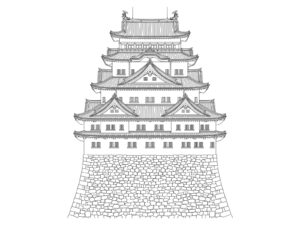
Nagoya Castle
Difficulty:~ -
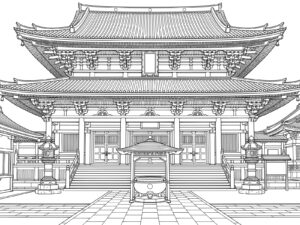
Kawasaki Daishi Temple
Difficulty:~ -
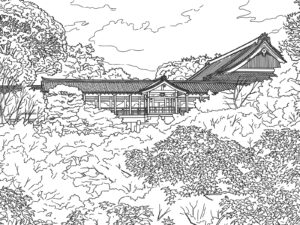
Tsutenkyo Bridge at Tofukuji Temple
Difficulty:~ -
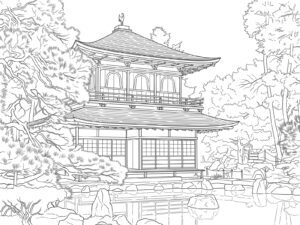
Ginkaku-ji Temple
Difficulty:~ -
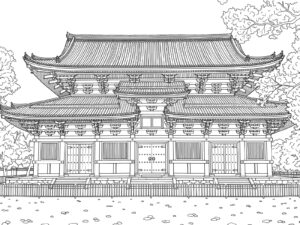
Kondo (Main Hall) of Toji Temple
Difficulty:~ -
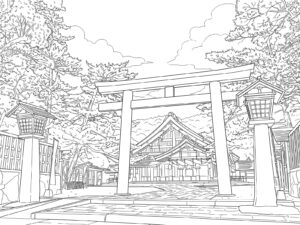
Izumo Taisha
Difficulty:~ -
Kaminarimon Gate at Senso-ji
Difficulty:~
-
Phoenix Hall of Byodoin Temple
-
Aji-ike Pond at Byodoin Phoenix Hall
-
-
Byodoin Phoenix Hall Adult
-