Humpback whale Coloring Pages
 ~
~ 

About Humpback whale
A big whale that swims like it is "flying" through the ocean
The Humpback whale is a very big whale that can grow to about 13 to 14 meters long and weigh 30 to 40 tons. Imagine a creature the size of a school gym jumping right out of the ocean in front of you!
The coolest thing about this whale is how it uses its long pectoral fins, which look like bird wings. It spreads them wide and swims through the sea as if it is gently flapping them.
Its name comes from the "Zatou," who carried a biwa on their back
If you write "Humpback whale" in kanji, it is 座頭鯨. Long ago, there were traveling musicians called "Zatou" who played an instrument called the biwa.
The round shape of the whale's back, just before it dives into the sea, looked just like a Zatou carrying a biwa on their back. That is why people say it got this name. Isn't it neat that old Japanese history is hidden in the Humpback whale's name?
The biggest mark is its chest fins, which are as long as 1/3 of its body
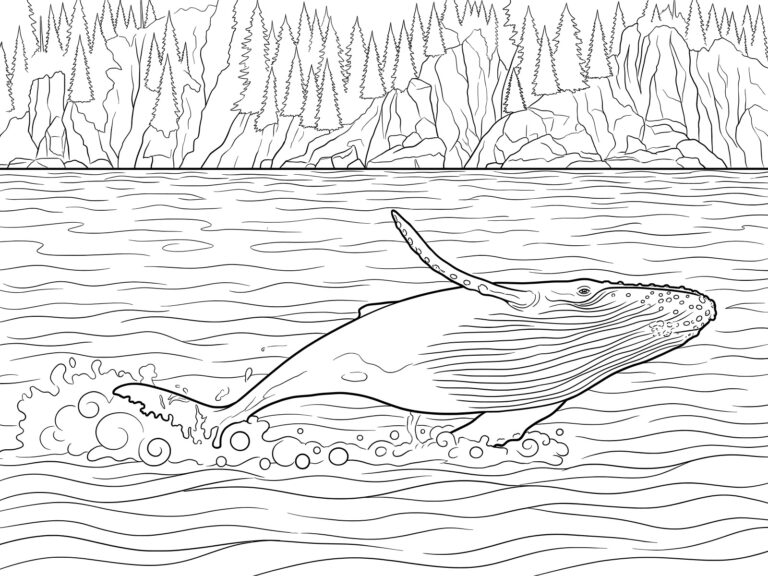
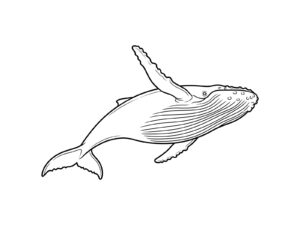
Take a look at the first coloring page. You can see a long, thin fin raised way up high, right? This is the pectoral fin. Wow, it is as long as one-third of its whole body!
This is super long compared to other whales. The scientific name for the Humpback whale is Megaptera, which means "big wings" in Greek. If you look closely, you can see the front edge of the pectoral fin is bumpy. It has a row of little bumps here too.
The bumps on its head are sensors for feeling things
Did you notice the bumpy round knobs lined up on top of its head and on its lower jaw? These are called tubercles, and hair grows from the top of each one.
People think that the Humpback whale might use this hair to feel the movement of the water around it. Lots of barnacles often stick to these knobs too, which makes the Humpback whale's face look even bumpier.
A Big Jump Out of the Water
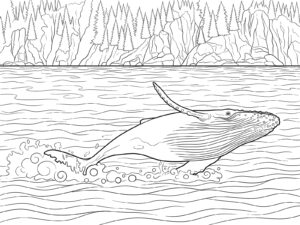
The Humpback whale can do a big jump where two-thirds of its body, or sometimes its whole body, leaps right out of the sea! People call this breaching. The third coloring page shows this very moment.
Its 30-ton body flies into the air and splashes back down with a huge crash. We still do not know for sure why they jump. Maybe to knock bugs off their body, maybe to send a sign to friends, or maybe just to play—there are many ideas, but no one knows the answer yet!
They catch fish with a bubble net
The Humpback whale blows bubbles from the hole on top of its head while swimming around and around a school of fish. Then, the bubbles make a round curtain that traps the fish inside.
Next, the Humpback whale comes up from below with its mouth open wide and swallows them all at once! This method is called bubble-net feeding, or "bubble net fishing" in Japanese. It is a smart way to eat, and sometimes they work together with their friends to do it. Usually, the Humpback whale eats small shrimp-like creatures called krill and little fish like herring.
In the winter, they come to the seas of Japan
The Humpback whale is a whale that travels far depending on the season.
In summer, they eat plenty of food in the cold northern seas like the Okhotsk Sea and the Bering Sea. Then in winter, they come to the warm seas of Okinawa and Ogasawara to give birth and raise their babies. They arrive in Okinawa around December and head back to the northern seas when spring comes.
How to Color Humpback whale
Dark Back, White Belly and Flippers
The Humpback whale has a dark gray or black back, and a white belly. If you change colors around the middle of its body, it will look super real!
Many Humpback whales have pure white on the inside of their long flippers. Leave this part white! Your coloring page will look really cool with the white flippers standing out against the dark body.
Go Gentle on the Throat Lines
Do you see many long lines running from the throat to the belly? These are called ventral pleats. They help the Humpback whale puff out its throat like a big pouch when it eats food.
These lines are small. If you color hard with dark colors, the lines will disappear. Color gently with a light color so you can still see the lines. You can even try using different colors for every other line to make a fun pattern!
Leave the Center of the Bumps White
Here is a trick for the round bumps on its head and lower jaw: don't color the whole inside! Color lightly along the edge of each circle and leave the center white. This makes them look like they are popping out! You can also leave a few bumps completely white instead of coloring them all the same.
Make Your Own Tail Fin on the Second Page
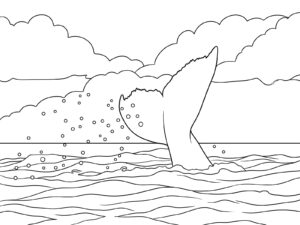
Every single Humpback whale has a different tail fin pattern! That means on the second coloring page, you can draw any pattern you like on the tail fin. Black and white patterns, stripes, or star shapes—make a Humpback whale that is the only one in the whole world!
Light Waves, Dark Whale on the Third Page
On the third page, wave lines fill up the whole picture. If you color them all dark, the Humpback whale will get lost in the waves.
Use light blue for the waves and dark colors for the Humpback whale. When you use light and dark like this, the star of your picture will pop out! If you make the forest and rocks in the background even lighter, they will look far away.
Fun Facts About Humpback whale
The pattern on the tail fin is like a fingerprint
The pattern on the belly side of the tail fin and the bumpy shape on the edges of a Humpback whale are completely different for every single whale. So, researchers take photos of tail fins lifted high when the whales dive to say, "This whale is that one!" It is used just like human fingerprints.
In Zamami, Okinawa, more than 1,800 whales have been identified so far. Among them, a whale with a pattern like the letter Z on its tail fin is a famous one that has been seen in the same sea for more than 30 years.
Only males sing songs
The Humpback whale is famous all over the world as a whale that sings songs. They sing a "song" combining low and high voices for 20 to 30 minutes in a row.
Only males in the breeding seas sing. And surprisingly, the whales in the same sea all sing the same song, and that song changes little by little over the years. It is just like a popular hit song spreading around!
Its scientific name means "big wings"
The scientific name of the Humpback whale is Megaptera novaeangliae. The first part, Megaptera, means "big wings" in Greek. The people who saw those long pectoral fins must have thought they were wings.
The Japanese name comes from the shape of its back, and the scientific name comes from its pectoral fins. It is fun that even for the same whale, different countries notice different things!
A whale you can meet in Japan, too
From winter to spring, you can go on a boat to see Humpback whales in the Kerama Islands of Okinawa and the Ogasawara Islands. In Okinawa, you can see them from around December to around May, especially from February to April. If you are lucky, you might see that huge jump right in front of your eyes!
Share These Humpback whale Coloring Pages


More Dolphins & Whales Coloring Pages
-
Humpback whale
-
Humpback whale tail fin
-
-
Humpback whale breaching
-
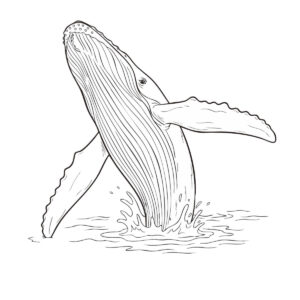
Humpback Whale Big Jump
-