Combine harvester Coloring Pages
 ~
~ 
About Combine harvester
The Name Means "Combined"
Combine harvester is a working vehicle that helps in the autumn rice fields.
Its name comes from the English word combine. It means "to put things together."
A long time ago, the machine that cut the rice plants and the machine that removed the rice grains were separate. This name was given because both machines were combined into one.
As it drives, Combine harvester does four jobs all at once: cutting, threshing, sorting, and storing.
The Boards Sticking Out in Front Separate the Rice Plants One Row at a Time
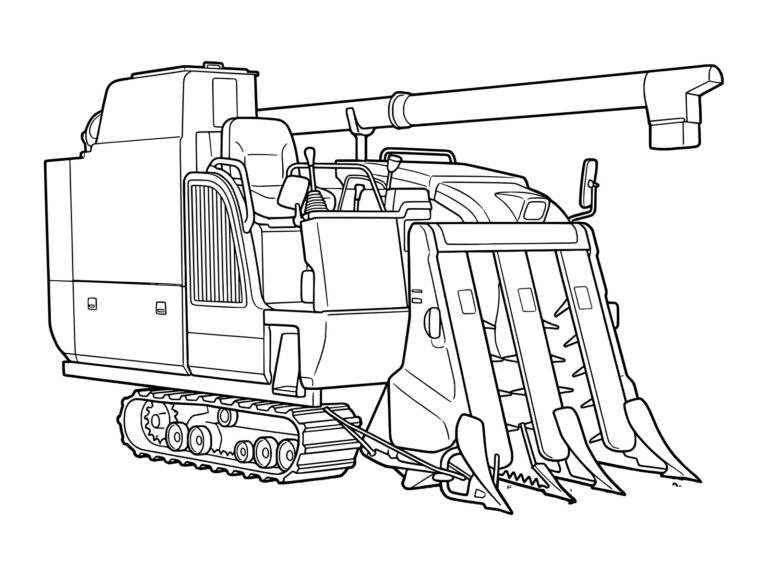
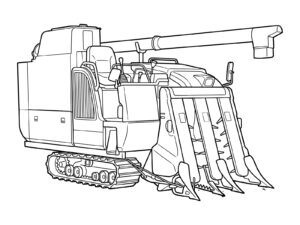
Can you see the long, thin boards sticking out from the front of Combine harvester? These are called dividers.
They have pointed tips that curve slightly up like a sled. They slide between the rice plants in the field and do the job of separating the rice plants to cut from the ones to leave behind.
Right behind them, a spinning part called the pickup reel pulls the rice plants in, and the cutting blade at the very bottom snaps the stems near the roots. It is a big blade like a pair of hair clippers, lined with jagged, triangular teeth.
It Drives on Crawler Tracks, Not Tires
The feet of Combine harvester are not tires. They are crawler tracks like a bulldozer.
Rice fields during harvest time are much softer than they look. If it had tires, it would sink deep into the mud and get stuck.
The crawler tracks spread the weight of the vehicle across a long belt, so the pressure on the ground is light and spread out. That is why it can keep moving without sinking, even in muddy rice fields.
The Rice Grains Collect in a Tank Inside the Body
The cut rice plants are carried right inside the vehicle. Inside, a spinning part called the threshing drum rubs the stalks to pull off only the rice grains. This is called threshing.
After the rice grains are pulled off, wind blows away the light bits of dirt to sort them out. Then, the grains collect in a box on top of the vehicle called a grain tank.
When the tank is full, a long pipe extending from the side pours the grains into a waiting truck. This pipe is called an unloading auger. When you are not using it, it stays folded on top of the vehicle.
The Leftover Straw Is Cut into Small Pieces and Put Back into the Rice Field
What do you think happens to the straw after the rice grains are taken off?
There is a blade called a cutter at the back of the vehicle. It cuts the straw into small pieces about 5 to 15 centimeters long and scatters them right onto the rice field.
During the winter, a tractor plows the scattered straw into the soil, and it becomes food for the next year's rice field. It is not being thrown away—it is being returned to the soil!
How to Color Combine harvester
Color the Body in Two Colors: Red and White
Japanese Combine harvesters often come in a mix of red and white, or orange and white.
If you color the top half white and the bottom half red, it will look super real! There are also green and blue ones, so using your favorite color is totally okay, too.
If you can't decide, try coloring the grain tank white and the cutting head red. Coloring them this way helps you see what each part does!
Color the Tracks Gray and Leave the Grooves White
If you color the tracks at the bottom pure black, you won't be able to see how they work.
We recommend that you color them dark gray and leave the sideways lines white. This shows how the rubber belts loop all the way around.
Color the round wheels inside with a lighter gray. That way, everyone can tell the belts and wheels are different parts!
Use Two Shades of Yellow for the Rice Plants
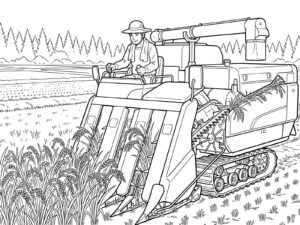
The best part of this coloring page is the rice plants on the left side!
Try coloring the ripe rice heads dark yellow, and the stems and leaves light yellow-green. Just using two colors shows how heavy the rice heads are as they hang down.
You don't need to color every single grain of rice. Just color the whole bunch yellow and leave the lines between the grains white. That is more than enough!
Color the Cut Field Light Brown
After the Combine harvester passes by, short stubble is left behind. Color it light brown or yellowish-brown.
When it sits next to the yellow rice that hasn't been cut yet, everyone can see at a glance how much rice has been cut!
You can leave the ground between the stubble white without coloring it. That will make the stubble pop right out!
Leave the Sky White and Color the Forest Dark Green
There are no lines drawn for the sky at the very top, right? The best choice here is to leave it white.
Instead, try coloring the cedar forest in the back dark green. Making the background dark makes the yellow rice and Combine harvester in front stand out even more!
Fun Facts About Combine harvester
Made in Japan: The "Head-Feeding" Type
There are two main types of Combine harvester.
The first is the Conventional type. It puts all the cut rice or wheat right into the machine, and people use it in big fields in Western countries. It can harvest both wheat and soybeans.
The other is the Head-feeding type. It carries the rice plants standing straight up, and puts only the tips with the grain into the threshing part.
This head-feeding type was born in Japan in 1966. It keeps the rice grains safe and reduces spills. Japanese rice fields are small, so this easy-to-turn shape became popular. The Combine harvester in your coloring page is this head-feeding type, too!
Harvesting Used to Take Many Days
Before the Combine harvester existed, harvesting rice was a big job for the whole family.
First, they cut the rice plants with a sickle. Next, they tied the cut rice into bundles and hung them on wooden racks called Hasa to dry for days. Once dry, they ran them through a threshing machine to remove the rice grains.
It took many days just for one rice field!
The Combine harvester does all of this while driving! This machine completely changed autumn rice fields.
Harvesting Starts After the Morning Dew Dries
Harvesting rice with a Combine harvester usually happens from late morning to evening.
Early in the morning, the rice plants are wet with morning dew. If you cut them wet, the plants stick together and clog the machine, and the rice grains get moldy more easily.
So farmers wait for the sun to dry the rice plants before they start.
That is the same reason why they do not harvest rice on rainy days!
It Harvests Slower Than You Walk
A Combine harvester cuts rice at a speed of about 1 to 3 kilometers per hour. That is slower than a person walking slowly!
It is not that it cannot go fast. It cuts, threshes, sorts, and stores all at the same time—doing four jobs at once! So, it can only move as fast as the machine can handle the rice plants.
If it rushes, the machine cannot keep up, and rice grains will spill outside. Moving slowly is the best way to harvest!
Share These Combine harvester Coloring Pages


More Work Vehicles Coloring Pages
-
Combine harvester
-
Rice combine harvester (detailed)
-