Ten-spotted ladybird Coloring Pages
 ~
~ 
About Ten-spotted ladybird
A member of the ladybird family that eats garden leaves
Ten-spotted ladybird is a member of the ladybird family. While normal ladybirds eat pests called aphids, Ten-spotted ladybird eats leaves, so farmers treat them as "pests."
Where its name and English name come from
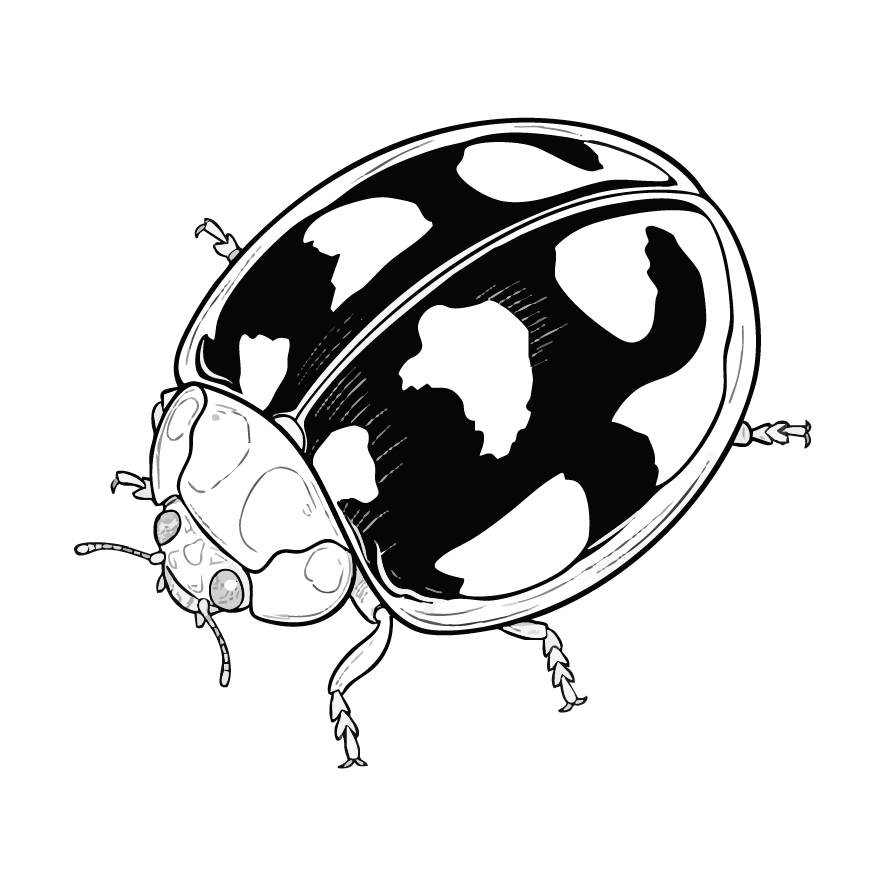
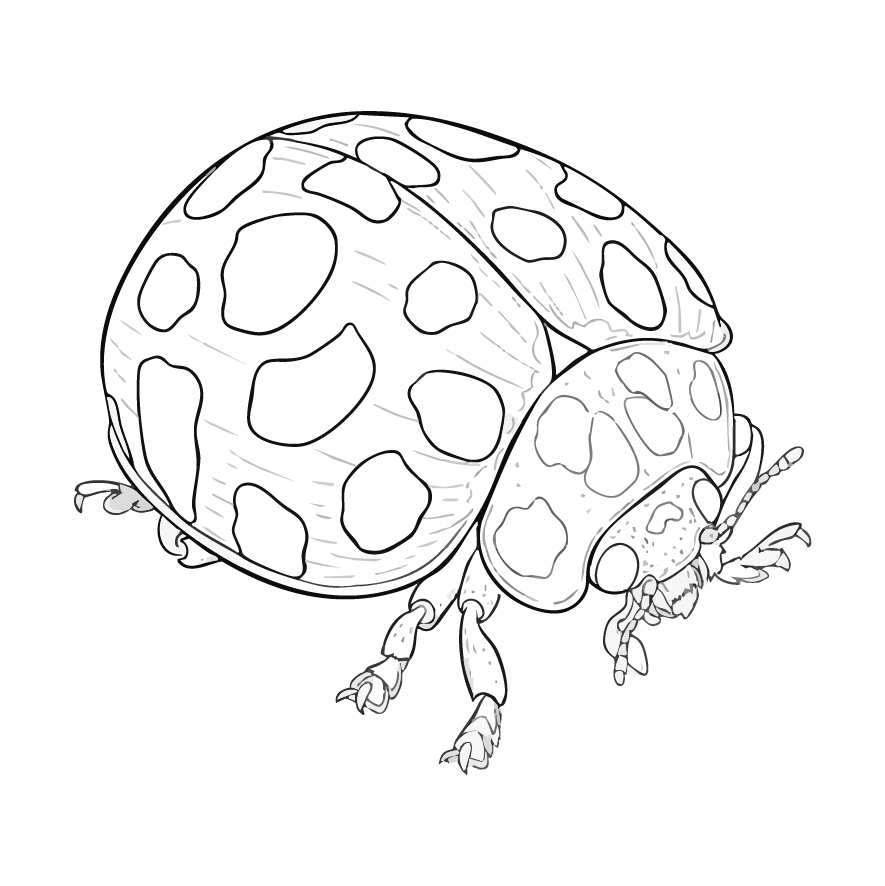
The name of Ten-spotted ladybird comes from the pattern on its body.
- Where its Japanese name comes from: Just like its Japanese name says, it got this name because it has ten black spots (dots) on its back.
- English name: In English, it is called "Potatoleaf Ladybird" or "Ten-spotted Lady Beetle." "Potato Leaf" means potato leaves, and it got this name from its habit of eating potato leaves.
What are its traits and lifestyle?
Ten-spotted ladybird has traits just like common ladybirds, except that it eats plants.
- What it eats: It eats garden leaves like eggplants, tomatoes, and potatoes.
- Body features: Its body is round and shiny, and its color is orange or reddish-brown.
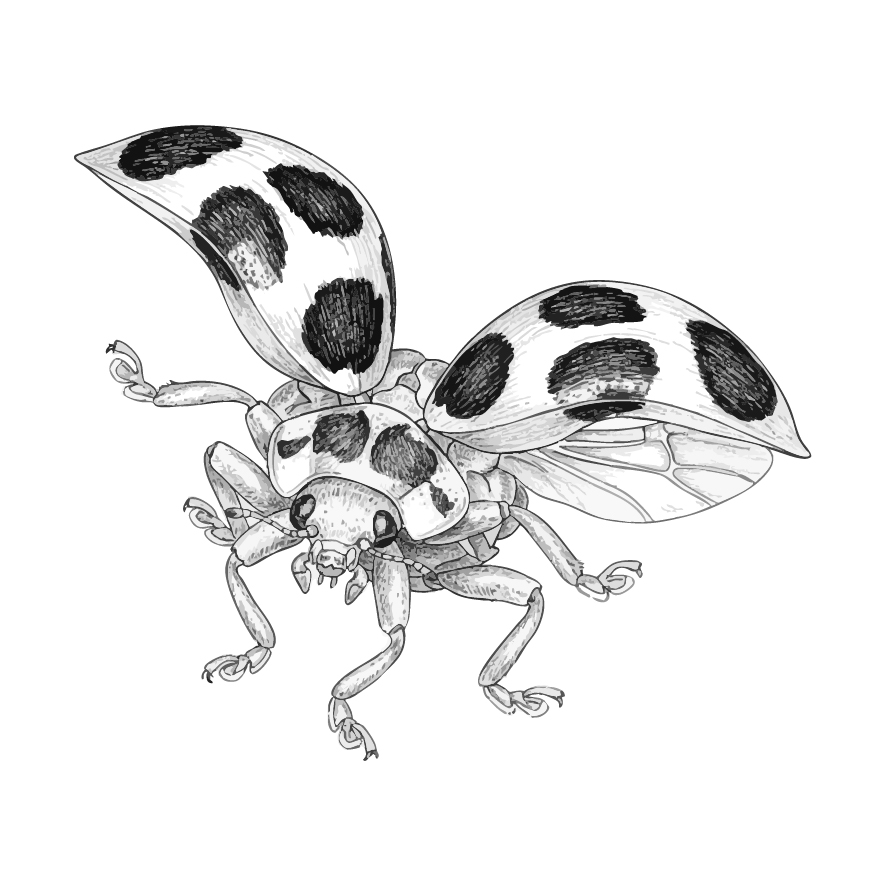
- Good at flying: It is good at flying by opening only its back wings, without spreading its hard front wings.
When and where you can find it
- When to see it: You can mostly see it from spring to autumn.
- Where it lives: It is often on the back of leaves of nightshade family plants in fields and gardens.
How to Color Ten-spotted ladybird
How to choose your colors: Use bright reddish-brown and black spots!
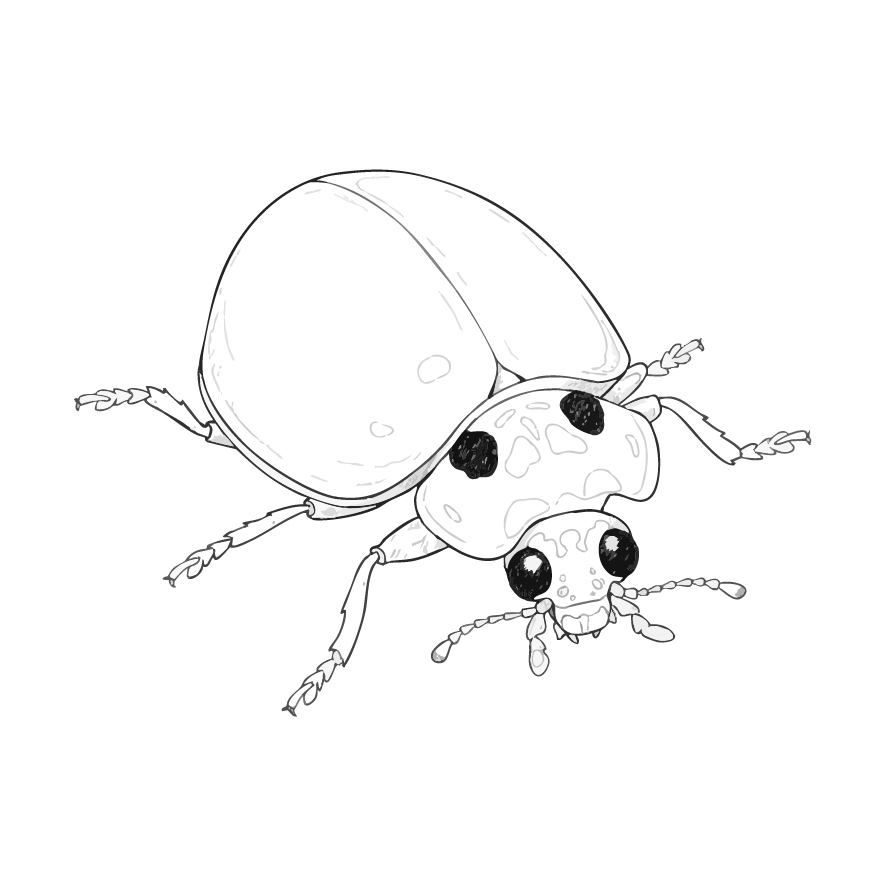
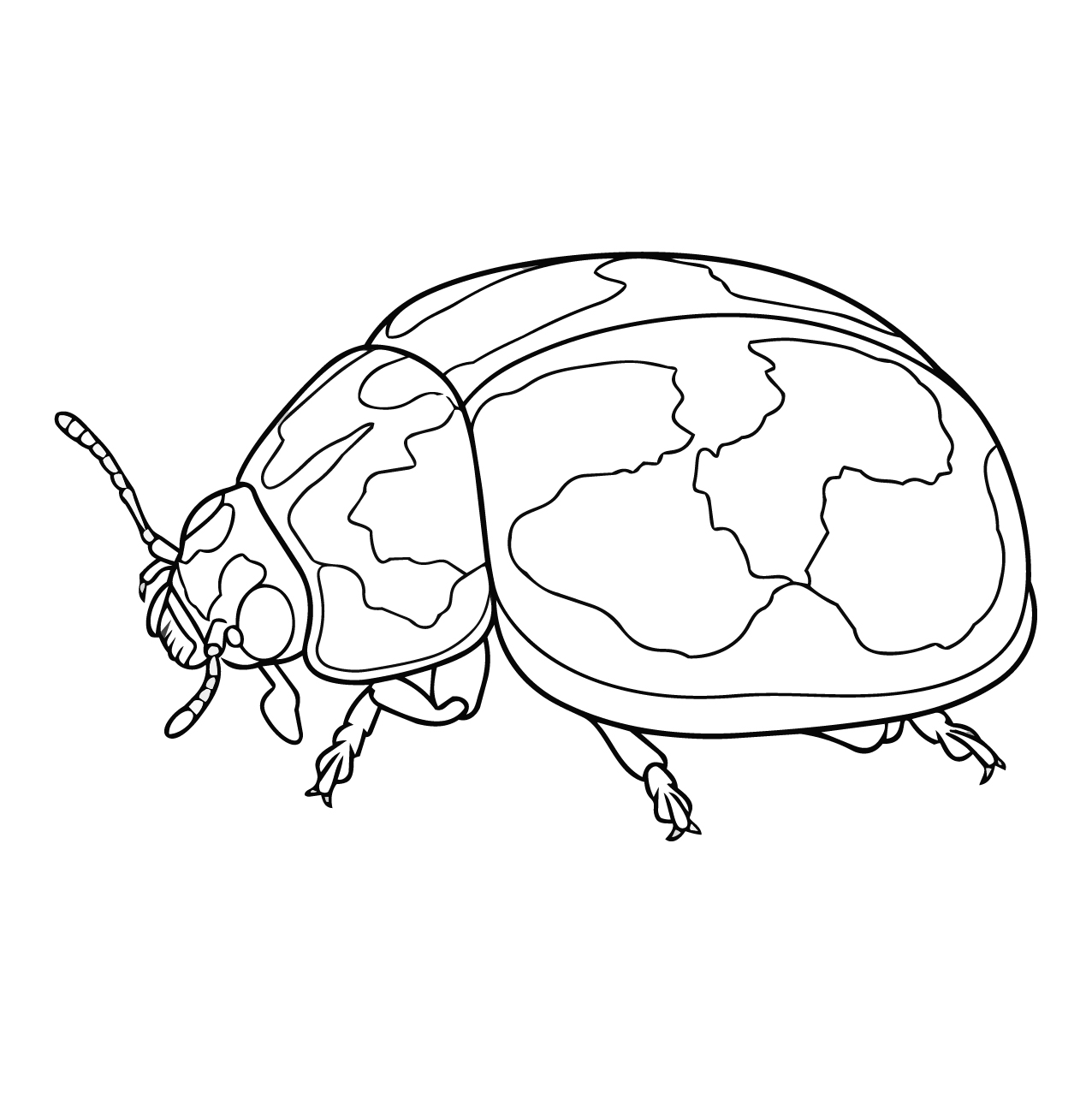
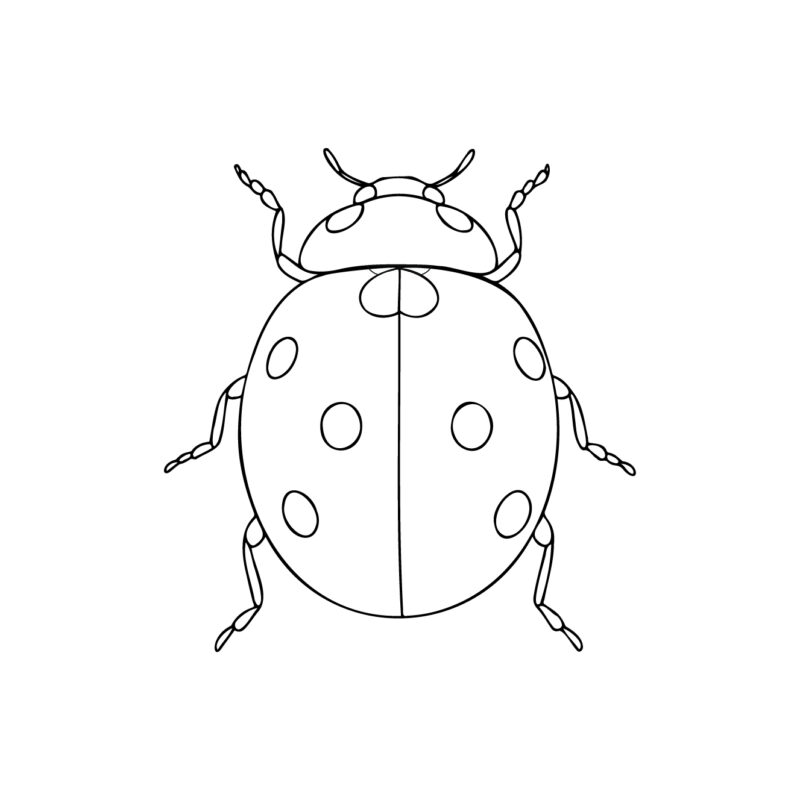
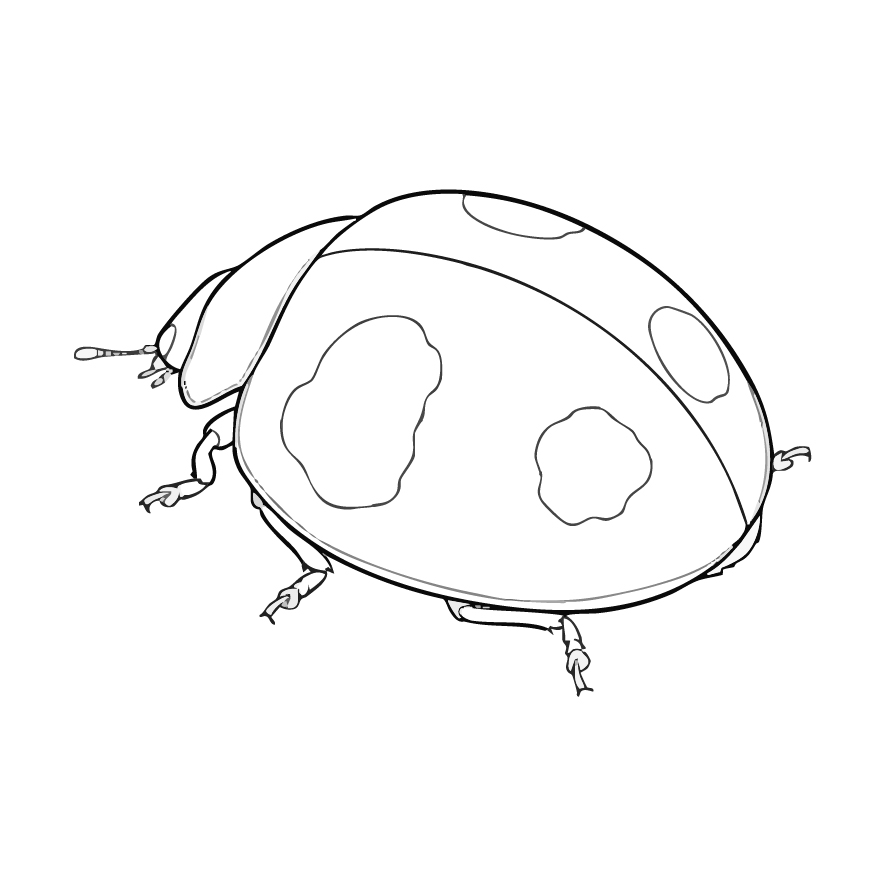
For your Ten-spotted ladybird coloring page, let's focus on its bold pattern of a round body with ten black spots.
- Basic colors: Pick mostly orange, reddish-brown, black (for spots and legs), and light brown (for leaves).
Colors for each part:
- Body color: Color its back using bright orange or reddish-brown as your main color.
- Spot pattern: Color the ten spots on its back with deep black and make them neatly round. This makes the features of the Ten-spotted ladybird really pop!
- Head and legs: Color the head and legs with black or dark brown to make them look sharp and clear.
- Shiny shell: The body is smooth and shiny! Use a lighter color or a white line where the light hits to give it a glossy look.
How to make it look 3D: Show off the round shape and shiny look!
To show the round body and glossy shine of the ladybird, think about where the shadows and highlights go. Places with shadows:
- Add shadows to places that don't get direct light, like the bottom of the body, under the head, and around the spots. Use a darker brown than your main color to show off the round body shape.
Places with light:
- Use bright orange or a white dot where the light hits, like the very middle of its back, to show off its smooth shine.
Let's add texture!
Colored pencils: If you color smoothly and evenly, you can show off the smooth texture of the ladybird. How to color: Try blending orange and reddish-brown together to get a deep, natural color.
Tips to enjoy your coloring page!
- Garden leaves!
- If you add green eggplant or tomato leaves in the background, it will look like the Ten-spotted ladybird is munching on a leaf, which is super fun!
- Round and cute!
- Keep the round shape in mind and color gently to make a very cute ladybird!
Share These Ten-spotted ladybird Coloring Pages


-
Seven-spotted ladybird adult
-
Ten-spotted ladybird adult 2
-
-
Harlequin ladybird larva
-