Liopleurodon Coloring Pages

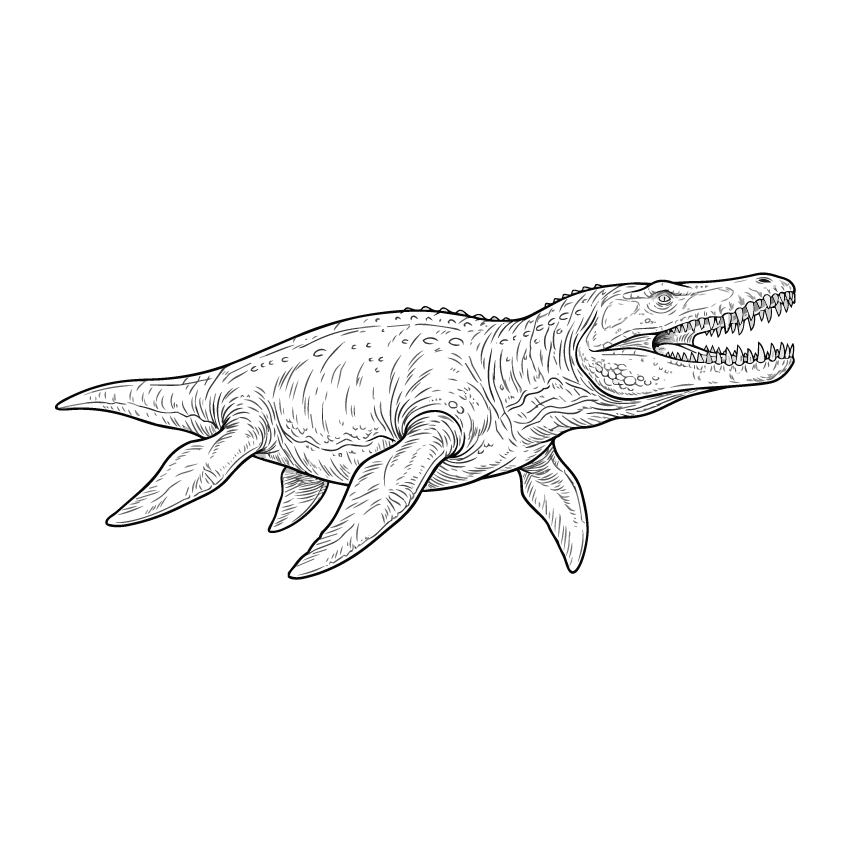
About Liopleurodon
English Name
The English name for Liopleurodon is written as "Liopleurodon". It is super famous all over the world as a sea dinosaur (to be exact, a relative of plesiosaurs)!
Name Origin: Smooth Teeth
The name Liopleurodon comes from Greek, and it means "smooth-sided teeth".
-
It got this name because the surface of its teeth was smooth with fewer grooves compared to its relatives.
-
But do not be fooled just because they were smooth! They were scary weapons that would never let go once they bit down.
When and Where It Lived
Liopleurodon lived about 160 million to 155 million years ago in a time called the Jurassic period.
-
It mostly lived in the seas near modern-day Europe (like the UK and France).
-
In the ocean back then, it ruled as the strongest hunter with no enemies at all.
What Did It Eat? Tyrant of the Sea
Liopleurodon was a meat-eating hunter that ate almost any creature in the ocean.
-
Scientists think it hunted fish, squid, and even other plesiosaurs and ichthyosaurs.
-
It swam freely in the sea and attacked prey at top speed. It was a scary tyrant of the ocean.
Difference Between Liopleurodon and Mosasaurus
The famous big sea creature Mosasaurus looks similar, but the time it lived and its body shape were totally different. Use this as a guide when you color your coloring page!
-
Time It Lived: Liopleurodon lived in the Jurassic period. Mosasaurus lived much later in the Cretaceous period. So, these two never met in the ocean.
-
How It Swam: Liopleurodon swam by flapping its four big flippers (paddles) like bird wings. But Mosasaurus wiggled its long tail to swim like an alligator.
-
Family: Liopleurodon is a relative of plesiosaurs. Mosasaurus is closely related to lizards.
Huge Head and Scary Jaws
The biggest feature of Liopleurodon is that its head was super huge compared to its body.
-
They say its head made up about one-fourth of its whole body length.
-
Some experts think its bite was stronger than Tyrannosaurus Rex. It could crunch right through big prey.
Swimming Smoothly with Four Paddles
Liopleurodon had four large flippers in the front and back.
-
By moving them one after another, it could speed up fast or turn quickly underwater.
-
People think it was a powerful swimmer, almost like a submarine in the sea.
An Amazing Sense of Smell
Liopleurodon had a super well-developed nose.
-
They say it could smell prey just from the flow of the water.
-
It could find exactly where far-away prey was hiding. It was just like a detective of the sea.
How to Color Liopleurodon
How to Choose Colors: Make It Look Like a Sea Ninja!
Big ocean hunters had colors that helped them hide from their prey!
-
Back Colors: Try using "dark blue, black, or dark gray" so it blends into the deep ocean when seen from above.
-
Belly Colors: Use "white or cream color" so it blends in with the bright sunlight when seen from below. This makes it look like a real sea creature!
-
Patterns: Add some soft "spotted patterns" on its back. It will look super cool, just like sunlight glittering on the water!
Tips for Skin Texture
People think Liopleurodon had smooth skin, just like whales or sharks today.
-
Make It Shiny: Lay your colored pencil flat and gently color in small circles.
-
Show Wrinkles: Trace the "neck wrinkles" and "lines near the flippers" on your coloring page with a slightly darker color. This gives Liopleurodon a big, powerful feel!
Make the Sharp Teeth and Mouth Look Cool!
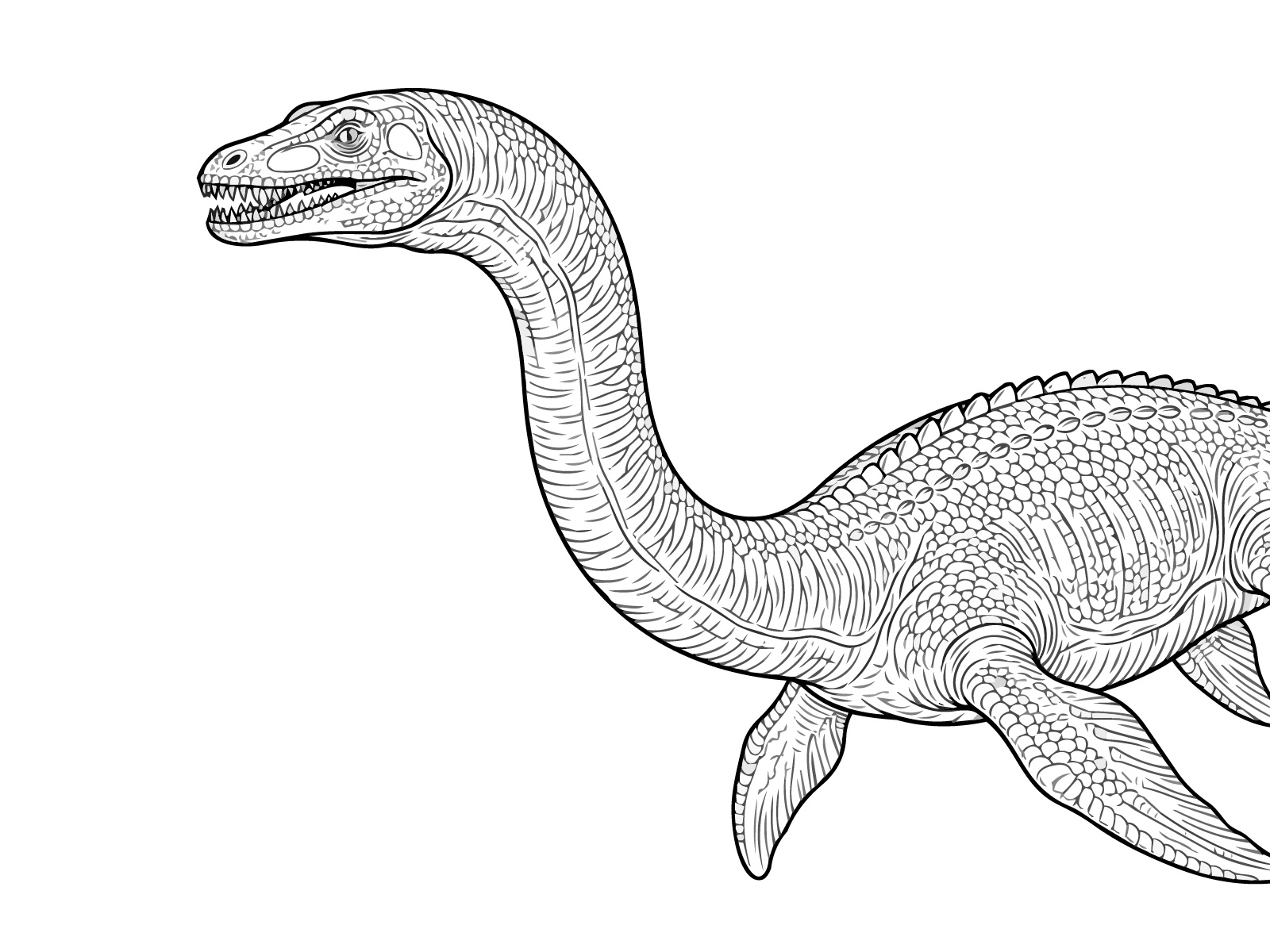
This coloring page shows a super exciting pose with its big mouth wide open!
-
Coloring the Teeth: Carefully color each tooth with "white or light beige". Add a little gray at the base of the teeth to make them look 3D and extra sharp!
-
Inside the Mouth: Color the back of the mouth with "dark red or pink". It will look so real, you can almost hear a mighty roar!
Show the Ocean Light
Liopleurodon swims deep down in the ocean.
-
Sunbeams: Color near its back with a lighter blue, or use an eraser to make soft lines. This creates "rays of sunlight" shining down!
-
Water Splashes: Draw little white dots around its flippers to show it swimming super fast!
Use your imagination to finish this powerful Liopleurodon, the strongest hunter of the Jurassic seas!
Fun Facts About Liopleurodon
The Name Means "Smooth-Sided Tooth"
The name Liopleurodon means "smooth-sided tooth" in Greek. Just like its name says, it had lots of sharp, strong teeth so it would never lose a prey once it caught it.
The Strongest Ocean Hunter
It is known as the most scary "strongest meat-eating reptile" in the seas of the Jurassic period. Scientists think it used its big head and powerful jaws to eat fish, squid, and even sea creatures as big as itself.
Swimming Freely with 4 Flippers
Its body had four big flippers shaped like boat oars, and it used them to "swim powerfully" through the sea. Just like sea turtles today, it is said to have moved its flippers up and down to glide quickly through the water like flying.
An Amazing Sense of Smell!
It is believed that Liopleurodon had an extra-special "ability to smell things" even underwater. By comparing how strong a smell was between its left and right nostrils, it was an amazing hunter that could figure out exactly which direction its prey was in.
Actually a Short-Necked Plesiosaur
Even though it belongs to the same "plesiosaur" group as long-necked friends like Futabasaurus, Liopleurodon is special because it had a "short neck and a very big head." It was a star of the sea that evolved to bite harder rather than grow a longer neck.
Share These Liopleurodon Coloring Pages


-
Liopleurodon
-