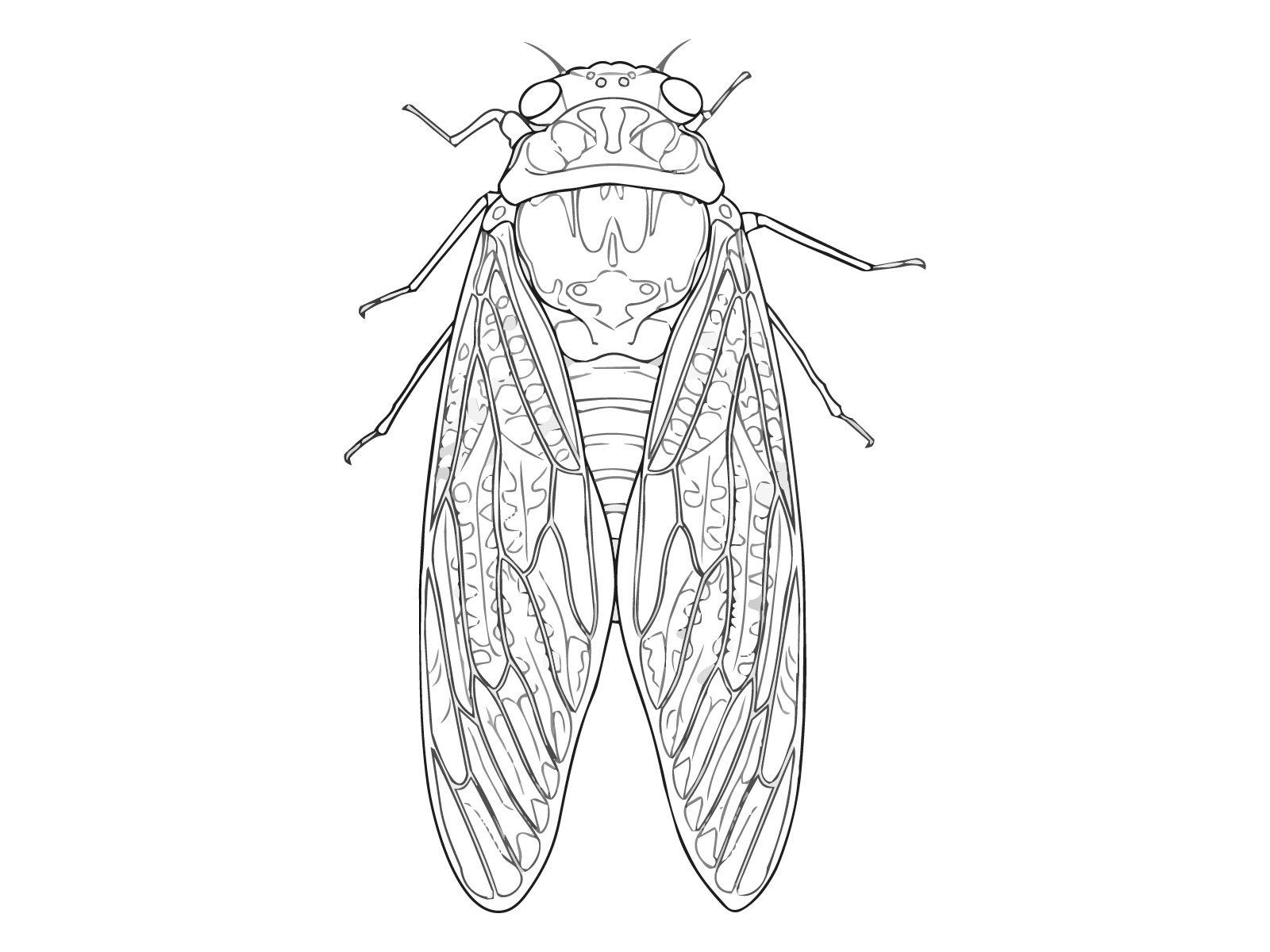
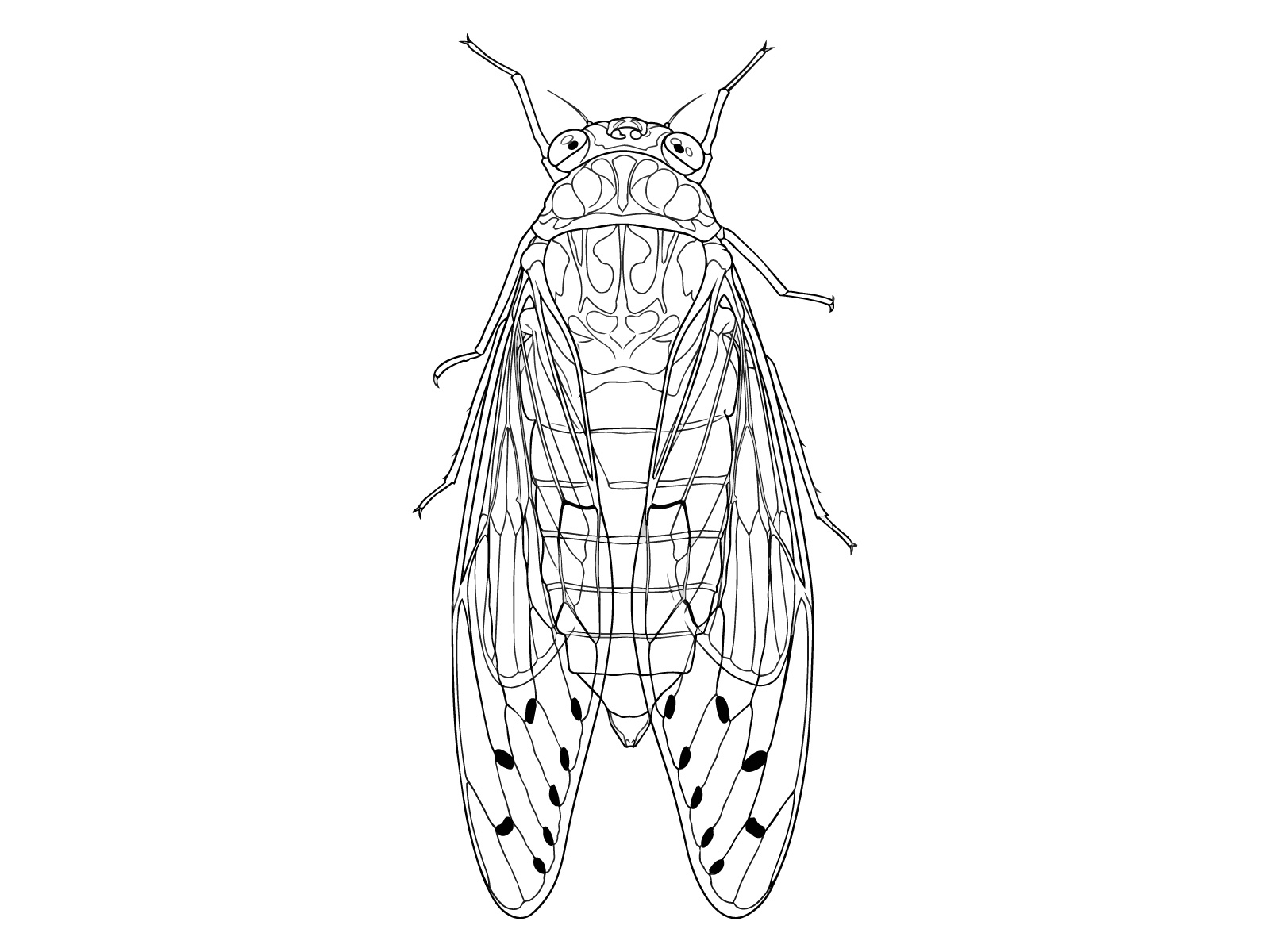
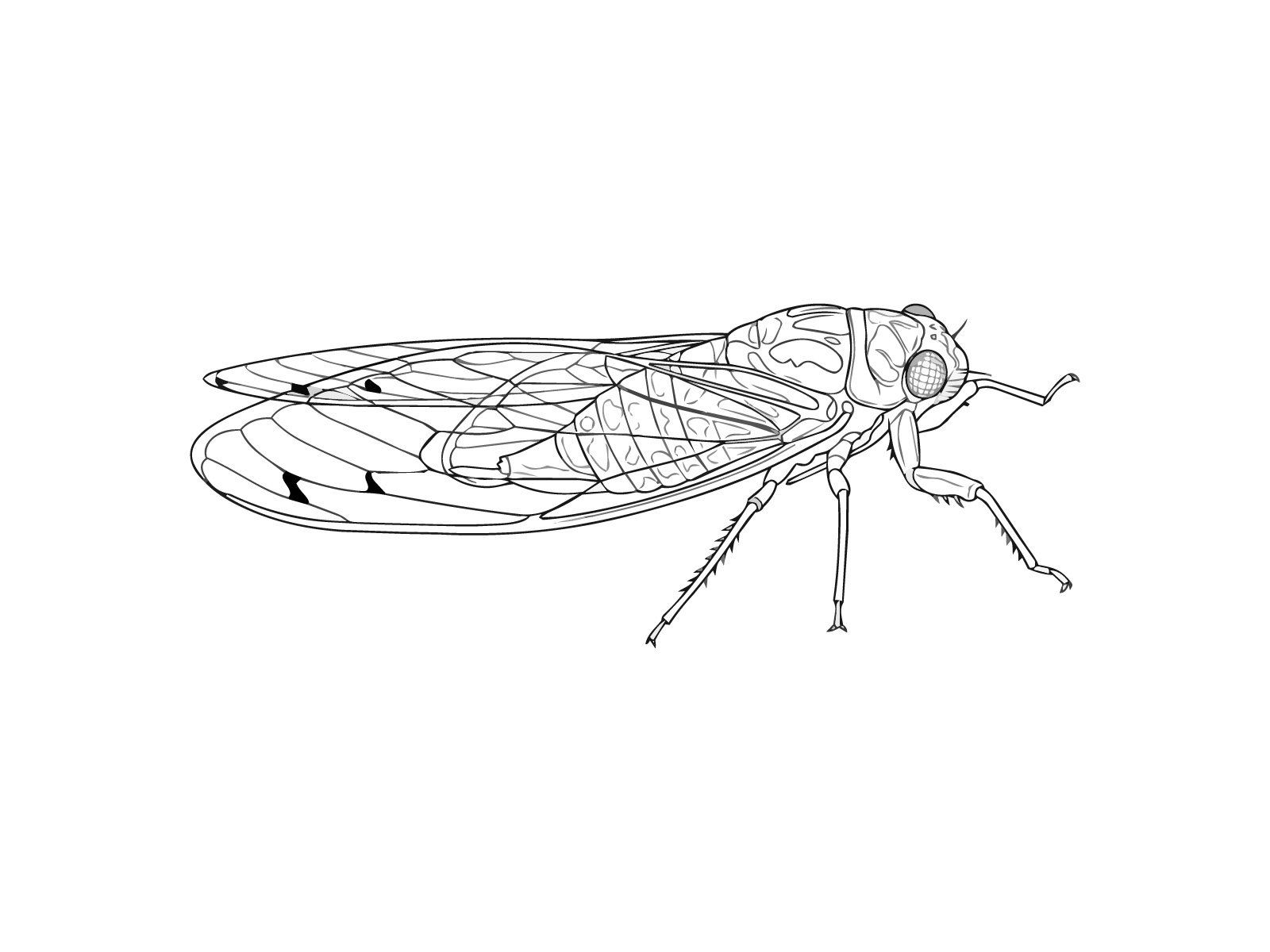
Meimuna opalifera Coloring Pages

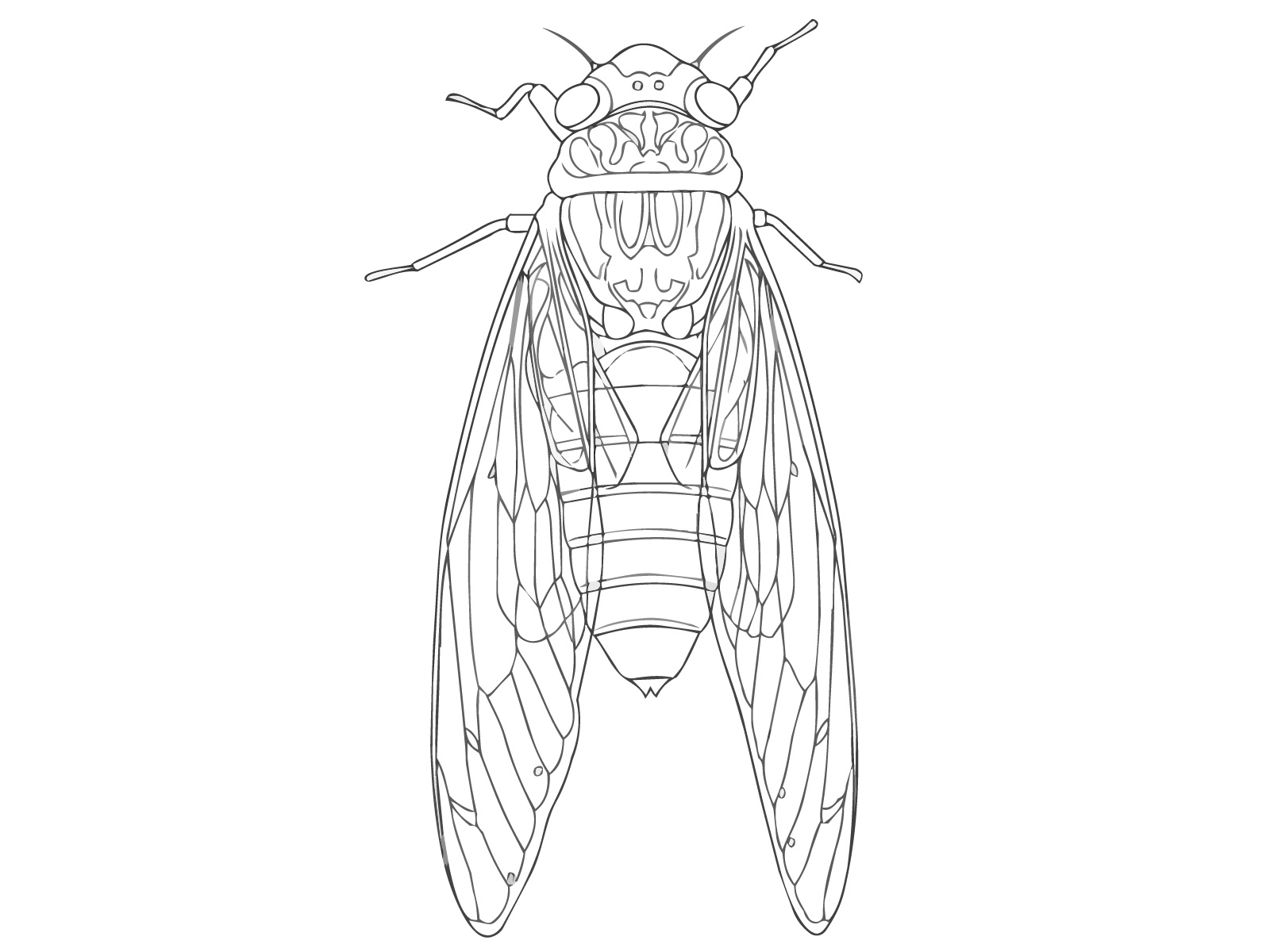
About Meimuna opalifera
The Cicada That Says Summer Is Ending! Meimuna opalifera
Just when everyone starts to feel like summer vacation is almost over, Meimuna opalifera happily begins to sing! After the big choruses of brown cicadas and Minmin cicadas fade away, many of them appear right as the cool autumn breeze starts to blow. They are truly a sign that summer is ending!
A Fun Song That Changes A Lot!
The best thing about Meimuna opalifera is that it has a very complex and fun song pattern compared to other cicadas.
-
At first, it starts singing quietly in a steady rhythm: "Oshi-tsukutsuku, oshi-tsukutsuku."
-
Then, like shifting into high gear, it speeds up faster and faster, shouting loudly, "Tsukutsuku-boshi! Tsukutsuku-boshi!"
-
At the end, it changes its song to "Uiyosu! Uiyosu!" and finally finishes softly with a "Jiii..." sound. Making so many different sounds all by itself makes it a real singing genius!
Its Japanese Name Comes Right From Its Song!
Do you know how it got its slightly unusual Japanese name, Tsukutsukuboshi?
-
The answer is just how its song sounds to our ears!
-
Because it sounds like it is shouting "Tsukutsuku-boshi," it got this friendly name.
-
In Kanji characters, it can be written as "尽く尽く法師," which has a mysterious meaning that sounds like a Buddhist monk wearing a hat.
When Can You See Them?
Meimuna opalifera is most active during the quiet time when summer comes to an end.
-
They mostly appear from late August to early September, during late summer and early autumn.
-
When kids hear this song, they feel the season changing and start to think, "I have to finish my homework fast!"
How Big Are They? A Small and Slim Body
Compared to other famous cicadas, its body is a little smaller and has a very slim shape.
-
An adult's body length is about 3 centimeters, which is only as big as your thumb or an eraser.
-
They are smaller than big brown cicadas or Bear cicadas, but they are very fast and great at flying. If they see a person, they quickly fly away high into the trees.
Where Do They Live? Areas You Can Find Them
Meimuna opalifera is an insect that lives very widely across many parts of Japan.
-
They can be found in many regions, from Hokkaido in the north to Honshu, Shikoku, Kyushu, and Okinawa in the south.
-
They rest straight up and down on familiar tree trunks in garden trees near your home, schoolyards, and forests in big parks.
What Color Is Its Body?
The body of Meimuna opalifera is not bright, but it has a cool, dark look.
-
Overall, it is dark brown, a deep brown color close to black.
-
Around its chest, it has a mix of light green (olive green) patterns.
-
Because these colors and patterns look just like the tree bark or moss they rest on, it works as great camouflage to hide from bird enemies.
Clear Wings Like Glass
Its wings have a very beautiful feature that is just as nice as other cicadas.
-
Its whole wings are clear and see-through just like glass.
-
The veins in the wings are dark, and an important sign is a tiny black dot pattern near the tips of the wings.
What Do They Eat to Grow?
Both adult cicadas and young nymphs in the ground get their important life nutrients from trees.
-
They poke their long, thin, straw-like mouths into tree trunks to drink delicious, healthy tree sap.
How Long Do They Live? Life Secrets
Meimuna opalifera also spends most of its life inside the dark soil.
-
As a nymph in the soil, it lives for about 1 to 2 years while drinking juice from tree roots.
-
Once it finally comes above ground and becomes an adult, it lives for about 1 to 3 weeks. In that short time, it sings wonderful songs with all its might to find friends.
How to Color Meimuna opalifera
How to Choose Colors: Pick Cool and Smart Colors!
Base body colors: Meimuna opalifera are small with cool, muted colors. We recommend using cool, dark colors as your base.
-
Patterns on the back and chest: First, color the whole body softly and evenly with black or dark brown. Next, layer a little dull green, olive green, or dark green over the bumpy chest patterns. This gives it a cool, realistic depth just like a real one!
-
Belly colors: Make the sections on the belly a little lighter than the back. Use light yellow, cream, or bright yellow-green. This makes the belly look round and popping out. It adds wonderful 3D detail!
-
Eyes: Use deep dark brown or dull green for the big eyes popping out on both sides. Leave a tiny white uncolored spot (highlight) right in the middle. Your eyes will look cool and full of life!
Magic Tricks to Show Clear Wings Beautifully
Here is a magic trick to show the glass-like clear wings! They are the best feature of Meimuna opalifera.
-
Wide spaces on the wings: On purpose, leave lots of the white paper uncolored in the wide spaces of the wings. Not coloring everything in is the most important secret!
-
Wing lines: Trace only the many thin lines (veins) on the wings carefully with the tip of your colored pencil. Use light blue or dark brown. Just doing this perfectly shows the beautiful clear wings reflecting shiny light! Do not forget to put a small pure black dot at the tip of the wings too.
How to Add 3D Depth: The Magic of "Shadows"
Here are tips to make the cicada's body look round and real, like it could move any second. Use the spaces between the lines nicely!
-
Shadow places: The dark places are the neck wrinkles under the head, the bases of the many legs, and the lower body where wings overlap.
-
Layering dark colors: Softly layer a slightly darker black or dark brown over these shadow places. This simple trick nicely shows the firm roundness and 3D shape of an insect's small body!
Tips for Paints, Colored Pencils, and Art Tools!
Depending on the tools you use, you can show the bumpy feel of Meimuna opalifera's body very well!
-
How to sharpen colored pencils: Sharpen your colored pencil tip really well. Then, trace the black lines clearly and dark. The fine body lines will pop out. Your picture will look real just like a picture book!
-
Crayon smudging trick: When coloring with crayons, push a little hard to color dark, then rub softly with your finger. The colors blend nicely. You can show how it hides on tree bark with real camouflage!
Hints to Enjoy Your Coloring Page!
Here is advice to make your Meimuna opalifera coloring page even more fun and a wonderful, one-of-a-kind art piece!
-
Express yourself freely! You do not have to stick to real colors. The most important thing is to use your favorite colors freely with your dream of "It would be fun if this cicada existed!" It is great to make a colorful rainbow Meimuna opalifera and create a fancy fairy cicada found nowhere else in the world!
-
Try drawing a background! Color the bumpy tree bark where the cicada holds on with brown or gray. You can also draw a fresh blue sky at the end of summer or a red dragonfly in the empty spaces. Your creativity will make your picture come to life even more!
Fun Facts About Meimuna opalifera
A Cicada That Tells Us Summer Is Ending
Meimuna opalifera does not show up much in July or early August. You will start to hear them sing a lot from late August through September. When you hear their song, fun summer vacation is almost over. It is a sign that autumn is coming close!
A Fun Song That Changes Halfway Through
The song of Meimuna opalifera is one of the most tricky bug songs of all cicadas. First it starts with a "zeee" sound. Next, it repeats a fun rhythm like "oshi-tsukutsuku, tsukutsuku-boushi!" At the very end, it shouts a silly "we-yohs!" many times before stopping. It sings just like a whole song!
A Small, Slim Body with Clear Wings
Compared to other cicadas, Meimuna opalifera is one size smaller and slimmer. Its body is dark with a bit of green pattern. Its wings are pretty and clear just like glass.
Did Its Japanese Name Come from a Monk?
The Japanese name "Tsukutsukuboushi" comes from its song, which sounded like "houshi" (a monk) to people long ago. When people heard this cicada, they might have thought of a monk chanting prayers. Even though it is small, Meimuna opalifera is a very special cicada!
Share These Meimuna opalifera Coloring Pages


-
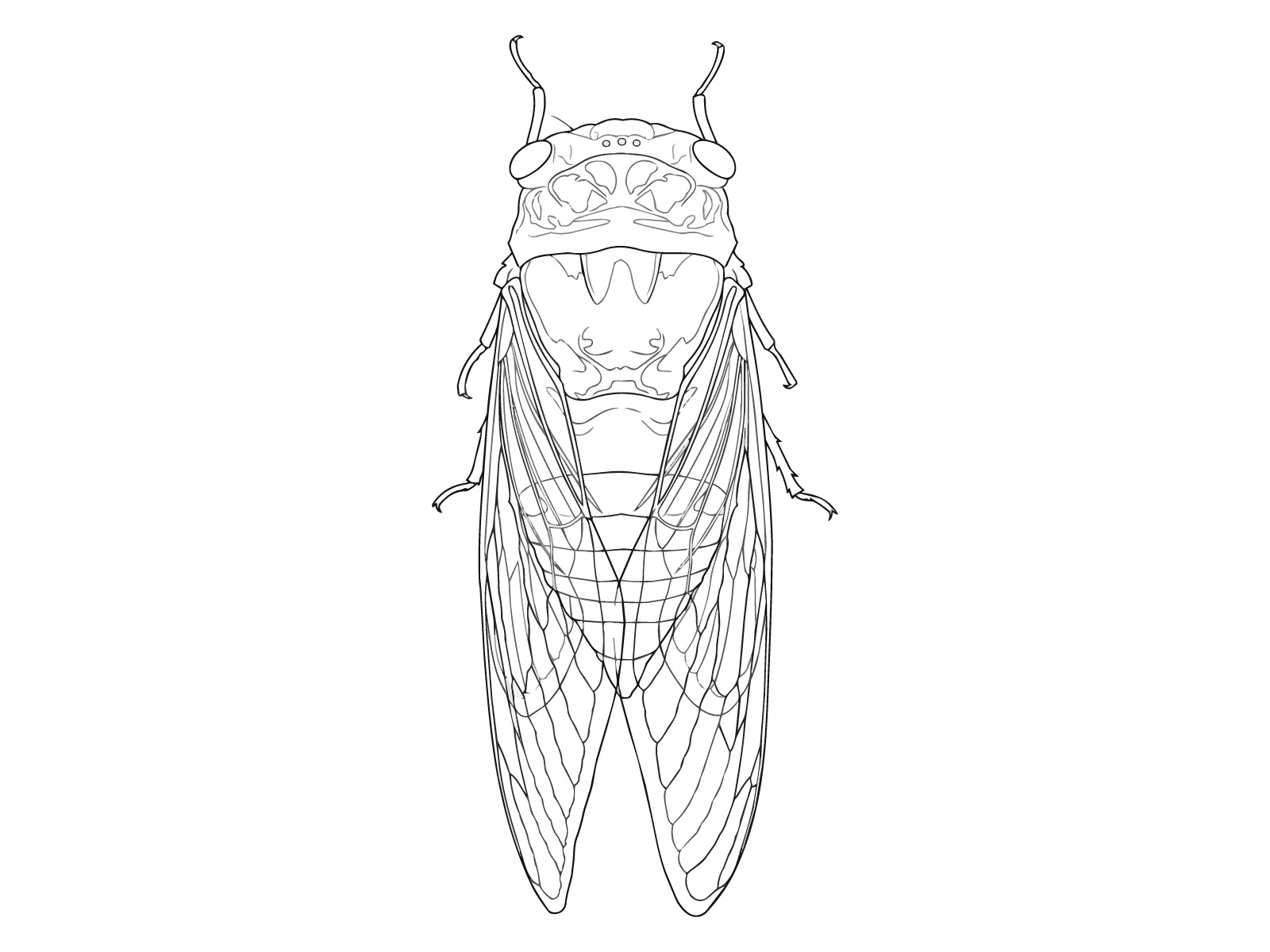
Tsukutsuku-boushi cicada
-
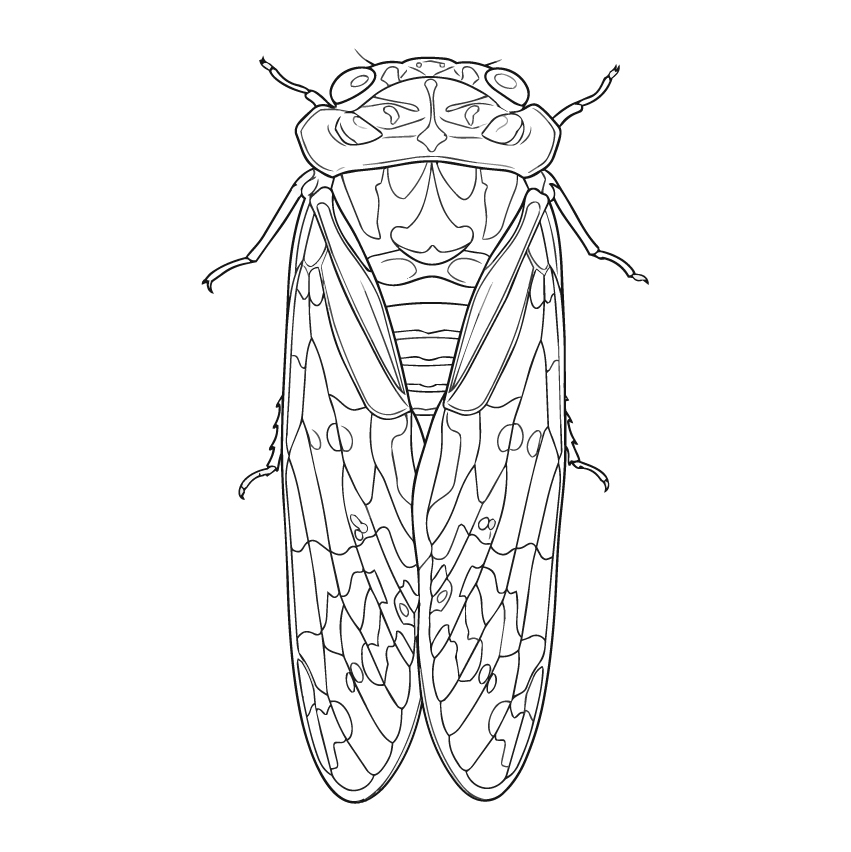
Meimuna opalifera 2
-