Okapi Coloring Pages

About Okapi
The lady of the forest! A member of the world's three rarest animals
The Okapi is a very rare animal that lives deep in the forests of Africa. People call it the "lady of the forest" because it looks so beautiful and graceful when it stands. Along with the giant panda and the pygmy hippo, it is one of the "world's three rarest animals." It is a star animal that everyone loves at the zoo!
The name and English name! Okapi comes from a local word
The name Okapi comes from the word "O'api," which is what the local Mbuti people called it. In English, it is called Okapi too. It was a secret animal that explorers and scientists around the world did not know about until Sir Harry Johnston, a British explorer, discovered it in 1901!
Not a zebra!? It is actually related to the giraffe
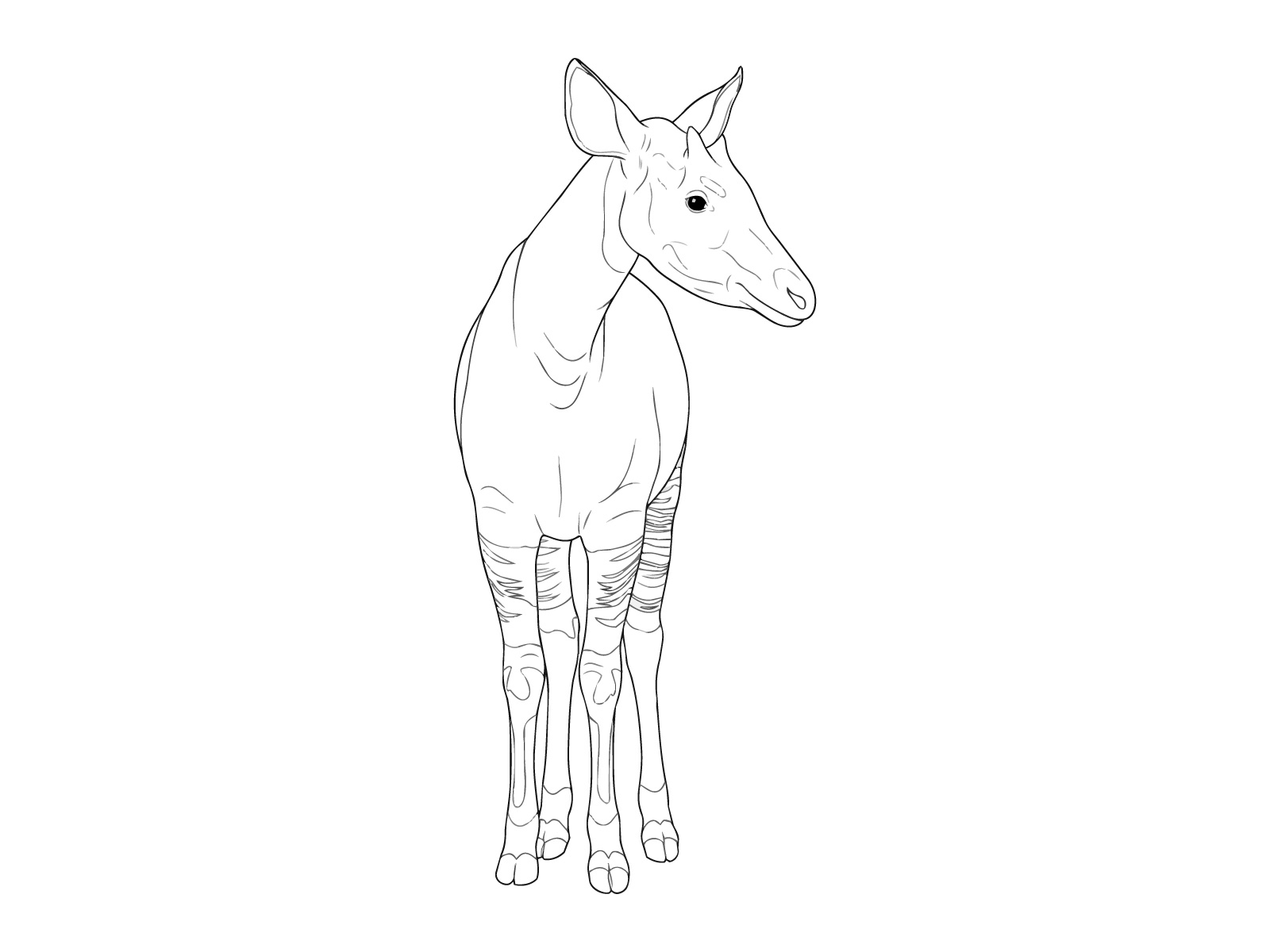
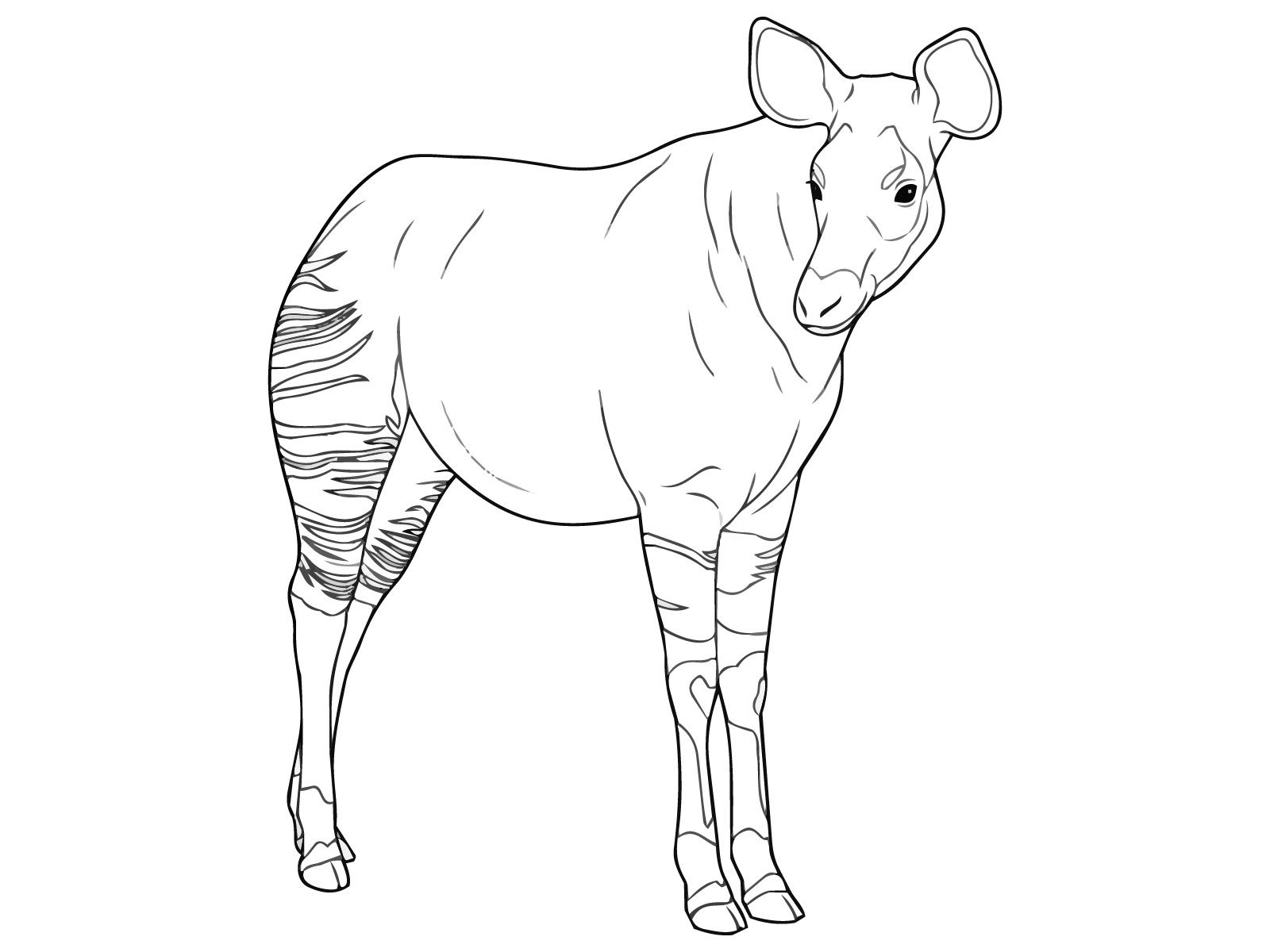
It has pretty black and white stripes on its bottom and legs, so it looks like a zebra. But it is not a zebra! It is actually related to the giraffe. If you look closely at its head, body, and neck bones, it looks just like a giraffe. Its hooves are split into two like a giraffe's hooves, not single like a zebra's hooves!
A living fossil! Unchanged for millions of years
The Okapi is a special animal called a "living fossil." People think it has lived until today looking just like the ancestors of giraffes did millions of years ago in Africa. It shows us what giraffes looked like before they got long necks. It is an amazing creature full of Earth's history!
It reaches its ears!? A long blue-black tongue that moves freely
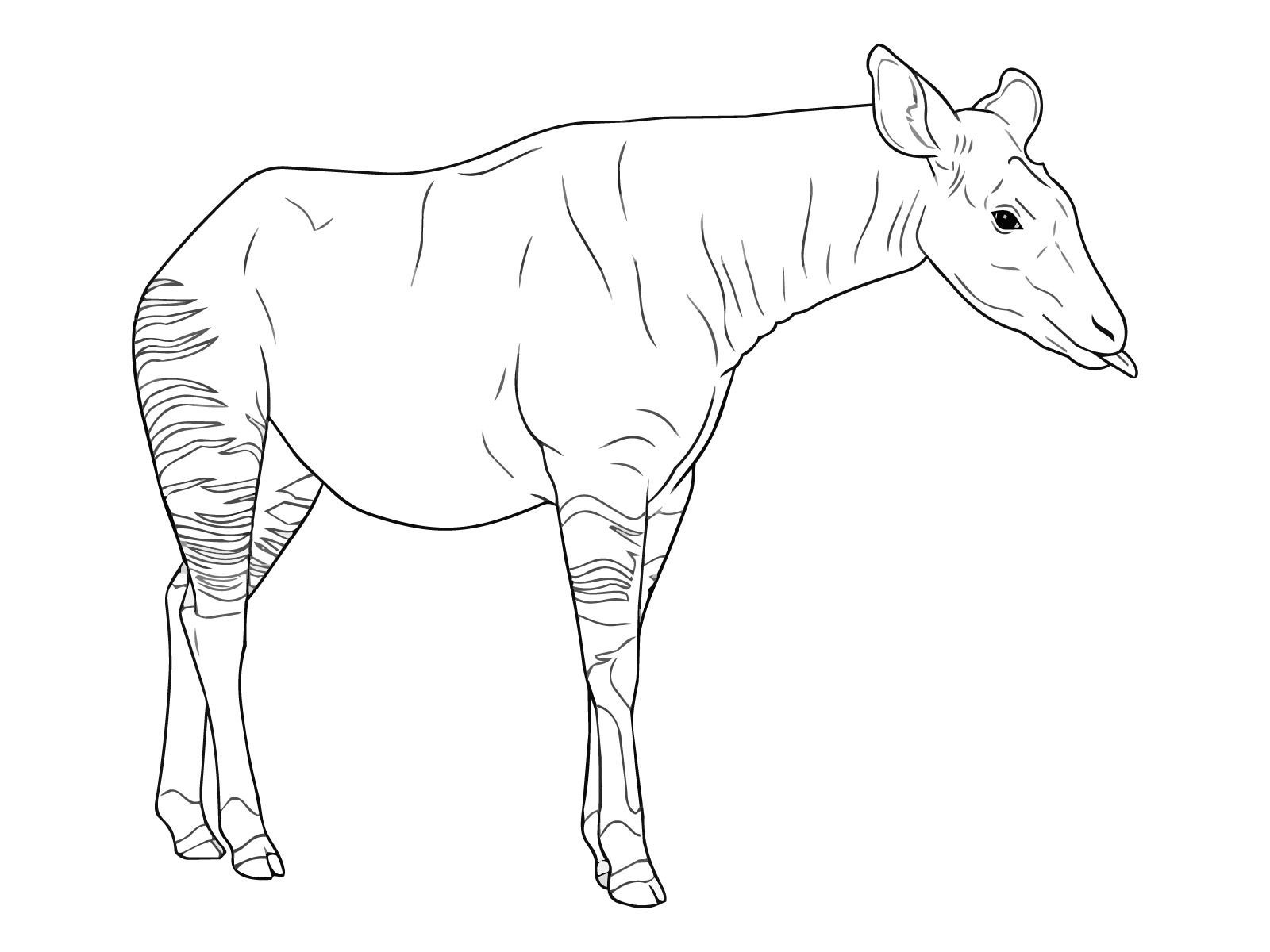
An amazingly long tongue comes out of the Okapi's mouth! It is about 40 to 50 centimeters long—longer than a 30-centimeter ruler! It has a dark, slightly blue color. The Okapi wraps its long tongue around tree branches to pull off its favorite leaves to eat. It can even reach its own eyes and ears, so it uses its tongue to clean its face and ears!
Beautiful fur! A velvet coat that repels rain
The Okapi's body is covered in shiny, chocolate-brown fur that feels like fine velvet or carpet. This fur looks pretty, and it has lots of natural oil to block water. Even in heavy rainforest showers, the fur protects the Okapi so its body does not get cold or wet!
Hiding in sunbeams! The secret of the leg stripes
The pretty white stripes on its bottom and legs do an important job in the wild! Sunlight shines through the trees and leaves. Then, the white and black pattern looks like light and shadows mixed together. This is a camouflage that tricks predators. The stripes also work as a guide for baby Okapi so they do not get lost when following their mothers in dark forests!
Only on boys! Two cute little horns
If you look closely at the Okapi's head, you can see two cute little horns. These horns are called "ossicones." Only boy Okapi grow them! Skin and fur cover the horns, and only the tips stick out as hard bone. Girl Okapi do not have horns, or they have just tiny bumps. You can tell boys and girls apart by looking for horns!
Amazing ears! Big ears that hear deep forest sounds
The Okapi has very big ears on its head compared to its body size. Forests are thick with trees, so it is hard to see far away. That is why the Okapi uses its ears more than its eyes to check around! It can move its big ears back and forth freely. It can hear small sounds like a twig snapping far away, or footsteps of leopards, which are its enemies!
In danger of dying out! Protecting the Ituri Forest together
People love the Okapi around the world. But wild Okapi only live in the "Ituri Forest," a rainforest in the Democratic Republic of the Congo in Africa. Trees are being cut down, so their home is getting smaller. People also hunt them illegally. Their numbers have dropped, so the Okapi is now listed as an endangered species. People around the world are working together to protect the beautiful forest so the Okapi can live safely!
How to Color Okapi
How to Choose Colors: Mix Chocolate Brown with White Stripes
When you color Okapi, the best trick is to make a sharp contrast between the deep body color and the white stripes on its legs!
Color the pretty pattern on its legs and bottom carefully so each part stands out.
Tips for Coloring the Pretty Leg Stripes
The most eye-catching part of the Okapi coloring page is the many side-to-side stripes on its legs and bottom.
When you color the stripes clearly, you get a fancy pattern that looks just like a real Okapi!
Color the Two Horns, Big Ears, and Long Tongue
Color the small parts around the face carefully to make Okapi look full of life!
Have fun coloring the special body parts that only Okapi has.
Soft Velvet Fur and 3D Light and Shadows
Try using dark and light colors to make Okapi's body look shiny and smooth!
It will make the fur look soft like velvet and pop out like magic!
Draw a Deep Rainforest Background to Bring Your Picture to Life
When you finish coloring Okapi, draw the African forest home in the empty spaces around it!
Have fun and finish your coloring page your way!
Fun Facts About Okapi
It looks like a zebra, but it is actually related to giraffes!
With beautiful stripes on its legs and bottom, the Okapi looks like a zebra at first glance. But because of its body shape and bones, it is actually related to giraffes (the giraffe family). It has small skin-covered horns on its head just like a giraffe (found on males). It also walks like a giraffe by moving both right legs at the same time, which is called "pacing."
A beautiful look called the "Lady of the Forest"
The Okapi has a shiny, deep chocolate-brown body and bright black-and-white stripes on its legs. This lovely contrast earned it the elegant nickname "Lady of the Forest." In the thick jungle, these stripes blend right into the sunlight shining through the trees. They act as perfect camouflage to trick enemies.
It reaches its eyes and ears! A long tongue about 40 centimeters long
The Okapi's tongue is about 40 centimeters long! It can stretch almost as long as its face. The Okapi wraps this clever, bluish-purple tongue around tree branches to pick its favorite leaves to eat. It can even lick its own eyes and ears to clean them!
A "living fossil" found in the 20th century
Because the Okapi lived quietly hidden deep in the tropical rainforests of Africa, Westerners did not discover it until 1901. Its body has barely changed from the ancestors of giraffes millions of years ago. That is why it is protected around the world as a "living fossil."
It leaves a scent from its feet to talk to friends!
The Okapi is very cautious and lives quietly by itself in the jungle, so it rarely makes a sound. Instead, it gives off a special scent from the bottom of its feet (between its hooves). By leaving this smell on the ground as it walks, the Okapi can tell its friends where it is without ever seeing them!
Share These Okapi Coloring Pages



-
Okapi
-
Okapi 2
-
-
Okapi 3
-