Pine cone Coloring Pages
 ~
~ 
About Pine cone
Forest Treasures! Pine cone
A Pine cone is like a baby from a tree called "pine" that you can find in parks and forests. But it is not a fruit! It actually acts like strong armor to protect the pine tree's "seeds". Its real name is "cone".
The Magic of Opening and Closing Scales
When you pick up a Pine cone, have you ever seen some with open scales and some with closed ones? Actually, they move depending on the moisture in the air (humidity). On sunny, dry days, it opens its scales wide to send seeds far away. But on rainy or humid days, it tightly closes its scales so the seeds do not get wet. It is almost like it is alive!
Seeds That Fly in the Sky!
Between the scales of a Pine cone, there are tiny seeds with thin wings. When the scales open, these seeds spin around and fly away on the wind to land on the ground far away. That is how new pine trees grow in new places.
A Plant with a Long History
Pine trees have a very long history. They were already growing in Japan long ago during the Jomon period. They are strong in both the cold and the heat, and their leaves stay green all year round. That is why people have cared for them for a long time as a symbol of "long life" and "good health".
They Come in Many Shapes
The Pine cone you usually see in Japan is shaped like an egg and is a few centimeters big. But in the world, there are long ones like bananas, and giant ones as big as a person's face! The shapes and sizes are totally different depending on the kind, so it is fun to compare them.
How to Color Pine cone
How to Choose Colors
You might think a Pine cone is always brown, but its color changes depending on where it is! Try picking colors to match the season or the scene.
- When on the ground: Dark brown or reddish brown is perfect for the look you know best.
- When growing on a tree: Young Pine cones are actually green! Color yours green if you want it to look fresh.
- When it gets old: Over time, a Pine cone can turn a grayish brown or even a bit white.
Show How the Scales Overlap
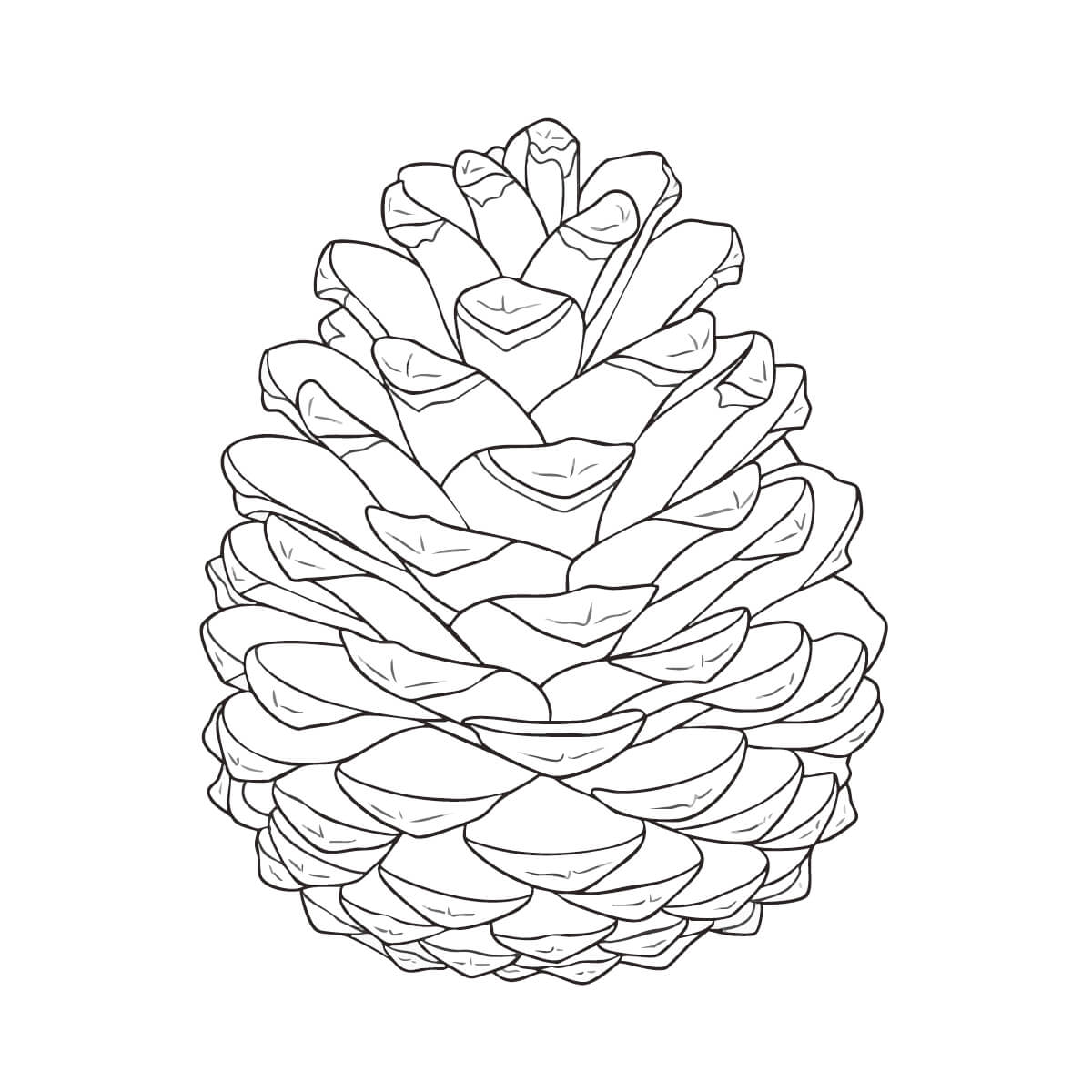
A Pine cone has many "scales" that overlap like fish scales. Coloring these well is the key!
- Tips of the scales: Light hits here easily. Color them with light brown or yellowish brown to make them pop out.
- Bases of the scales (deep inside): The parts hidden under other scales are in the shade. Use very dark brown or a color close to black here. This will make it look bumpy and real!
Make It Feel Rough and Hard
A Pine cone is made of wood and feels hard. Try these tricks to make it look bumpy!
- With colored pencils: Press a little harder to show that it is tough. Carefully trace around each scale to make the shape stand out.
- With crayons: Mix in a little black or purple with the brown to make shadows. This gives it a deep, cool color!
Draw the Background Too
- The ground: A Pine cone often falls near long, thin pine needles. Draw thin green and brown lines around it to show the needles.
- Seasons: You can draw orange and red leaves for fall. For winter, try adding white on top of your Pine cone to look like snow!
Have Fun and Be Creative!
Have you ever seen a Pine cone painted gold or silver for Christmas? On your coloring page, you do not have to stick to real colors! Use a gold pen or pick your favorite colors to make a bright, special Pine cone of your very own!
Share These Pine cone Coloring Pages


-
Pine cone 1
-
Pinecone 2
-
-
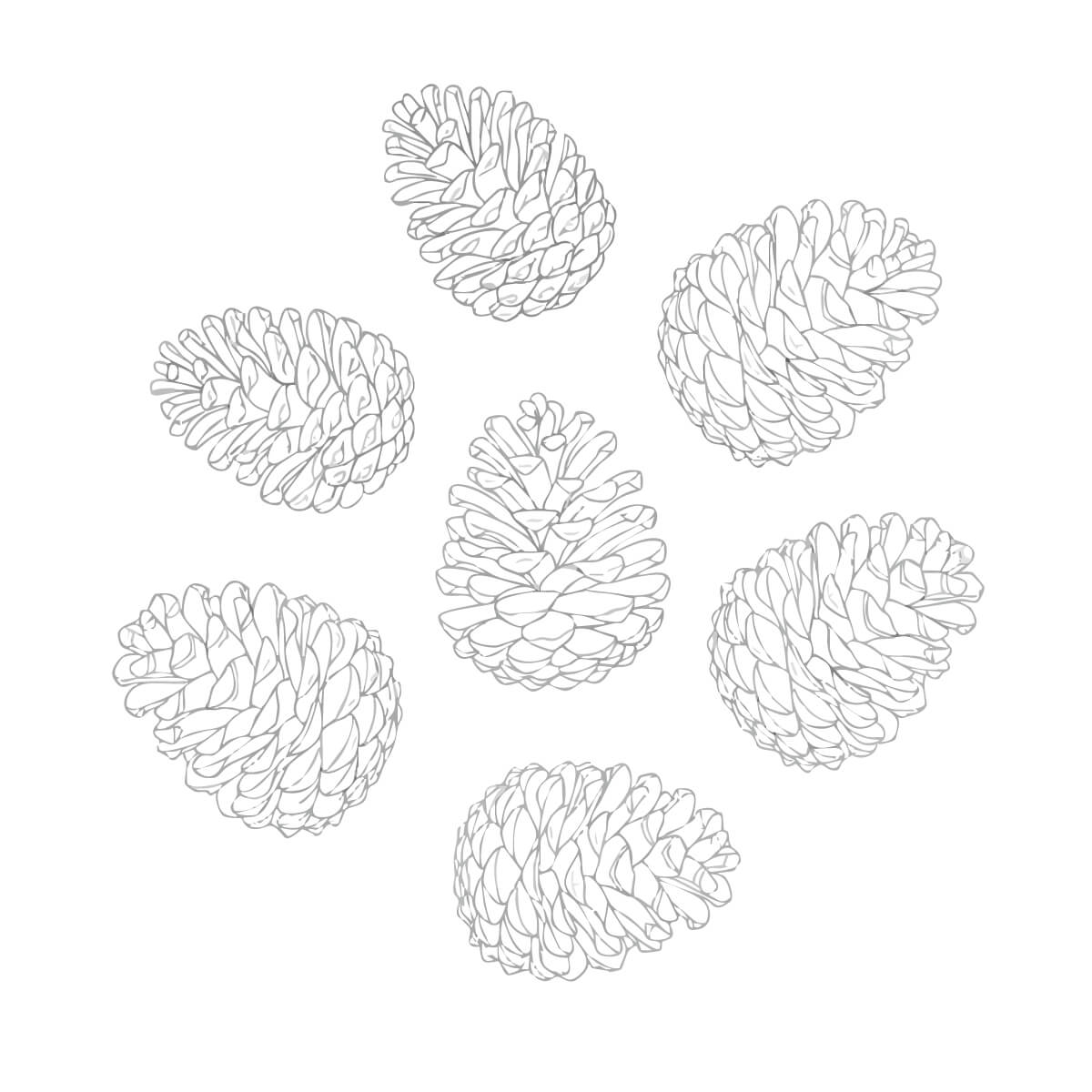
Many pinecones
-