Yomogi / Japanese mugwort Coloring Pages
 ~
~ 
About Yomogi / Japanese mugwort
The Secret Behind Kusa Mochi's Green Color
Do you know what makes kusa mochi and kusa dango such a pretty green color? It comes from the leaves of a plant called Yomogi / Japanese mugwort.
Yomogi / Japanese mugwort is a very common plant. It grows in patches in sunny places, like the corners of schoolyards, along roadsides, and on riverbanks. It grows about 50 to 100 centimeters tall.
Isn't it surprising that the color and smell you enjoy every year come from a plant that grows right near you?
Deep Cuts Just Like a Chrysanthemum Leaf
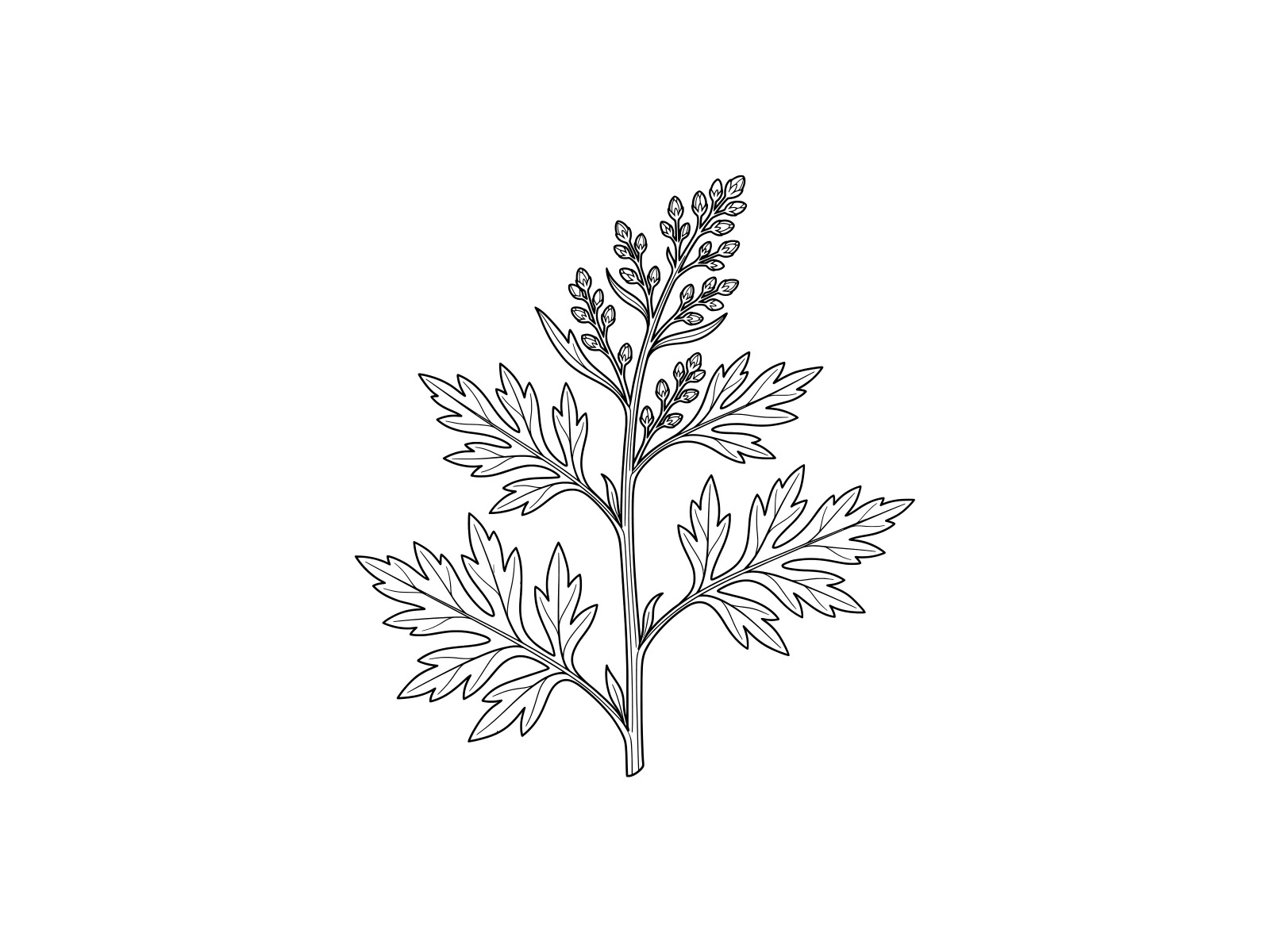
The main key to finding Yomogi / Japanese mugwort is the shape of its leaves.
Each leaf has deep cuts on the left and right, just like a feather. It looks a lot like a chrysanthemum leaf. That makes sense, because Yomogi / Japanese mugwort is in the same plant family as chrysanthemums.
The leaves are about 4 centimeters wide and 8 centimeters long. Look closely at the coloring page. Can you see how each leaf splits into 3 to 5 pointed parts on the sides?
The Back of the Leaf Is Pure White
This part is very important! Pick one leaf of Yomogi / Japanese mugwort and turn it over.
The top is green, but the back is pure white! That is because it is covered in soft white fuzz. If you touch it, it feels fluffy and smooth, like velvet.
Not many plants have such different colors on the top and bottom. "If the back of the leaf is white, it is Yomogi / Japanese mugwort!" This is the easiest way to tell!
This White Fuzz Becomes Moxa for Okyu
Here comes the most surprising part! People collect only this white fuzz from the back of the leaf to make moxa, which is used for a heat care called okyu.
To make it, people dry the leaves in the sun, pound them, and sift them. The leaf breaks away, and only the soft white fuzz stays behind. Then, people pinch a little bit of it and light it.
That is why Yomogi / Japanese mugwort is also called Yaitogusa. "Yaito" means okyu. That tiny white fuzz has been warming people's bodies for hundreds of years!
Three Ideas About Its Name
Actually, nobody knows for sure where the Japanese name "Yomogi" came from! There are three big ideas.
The first is Yomogusa (Four-Way Herb). That is because it spreads out and grows in all four directions.
The second is Yomogusa (Good-Sprouting Herb). That is because it sprouts very quickly when spring comes.
The third is Yomogusa (Good-Burning Herb). That is because it burns very well when it dries.
All of these fit Yomogi / Japanese mugwort so well! People also call it Mochigusa (Rice-Cake Herb) because spring sprouts are put into rice cakes.
Pick in Spring, Eat in Spring
People use young sprouts picked in early spring to make kusa mochi. They pick the soft tips, boil them, and mix them into the mochi.
If you want to make tempura, you can use the soft stems until early summer (around June).
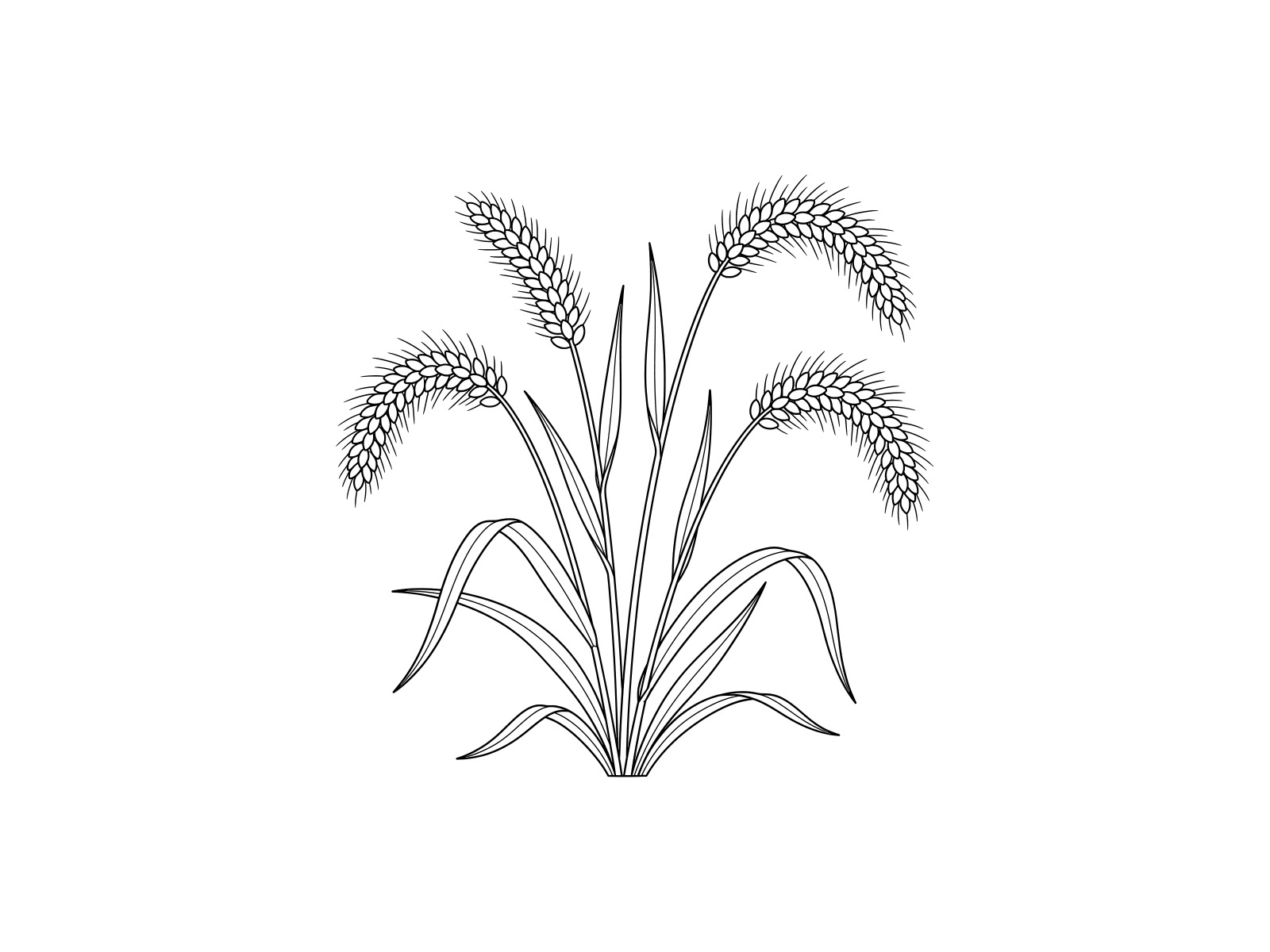
Flowers bloom from summer to autumn (August to October), but the flowers of Yomogi / Japanese mugwort are very simple. The tiny bumps at the top of the coloring page are the flower buds. They do not have bright petals, so you might not even notice they are flowers unless someone tells you!
How to Color Yomogi / Japanese mugwort
Color the Top Green and the Bottom White
The most fun part of this Yomogi / Japanese mugwort coloring page is coloring the top and bottom of the leaves differently.
Real ones are green on top and bright white underneath. So, pick one or two leaves that are curled over to show their backs, and leave them white without coloring.
Just doing that makes your picture say, "Ah, this leaf is facing backward!" It will look much more like real Yomogi / Japanese mugwort than if you color everything green.
Color All the Way into the Cuts
Leaves of Yomogi / Japanese mugwort have deep cuts, so there are lots of spaces between the parts.
If you leave the parts uncolored, the leaf will look like it is broken into pieces. Color each part carefully, all the way to the tip. Sharpen the tip of your colored pencil to help with small places.
It is okay to leave the spaces (the cut-in parts) white. Those white spaces help show the leaf shape clearly.
Use 3 Different Greens
Leaves of Yomogi / Japanese mugwort have a soft green color with a bit of white in it. A soft yellow-green looks closer to the real thing than a deep, vivid green.
Color the big leaves in front with dark green, the ones in the middle with yellow-green, and the small ones in the back with light yellow-green. Using these 3 steps gives your leafy plant a nice sense of depth.
Use a Color with a Hint of Red for the Stem
Stems of Yomogi / Japanese mugwort are not just green. They often have a reddish-brown color, too.
Try coloring the stem with reddish-brown or light brown. Sitting next to the yellow-green leaves, it makes the picture look much sharper. Color along the lines going up the stem to make it look like it is standing up straight.
Once You Color It, Go Turn Over Some Leaves!
When you finish coloring, take this picture to a corner of your schoolyard or a riverbank. Look for leaves with deep cuts that look like chrysanthemum leaves.
When you find one, pick a leaf and flip it over. If the back is bright white, that is Yomogi / Japanese mugwort! While you are at it, rub it with your fingers and smell it. You should smell that wonderful scent used in Kusa Mochi!
Fun Facts About Yomogi / Japanese mugwort
Moxa for moxibustion is made with only the hairs on the back of the leaves
The moxa used for moxibustion is made from Yomogi / Japanese mugwort. On top of that, people do not use the whole leaf. They use only the white fluff on the back.
When you pound dried leaves with a mortar and sift them, the leaves break down and fall away. Only the soft, fluffy hairs stay behind. People gather them together like cotton to make moxa.
It takes a lot of leaves to make just one gram of moxa. That is why Yomogi / Japanese mugwort is also called Yaitogusa. "Yaito" means moxibustion.
No one knows for sure where the name comes from
There are three strong ideas about how Yomogi / Japanese mugwort got its name, but no one has decided which one is right.
Yomogi (四方草)—because it spreads and grows in all four directions. Yomogi (善萌草)—because it sprouts so well in spring. Yomogi (善燃草)—because it burns so well.
The fun part is that every idea matches a real feature of Yomogi / Japanese mugwort! It really does spread well, sprout fast, and burn easily. Maybe that is why no one can choose just one answer!
Old-time grass rice cakes did not use Yomogi / Japanese mugwort
Almost all grass rice cakes today are made with Yomogi / Japanese mugwort. But a long time ago, people used a different plant.
They used a plant called cudweed (hahakogusa). You might know it as "gogyo," one of the seven herbs of spring. The very first grass rice cakes were made by pounding that plant into the rice cakes.
Over time, people switched to Yomogi / Japanese mugwort, and that is how we got the green grass rice cakes we eat today.
The smell comes from cineole
When you rub a leaf of Yomogi / Japanese mugwort, it gives off a sharp, special smell. The main part of this smell is called cineole.
Yomogi / Japanese mugwort is also a herbal medicine called Gaiyo. In traditional medicine, people have used it to stop bleeding and ease pain.
It is good to eat, good to smell, and good for moxibustion. It is amazing that a plant growing in the corner of your schoolyard can do so many things!
Share These Yomogi / Japanese mugwort Coloring Pages


-
Yomogi / Mugwort
-
Mugwort clump

-