Green foxtail (Nekojarashi) Coloring Pages
 ~
~ 
About Green foxtail (Nekojarashi)
Grass swaying in the wind in a corner of the schoolyard
Green foxtail (Nekojarashi) is one of the plants you see most often in the corners of schoolyards, on your walk to school, or in empty spots at the park. From summer to fall, it grows fluffy heads that sway gently in the wind.
You might know it better by its nickname, "nekojarashi" (cat teaser). But Green foxtail (Nekojarashi) is this plant's real name!
The name comes from "puppy"
If you write Green foxtail (Nekojarashi) in kanji, it means "dog tail grass". "狗" means dog, so it literally means "grass that looks like a dog's tail."
The fluffy top looks just like a dog's tail, doesn't it? Long ago, people saw this and called it "Inukkoro-gusa" (puppy grass). People say that over time, the name softly changed to become Green foxtail (Nekojarashi).
On the other hand, the name "Nekojarashi" comes from teasing cats with it. If you wave the fluffy top in front of a cat, the cat will jump at it excitedly! It is pretty funny that one plant has both a dog name and a cat name, isn't it?
The secret behind the fluffy spike
If you touch the ears, they feel soft and fluffy, right? But if you look closely, that fluff is actually made of thin hairs.
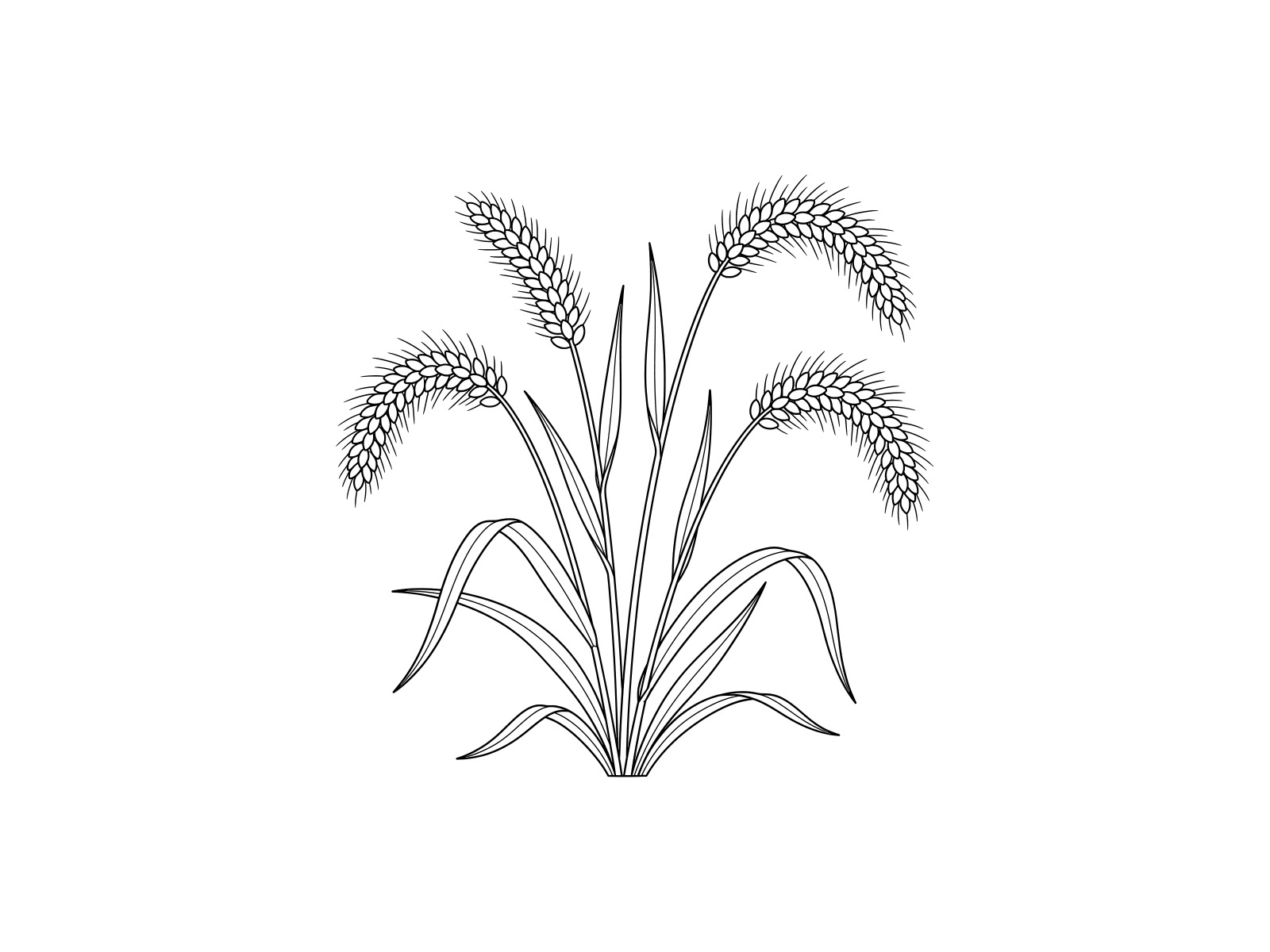
The ear is shaped like a cylinder, and it is packed with little bumps inside. Each bump is a flower, and it will turn into a seed later. Lots of stiff hairs stick out from the base of the bumps, and these cover the whole ear. That is why it looks like a brush.
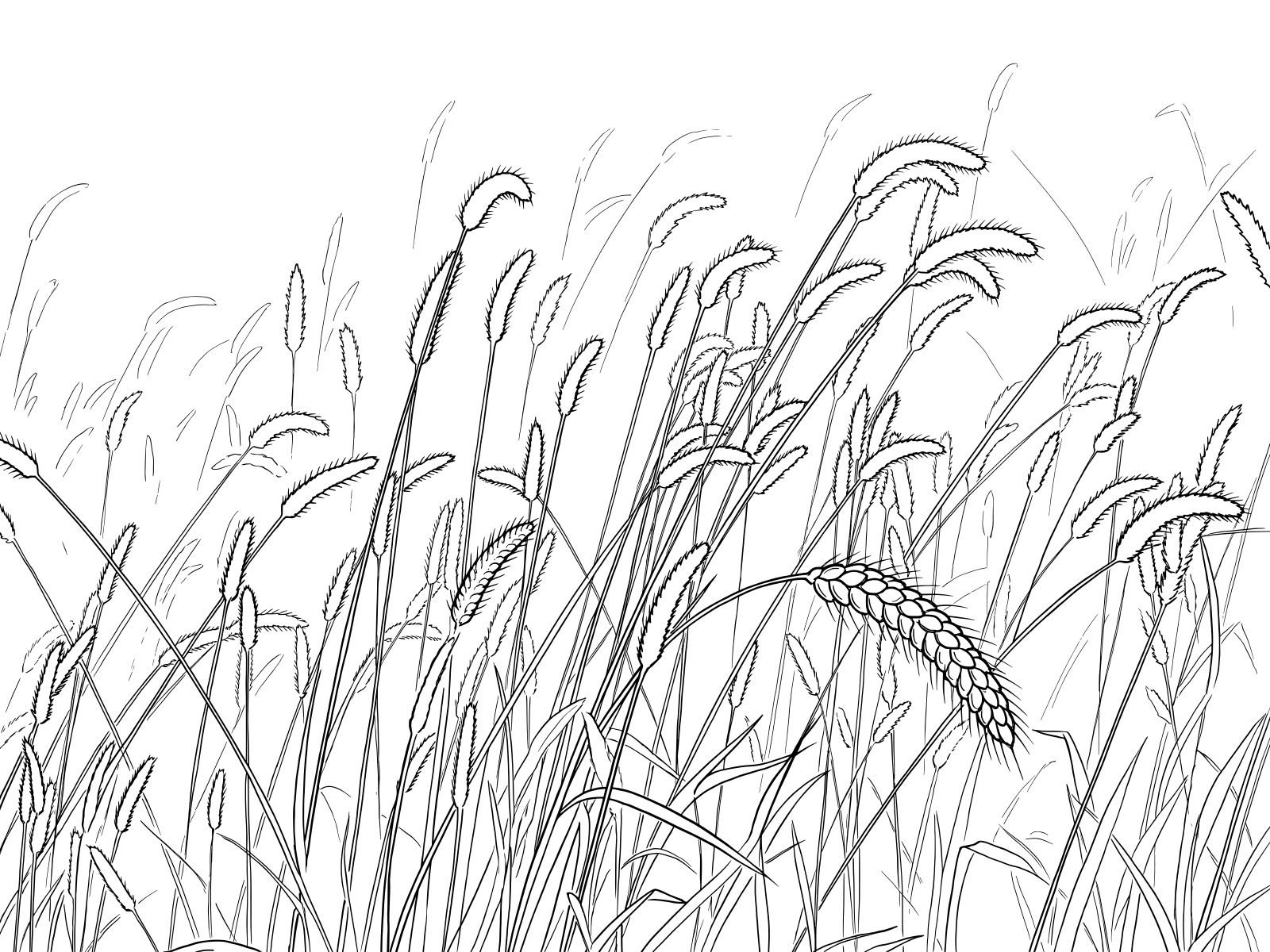
Look closely at the coloring page. Can you see each bump drawn inside the ear, with hairs sticking out around it?
The flower heads are 3 to 7 centimeters long
The ears are about 3 to 7 centimeters long. The plant can grow from a small 20 to 30 centimeters up to over 60 centimeters tall.
It blooms from summer to autumn. Green foxtail (Nekojarashi) loves places with open soil, like sunny empty lots, the edges of fields, and roadsides. That is why you can often find Green foxtail (Nekojarashi) in the corners of schoolyards or around flower beds.
Actually, the Ancestor of Foxtail Millet
Here is an amazing story for you. Green foxtail (Nekojarashi) is actually thought to be the ancestor of a crop called foxtail millet.
Foxtail millet was a grain eaten in old Japan, and it was just as important as rice. Even if "foxtail millet" does not ring a bell, you might have seen it in bird food or rice cakes.
People started growing foxtail millet long ago, starting right from Green foxtail (Nekojarashi). That grass swaying in the corner of your schoolyard is actually connected to the beginning of human food!
You can even eat the seeds
Because it is the ancestor of foxtail millet, you can actually eat Green foxtail (Nekojarashi) seeds. If you take the seeds off the stem and remove the outer shells, they are good to eat.
However, the seeds are very small, so collecting enough to fill your tummy is really hard. Long ago, people kept picking and growing plants with bigger seeds, and that is how we got the foxtail millet we have today.
How to Color Green foxtail (Nekojarashi)
Color the Spikes and the Hairs Separately
The best part of this Green foxtail (Nekojarashi) coloring page is the spikes! If you use different colors for the grains inside and the hairs around them, they will look nice and fluffy.
We recommend coloring the grains inside yellowish-green or ocher, and the hairs around them light yellow or cream. Leaving the hairs uncolored and white looks very pretty, too!
You do not have to trace every single hair. The trick is to color gently over the whole fuzzy clump of hair.
Autumn Spikes Turn Brown and Red-Purple
Green foxtail (Nekojarashi) spikes are green when they are young. But as autumn comes, they turn brown and red-purple.
So, if you color the spikes in front green and the spikes in the back brown, you can show the changing seasons! Even if you mix green, yellow, brown, and red-purple in the same picture, it will still look just like the real thing.
Leave the Lines inside the Leaves
There is one line running down the middle of the long, thin leaves. Try coloring the left and right sides of the line with slightly different shades so you do not cover it up.
For the twisted parts of the leaves, the trick is to use different colors for the front and back. If you color the front dark green and the back bright yellowish-green, it will look nicely twisted!
For the Second Page, Make the Distance Faint
The second coloring page shows a whole field of Green foxtail (Nekojarashi). If you color everything with the same brightness, it will look flat.
Color the spikes in front dark and clear, and the spikes in the back faint. Just doing this gives your picture great depth! If you leave the empty space at the top white or color it light blue, it will look like a field in the evening.
When You Finish, Go Touch the Real Thing
When you finish coloring, take this picture and go to the corner of the schoolyard! It is easy to find them if you look for places with bare soil.
Pick just one spike, put it on your palm, and gently squeeze and open your hand. Thanks to the hairs, the spike slowly creeps forward! You can see that those hairs you drew are really working.
Fun Facts About Green foxtail (Nekojarashi)
A plant with both a dog's and a cat's name
Green foxtail (Nekojarashi) is a rare plant that has two animal names.
Its official Japanese name, Enokorogusa, comes from how the head looks like a dog's tail. It started as a word meaning "puppy grass"!
On the other hand, its other name, Nekojarashi, comes from how cats love to play with it when you shake the head. Even though it is the same plant, some people saw a dog, and others saw a cat toy. Isn't it fun how things get named?
It was the ancestor of foxtail millet
Green foxtail (Nekojarashi) is thought to be the original form of foxtail millet. Millet is a grain that people in old Japan ate just like rice.
Even today, Green foxtail (Nekojarashi) and millet are such close relatives that they mix together easily. If you look closely at Green foxtail (Nekojarashi) near a farm field, you might find some with thick heads that look mixed with millet!
The hairs have a real job to do
Hard hairs stick out from the head of the plant. They might look annoying, but they have a real job.
Thanks to these hairs, the seeds catch on animal fur or your clothes to travel far away. Plus, people think the hairs protect the young seeds from birds and bugs.
When you squeeze the head in your hand and open it, it moves forward. That happens because these hairs grow in just one direction!
It has been in Japan since the Jomon period
Green foxtail (Nekojarashi) was originally a plant from Eurasia. People say it came to Japan when farming started. That means we have been friends with it for a very long time!
Now, you can find it all over Japan, from Hokkaido to Okinawa. For thousands of years, this plant has been swaying in the wind right next to people's lives.
Share These Green foxtail (Nekojarashi) Coloring Pages



-
Foxtail
-
Foxtail field
-