Naritasan Shinshoji Temple Coloring Pages
 ~
~ 
About Naritasan Shinshoji Temple
A temple with over 1,000 years of history
Naritasan Shinshoji Temple is a temple in Narita City, Chiba Prefecture. It is fondly known as "Narita's Ofudo-sama."
It started back in 940. That was over 1,000 years ago!
Around that time, a samurai named Taira no Masakado started a big war in the Kanto area. A monk named Kancho brought a statue of Fudomyoo to this land and prayed for peace. People say this was how the temple began.
About 3 million people visit for New Year's!
Naritasan Shinshoji Temple is a temple where so many people come to pray during Hatsumode at the New Year.
Just in the first three days of the New Year, about 3 million people visit!
Along with Meiji Jingu Shrine in Tokyo, it is one of the most popular places in Japan for Hatsumode.
The Big Great Main Hall
Standing grandly in the middle of the grounds is the Great Main Hall. It is a huge hall built in 1968.
Every day, a special prayer called Goma takes place here. Fires are lit to pray for everyone's wishes to come true.
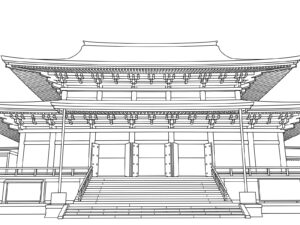
The second coloring page shows the Great Main Hall from the front, with its big two-tiered roof and wide stone steps.
The Colorful Three-Story Pagoda of Naritasan Shinshoji Temple
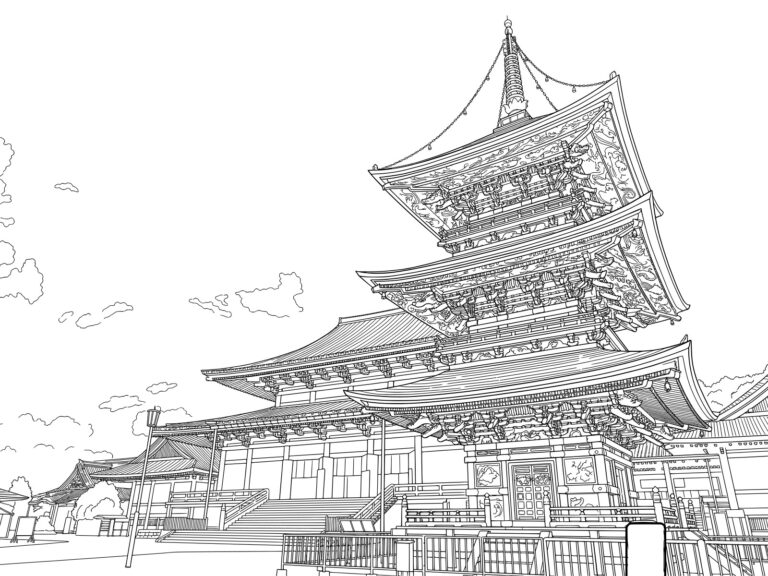
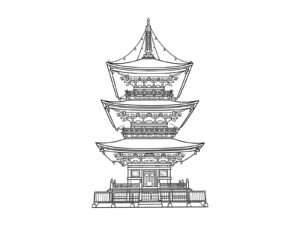
Next to the Great Main Hall stands the Three-Storied Pagoda. Built in 1712, it is a national Important Cultural Property.
It is a pagoda with three overlapping roofs, and the space under the eaves is full of detailed carvings of dragons and clouds.
It is painted in bright colors like red, green, blue, and gold. If you compare it to the Five-Storied Pagoda at Toji Temple, you can see that the number of roofs and the colors are different.
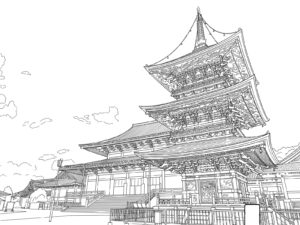
The first page shows the Three-Storied Pagoda from the front, and the third page shows the view looking up at the Three-Storied Pagoda and the Great Main Hall.
Lots of Temple Halls That Are Important Cultural Properties
In the precinct of Naritasan Shinshoji Temple, there are many other buildings that are national Important Cultural Properties, besides the Three-Story Pagoda.
These include the Nio-mon Gate with Nio statues on the left and right, the Shaka-do Hall with carvings of the 500 Arhats, the Komyo-do Hall built in 1701, and the Gaku-do Hall decorated with many ema wooden plaques.
Deep inside the precinct, there is also the huge, 58-meter-tall Great Pagoda of Peace. It looks different from the Three-Story Pagoda, so try comparing them!
The large precinct also has a park, so you can enjoy seasonal flowers and autumn leaves too.
How to Color Naritasan Shinshoji Temple
Paint the Three-Story Pagoda in Vermilion and Gold
The railings and pillars of the three-story pagoda are a bright vermilion red.
The carvings under the eaves are colored in a lively mix of blue, green, and gold.
If you color the cloud swirls blue or green, and the dragon gold or yellow, your pagoda will look grand just like the real thing!
Try painting the roof light blue-green, like aged copper.
The Great Main Hall Has White Walls and Dark Brown Pillars
The Great Main Hall is a calm-looking hall with white walls and dark brown pillars.
The roof is light blue-green, just like the three-story pagoda.
If you make the three big front doors a wood color lined with gold fittings, the entrance to the hall will really stand out.
Please color the stone steps light gray.
For Pictures Looking Up, Sky Blue Is the Key
The third picture looks up at Naritasan Shinshoji Temple's pagoda and Great Main Hall from below.
If you color the sky a deep blue, the vermilion three-story pagoda will really pop!
If you leave the clouds white and just add light sky blue around the edges, they will look soft and fluffy.
The area under the pagoda's eaves is very detailed, so sharpen your colored pencil and color it bit by bit!
Color the Interlocking Wood of the Great Main Hall One by One
In the second picture of the Great Main Hall, you can see a whole row of interlocking wooden brackets holding up the roof eaves.
If you color the brackets in alternating dark brown and white, you can clearly see how neatly they line up.
If you color the railings vermilion or dark brown, the front of the hall will look sharp and neat.
Fun Facts About Naritasan Shinshoji Temple
Setsubun where they don't say "Out with the ogres"
At the Setsubun festival of Naritasan Shinshoji Temple, they don't say "Out with the ogres!" when throwing beans.
They only say, "In with good luck!"
It is said that in front of Fudo Myoo's big, kind heart, even ogres change into good spirits.
Sumo wrestlers and famous TV stars join in on the bean throwing, too!
Kabuki's "Naritaya"
The kabuki family of Ichikawa Danjuro is called "Naritaya."
A long time ago, the first Danjuro prayed at Naritasan Shinshoji Temple and was blessed with a child he had wished for.
It is said that Naritaya began when he played Fudo Myoo on stage to say thank you.
The temple road is an eel town
An approach road of about 800 meters leads from Narita Station to Naritasan Shinshoji Temple.
The road is lined with many restaurants that serve delicious eel.
Eel became famous in Narita because people used to catch a lot of eel in nearby Lake Imba.
Goma prayers
In the Great Main Hall, special prayers called Goma are held every day.
They light a fire in front of Fudo Myoo and burn wooden sticks with everyone's wishes written on them to pray for the wishes to come true.
At New Year's, many people visit to pray for their family's health.
Share These Naritasan Shinshoji Temple Coloring Pages


More Castles, Shrines & Temples Coloring Pages
-
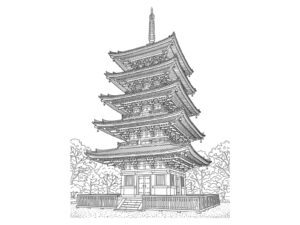
Three-storied Pagoda of Naritasan
-
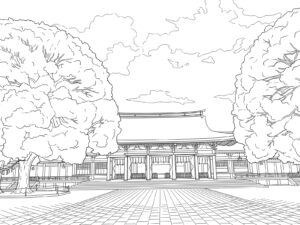
Great Main Hall of Naritasan Temple
-
-
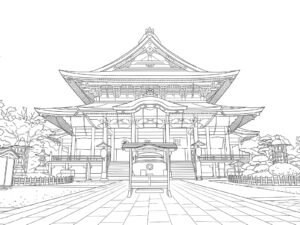
Three-story Pagoda and Main Hall (Detailed)
-