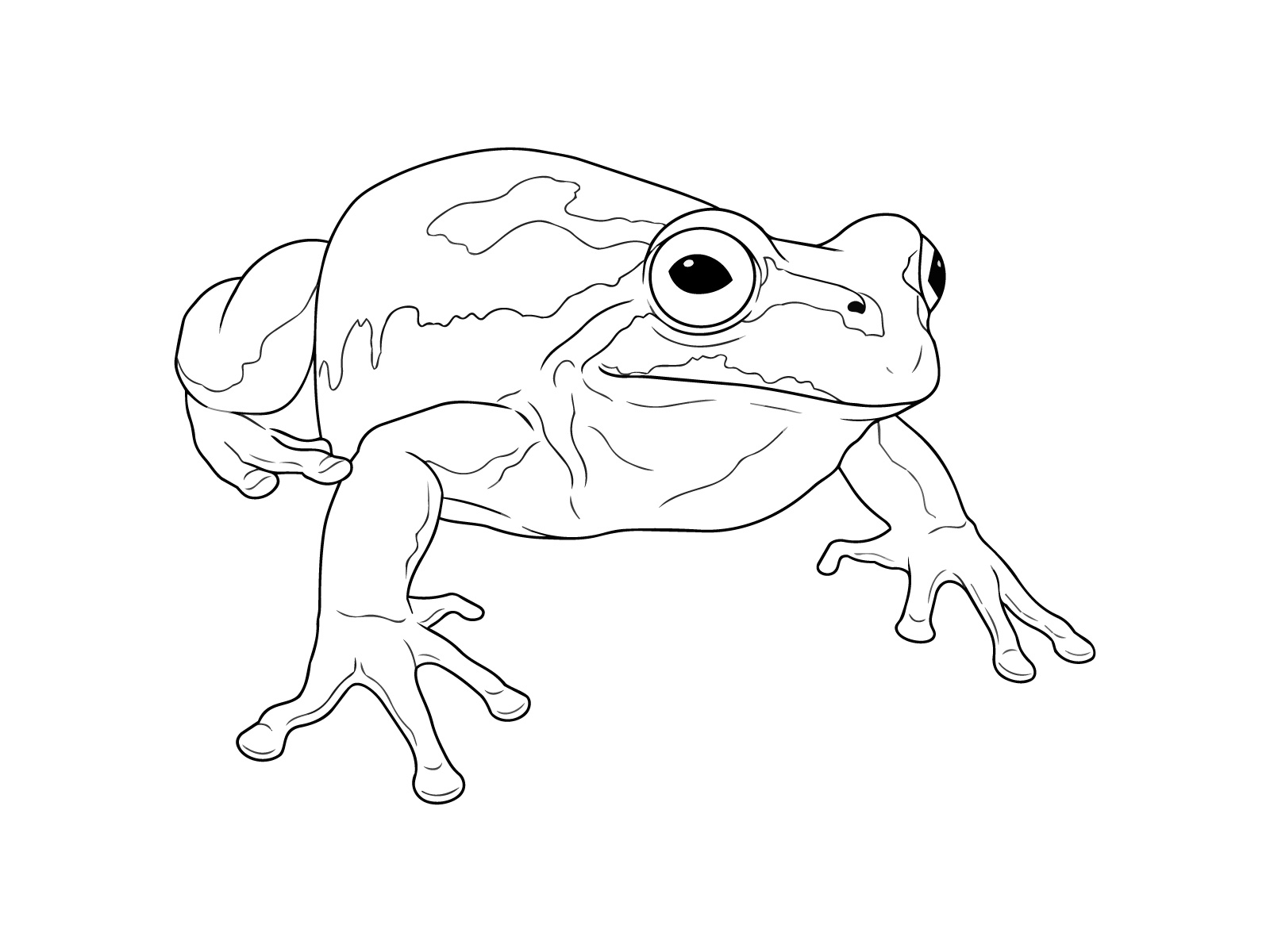
Japanese tree frog Coloring Pages
 ~
~ 
About Japanese tree frog
A Little Star in Nature Close to You! What is the Japanese tree frog?
The Japanese tree frog is the most familiar frog of all! You can spot them near rice fields, rivers, and in your garden. They are small and super cute. Watching them hop around so happily makes them true popular stars of Japan's rainy season and summer nature!
Where Do They Live? Places You Can Find Them
They live all across Japan, from Hokkaido to Honshu, Shikoku, Kyushu, and nearby islands. You might think frogs stay in the water all the time. But when a Japanese tree frog grows up, it loves to climb high places! You can find them not just by the water, but in grassy spots, on trees, under big leaves, on house walls, and near vending machines.
Amazing Ninja Trick! The Secret of Changing Body Colors
The cool superpower of the Japanese tree frog is that it can completely change its body color to match what is around it!
-
On grass or leaves, it turns a bright, fresh green.
-
On soil, tree trunks, or concrete, it turns a sneaky gray or light brown.
-
It can even make dark spots pop up on its skin to match its home. This is a special ninja frog trick! It helps the frog blend in so birds and snakes cannot spot it.
Their Trademark: A Black Mask from Nose to Ear
Here is a great tip to help you recognize the Japanese tree frog every single time. Look for the thick black line that runs neatly from its nostrils, through its eyes, and behind its ears! It looks like a cool black eye mask. Other green frogs live in Japan too, but only the Japanese tree frog has this black mask. Remember this, and you will be a frog expert!
Round Suction Cups on Their Toes Let Them Climb Anywhere
Take a close look at the toes of the Japanese tree frog. Every toe has a cute, round suction cup! Thanks to these cups, they can stick to smooth hydrangea leaves, plastic, glass windows, and house walls. They can easily climb straight up vertical places!
What Do They Eat?
The Japanese tree frog is a hunter that eats live insects. It loves ants, spiders, moths, flies, and small caterpillars. When it sees food, it shoots out a long, sticky tongue in a flash. The bug sticks to the tongue, and the frog rolls it right into its mouth! If something does not move, the frog does not know it is food, so it only hunts bugs that move.
They Love Rain! The Secret of the Rain Call
On rainy season nights, you can hear a big frog chorus singing "Ribbit, ribbit!" from the rice fields. But even during the day, when it gets cloudy or humid before a rain, they get happy and start to sing! People call this the "rain call." The Japanese tree frog has very thin skin that dries out easily, so it gets so excited when rain is coming. They are like cute little weather reporters!
Always Wash Your Hands After Touching! The Secret of Their Poison
The Japanese tree frog is tiny and cute, but its skin makes a tiny bit of mild poison to protect itself from germs. Just touching the frog will not hurt your skin. But if you rub your eyes or touch your mouth right after, it can sting a lot and make your eyes hurt! So make a promise to always wash your hands with soap after playing with a Japanese tree frog.
The Big Makeover from Tadpole to Frog
In spring, the Japanese tree frog lays many eggs in the water. The babies born from the eggs are tadpoles! At first, they swim like fish using gills. As they grow, their back legs sprout first, and then their front legs grow. Finally, their long tails shrink right into their bodies. Then, they turn into the cute little frogs you know and set off on a big adventure onto land!
How to Color Japanese tree frog
How to Choose Colors: Fresh Greens and Cool Transformation Colors
Main body colors: Think about where you want your Japanese tree frog to be, then pick your main colors!
-
Classic fresh green: If you want to use the most famous green, first color the whole body softly and smoothly with light yellow-green. On top of that, follow the round back and layer vivid green or emerald green lightly. This makes your Japanese tree frog look happy and healthy, like it is sitting in early summer plants!
-
Ninja transformation gray and brown: If you want a Japanese tree frog hiding on concrete or tree bark, try coloring the whole body with light gray or beige (yellow-ocher). Then, only along the pattern lines on its back, lightly draw dark gray or dark brown spot patterns. You will get a Japanese tree frog with perfect camouflage!
The Cute "Black Mask" and Big Eyes
This is the most important step to make your Japanese tree frog look alive!
-
Black line across the eye: Use a sharp jet-black colored pencil to fill in the thick line from the nose tip through the eye. Make it dark, clear, and strong! Just making this part sharp makes it look 100 times more like a real Japanese tree frog right away.
-
Big, round eyes: For the big, popping eyes, color the center pupil jet-black. Color the ring around it (iris) with gold or bright yellow. Leave a tiny bit of white paper uncolored inside the black pupil for a highlight! This makes the eyes look shiny and wet, giving it the cutest look.
Plump Belly and Leaving White Space
The belly of a Japanese tree frog is special because it is a nice white (or light cream color), different from its back.
-
Leave the belly white: For the middle of the plump belly, try leaving the white paper just as it is without adding any color.
-
Add shadows for 3D depth: Add very light gray or pale yellow softly only to the bottom edge of the belly and under the legs. Doing this makes the belly look round and soft, sticking forward just like a real frog!
Legs with Suction Cups and Lively Poses
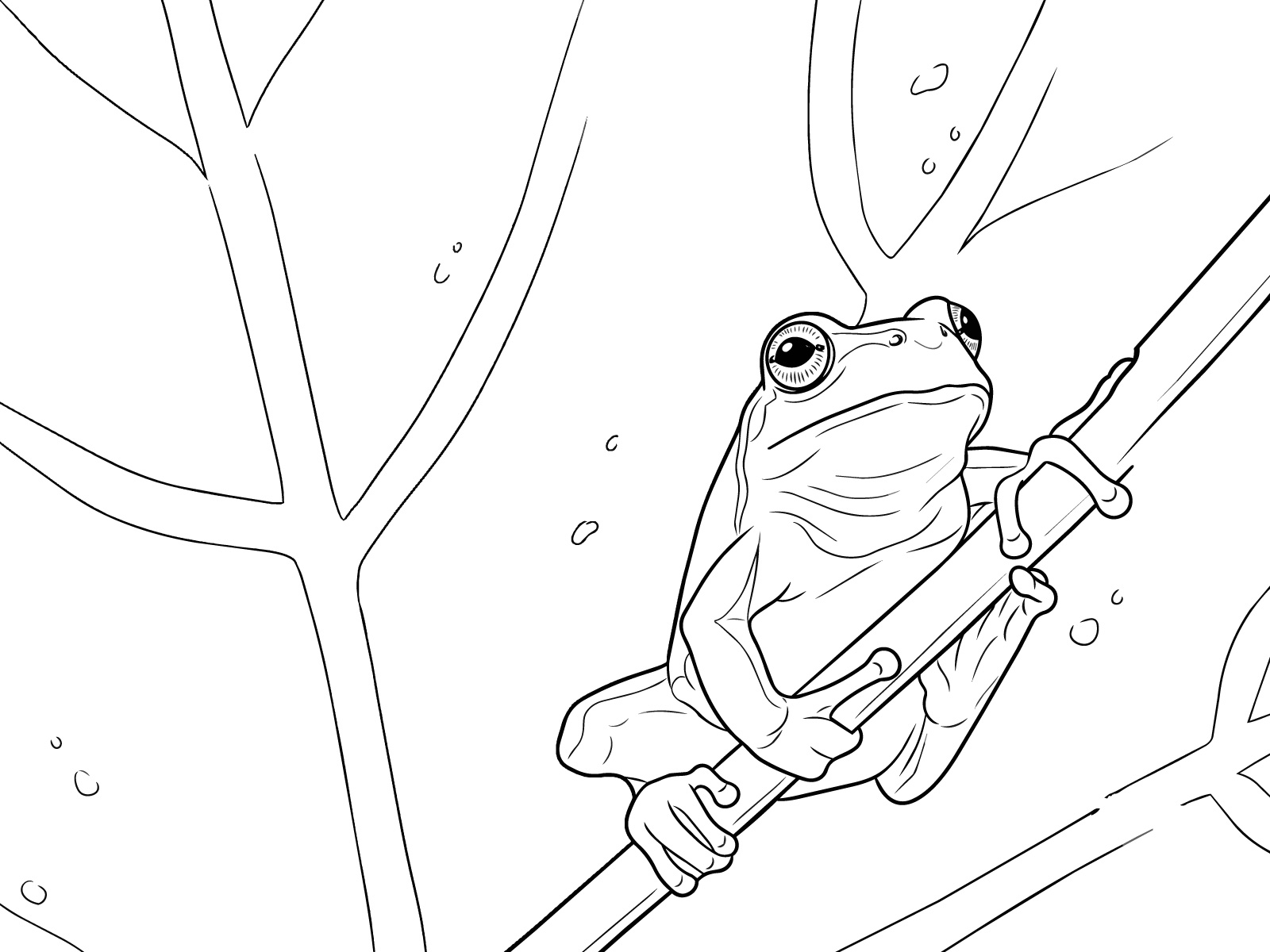
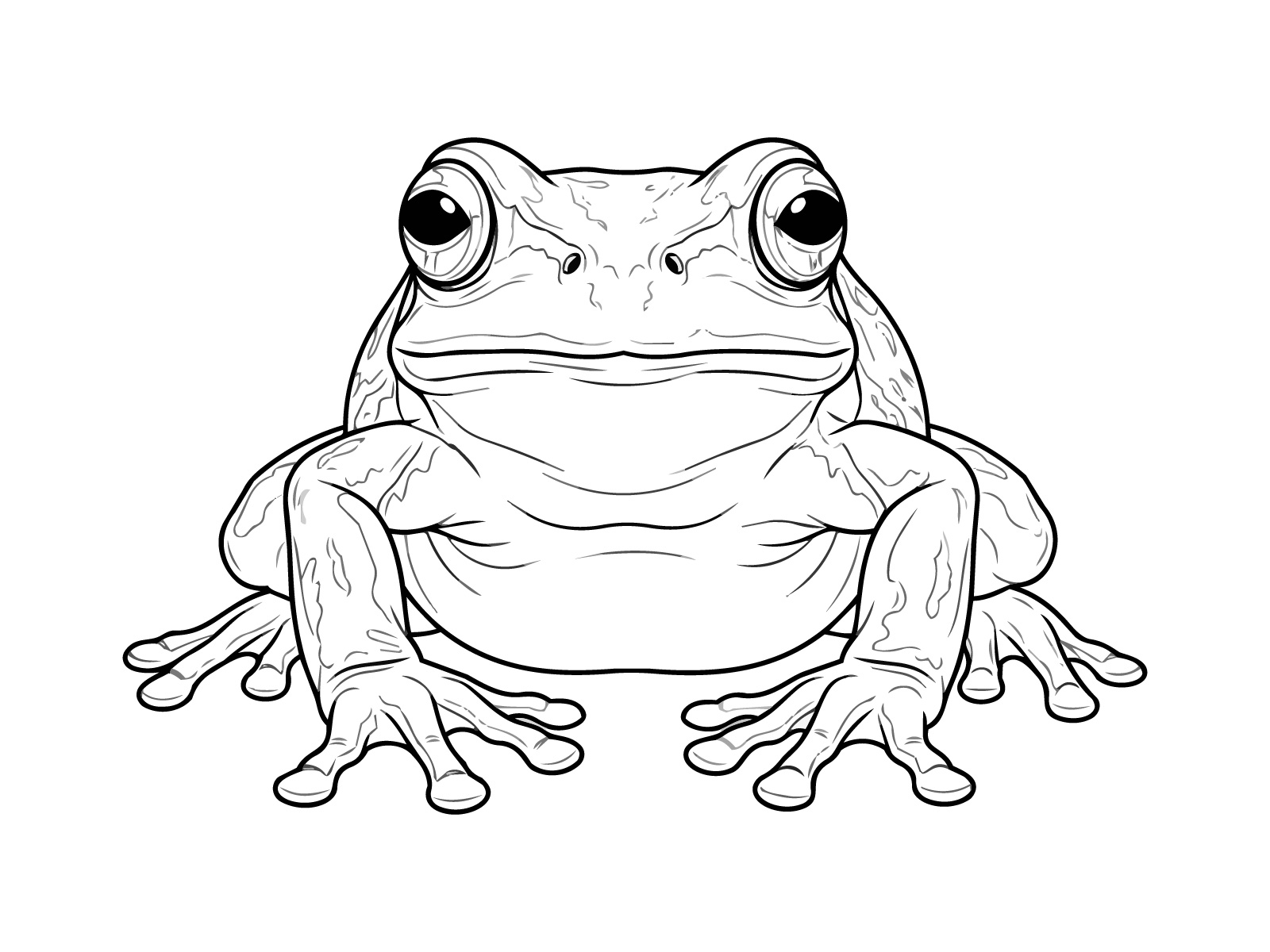
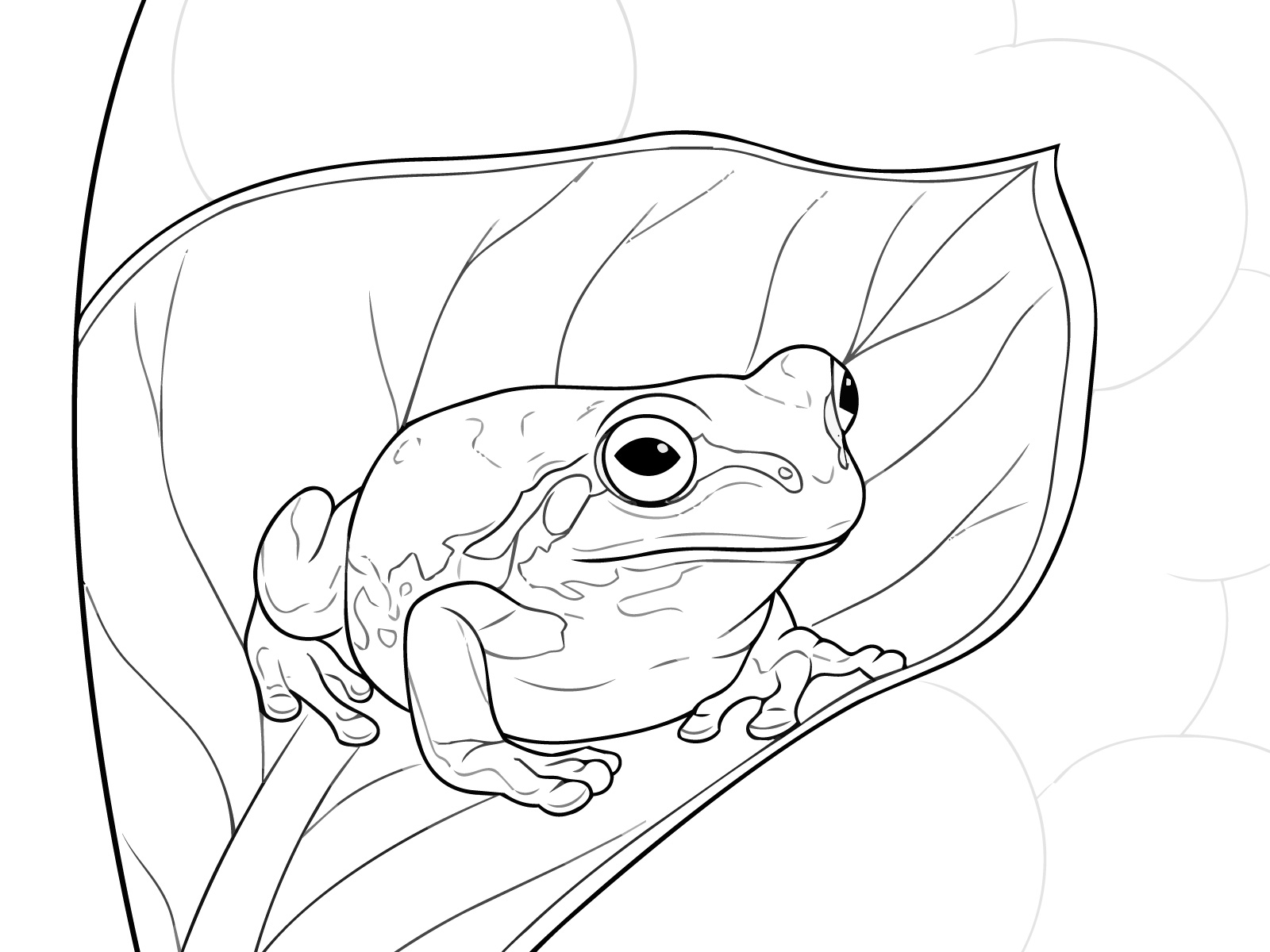
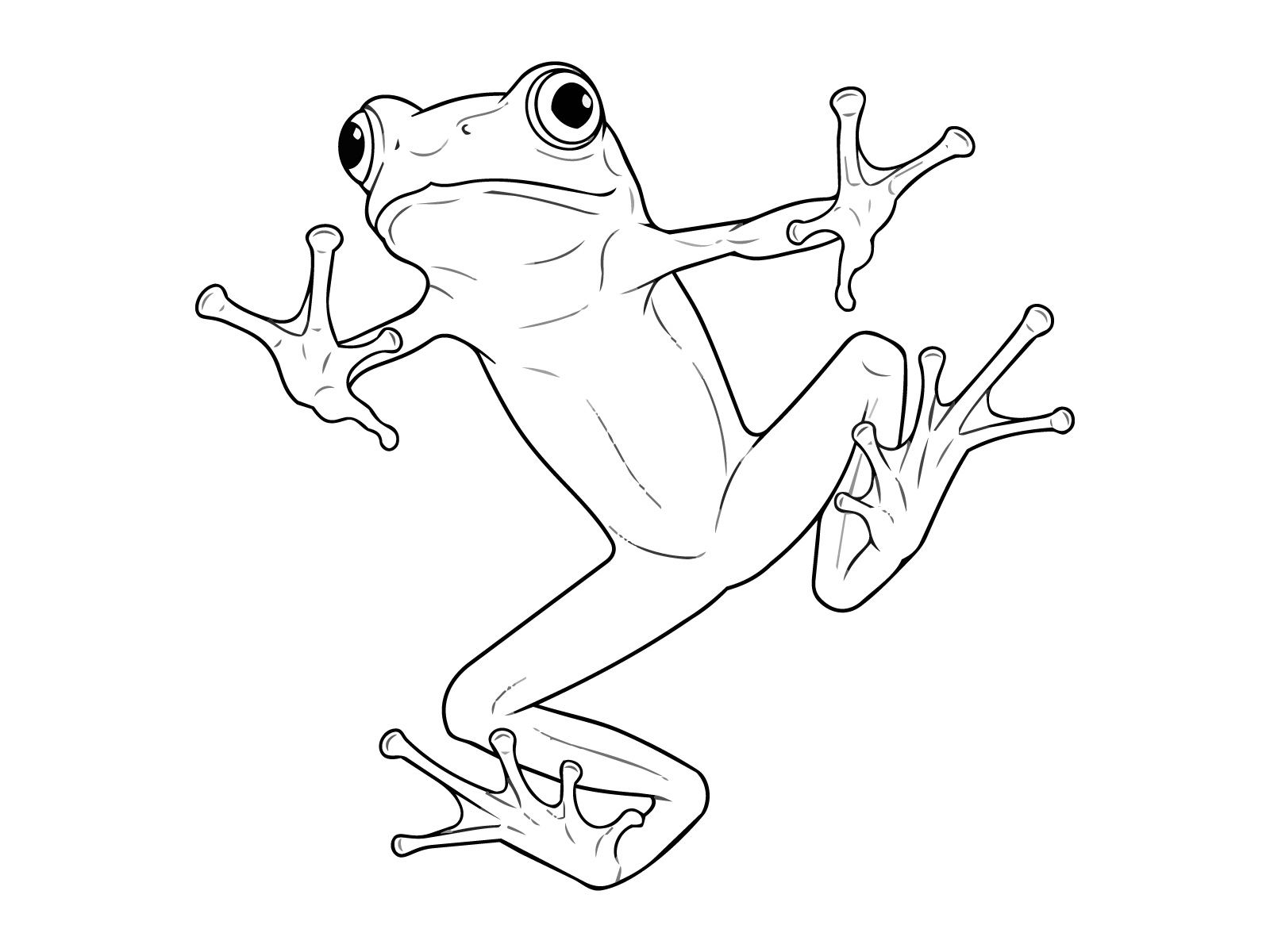
The picture shows neat poses, like sticking to glass or sitting still on a leaf!
-
Cute round suction cups: For the little round suction cups on its fingertips, make them a bit brighter yellow or light yellow-green than the green on its back. This makes the soft, sticky suction cups stand out, and your art will look awesome!
-
Sleek leg lines: Trace a neat shadow line along the long bones of the back legs using a darker green. This makes your Japanese tree frog look ready to take a big, powerful jump!
Tips for Big Leaves and Raindrops in the Background
Try some fun tricks on the big hydrangea or lotus leaf the Japanese tree frog sits on, and on the space around it, to finish a great coloring page!
-
Match colors with the leaf: If you colored the Japanese tree frog bright green, try coloring the leaf dark forest green or blue-green. Changing the shade helps the Japanese tree frog pop out instead of hiding in the background!
-
Make a rainy day picture: Tilt your light blue colored pencil sideways and shade the white background softly. Then trace round raindrop shapes clearly with dark light-blue! This creates a great story picture, making it look like the Japanese tree frog is singing happily in the refreshing rain!
Fun Facts About Japanese tree frog
They can transform to match their surroundings!
The Japanese tree frog can change its body color from bright green to gray or brown to match the light and background around it. This is their camouflage skill to hide from enemies. When they jump onto rough tree trunks or concrete, they quickly turn a dull color!
Always wash your hands after touching them! The secret of their skin's "poison"
They are super cute frogs, but their skin actually makes a slime with strong poison. If you rub your eyes after touching one, it can hurt a lot or even hurt your sight. So make sure you always wash your hands after touching a frog!
Weather forecasters!? Their "rain calls" before it rains
The male Japanese tree frog croaks at night. But even in the day, they start singing "Ribbit, ribbit" when rain is coming! This is called "rain calling." They sing because they feel the air getting wet. Long ago, people even guessed the weather by listening to frog voices!
Sticking tight anywhere! Handy suction pads
If you look closely at their toes, you will see round, puffy suction pads. Thanks to these pads, they can stick tight and climb smoothly, even on slippery glass windows, house walls, or plant leaves without sliding!
Different numbers of toes on front and back legs
You can find something fun if you look closely at a Japanese tree frog's feet. They actually have only 4 toes on their front feet, but 5 toes on their back feet! The toes on their back feet also have small webs between them. This helps them make big jumps and swim very well!
Share These Japanese tree frog Coloring Pages


More Reptiles & Amphibians Coloring Pages
-
Japanese tree frog
-
Japanese Tree Frog 2
-
-
Japanese tree frog 3
-
Japanese Tree Frog 4
-
-
Japanese tree frog 5
-