Shinkansen Series 0 Coloring Pages
 ~

About Shinkansen Series 0
The Very First Shinkansen
Shinkansen Series 0 was the very first Shinkansen to run in Japan.
It made its debut on October 1, 1964, when the Tokaido Shinkansen opened between Tokyo and Shin-Osaka.
At its top speed, it ran at 210 kilometers per hour. It made the trip between Tokyo and Osaka much faster, cutting it down from over 6 hours!
It was the world's very first high-speed train, and it amazed people all over the world.
The Round "Dango Nose"
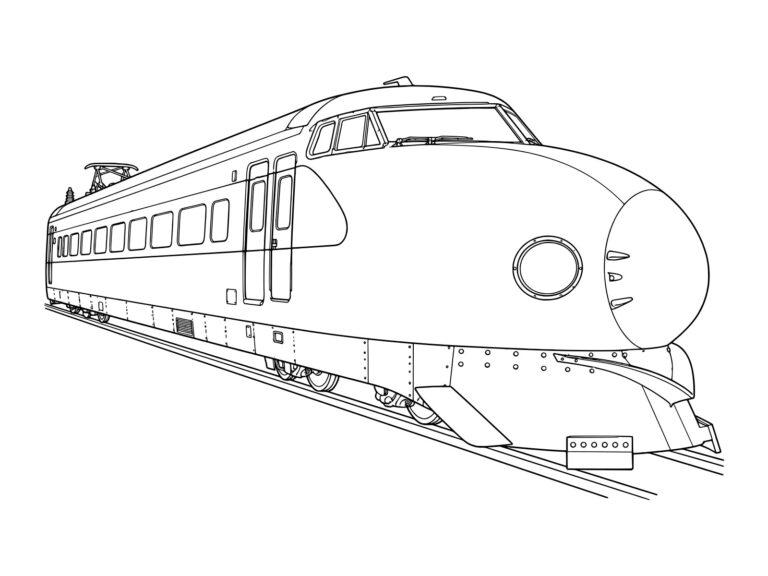
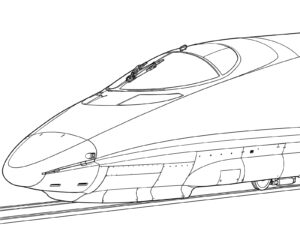
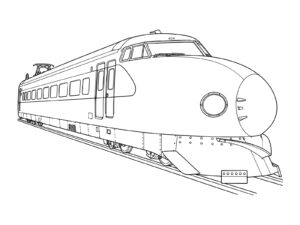
The coolest thing about Shinkansen Series 0 is its round, puffy nose.
People lovingly call it the "Dango Nose" because of its fun shape!
There is a round cover right at the tip of the nose, and round lights that look like eyes sit on both sides.
Take a close look at its face in the 1st coloring page.
You can also see the pantograph on top of the roof, which takes in electricity.
Where You Can Meet Shinkansen Series 0
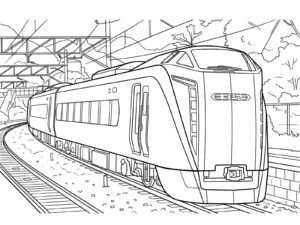
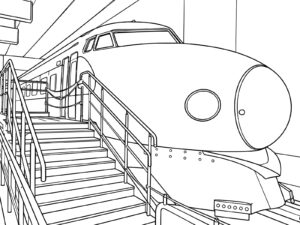
The 2nd page shows Shinkansen Series 0 on display at a museum.
Shinkansen Series 0 retired from regular service in 2008.
Now, you can visit real Shinkansen Series 0 trains saved in train museums and parks all across Japan.
Look at the left side of the picture, and you will see stairs used to go inside the train car.
When you see it up close, you can really tell how big Shinkansen Series 0 is!
Mount Fuji and Shinkansen Series 0
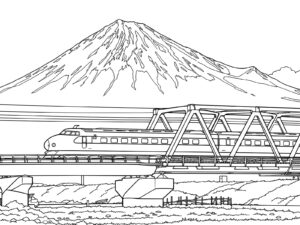
The 3rd picture shows Shinkansen Series 0 crossing an iron bridge with Mount Fuji behind it.
On clear days, you can see Mount Fuji right outside your window from the Tokaido Shinkansen.
Mount Fuji and the Shinkansen are famous symbols of Japan, so they have been on many posters and photos together.
Try to find the triangle patterns on the iron bridge and the grass by the river, too!
Let's Compare it to Today's Shinkansen
A lot of new Shinkansen trains were made after Shinkansen Series 0.
If you line up its coloring page next to the Series N700 or Series E5 coloring page, you can see that the front nose got longer and sharper over time.
When trains go really fast, wind pressure and tunnel noises get louder, so designers kept changing the shape to help.
The Original Shinkansen Look
The white and blue colors of Shinkansen Series 0 have been passed down to Tokaido Shinkansen trains ever since.
Even today's Series N700 has a white body with a blue stripe.
So, Shinkansen Series 0 is where all Shinkansen colors started!
How to Color Shinkansen Series 0
Let's color with white and blue!
The body of Shinkansen Series 0 uses two colors: creamy white and blue.
Try coloring the stripe around the windows and the bottom of the body blue, and leave the rest white.
If you color the blue in the same direction, it will look super smooth!
Make the round nose look soft and bouncy
If you add a little shade with light gray around the edges of the round nose, it will look nice and rounded.
Color the round cover on the tip of the nose cream or light yellow to make it look like a real light!
The round lights that look like eyes can be orange or red, too.
Color the museum with wood and metal colors
Try coloring the stairs and handrails on the second picture brown or gray, and the museum walls cream.
The trick is to use light colors around the train so Shinkansen Series 0 stands out!
Color Mt. Fuji with snow and mountain slopes
For Mt. Fuji on the third picture, leave the snow at the top white! Color the mountain slopes blue or purple to make it look like Mt. Fuji in winter.
We recommend light blue for the sky, gray for the bridge, and light green or ocher for the grass along the riverbed.
Color the windows and doors carefully
Shinkansen Series 0 has many windows in a row.
If you color the window glass light blue or light gray and leave the window frames white, they will look nicely lined up.
You can keep the doors white just like the body. But if you trace the door lines a little darker, the shape will stand out clearly.
Color the wheels and undercarriage dark gray!
Fun Facts About Shinkansen Series 0
"Dream Super Express"
When Shinkansen Series 0 made its debut, the Shinkansen was called the "Dream Super Express."
It started running in 1964, the year of the Tokyo Olympics, and became a symbol of a new era for Japan.
More Than 3,000 Cars Were Built
For over 20 years, more than 3,000 cars of Shinkansen Series 0 were built while slightly changing their design.
It worked hard for a long time not only on the Tokaido Shinkansen, but also on the Sanyo Shinkansen.
At the end, it ran as the "Kodama" on the Sanyo Shinkansen, and retired in 2008.
Rides That Copy Its Shape
The round nose of Shinkansen Series 0 is super popular, so trains, buses, and playground equipment that copy its shape were made all over Japan.
If you see one, try comparing it with the real Shinkansen Series 0!
The Name "Shinkansen Series 0" Came Later
When it made its debut, Shinkansen Series 0 did not have "Series 0" in its name, and was just called the "Shinkansen."
Later, new Shinkansen like Series 200 were made, so it started being called "Shinkansen Series 0" to mean the very first Shinkansen.
A Coupler Inside Its Nose
Inside the round nose of Shinkansen Series 0, a coupler is stored to connect it with other train cars.
It is made to connect with other cars whenever it gets into trouble.
Share These Shinkansen Series 0 Coloring Pages


-
Series 0 (front three-quarter view)
-
Series 0 at the museum
-
-
Mount Fuji and the 0 Series Shinkansen
-