Nandina Coloring Pages
 ~
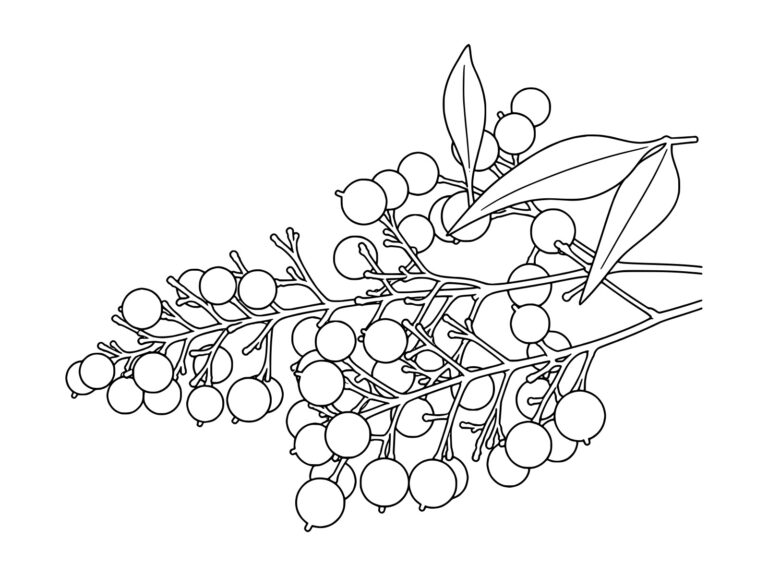

About Nandina
A tree with red berries in winter
In winter, Nandina grows lots of bright red, tiny berries that hang in bunches like grapes.
Its long, pointed leaves are lined up just like feathers.
Tiny white flowers bloom in early summer, and the berries turn red from autumn to winter.
In winter, Nandina is so pretty with white snow, green leaves, and red berries all together.
A lucky tree that turns bad into good
Nandina is known as a lucky tree in Japan because its Japanese name sounds like words that mean "turning trouble into good luck."
People have planted it at house entrances and in gardens for a long time.
For New Year's, it is used for kadomatsu (bamboo decorations), flower arrangements, and New Year food decorations.
In some areas, people put Nandina leaves next to red rice, too.
Eyes and ears for a snow rabbit
On a snowy day, let's make a "snow rabbit" out of snow!
Make a round shape with snow, then use red Nandina berries for the eyes and long leaves for the ears to make a cute rabbit.
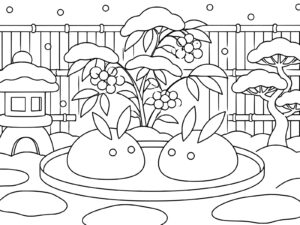
The second coloring page shows two snow rabbits sitting together in a snowy garden.
Have fun coloring them along with the snowman and rabbit coloring pages!
White flowers and red berries
Nandina flowers are tiny and white, and they bloom around June.
Many flowers with bright yellow centers bloom together in long bunches.
After the flowers bloom, small green berries grow, and they slowly turn red from autumn to winter.
This tree shows you many fun looks all year long, like flowers, green berries, red berries, and red leaves in autumn.
It is strong in both cold and hot weather, and it can grow in the shade, so you can see it in gardens all over Japan.
The mystery of its name
Nandina came from China, and people say its Japanese name was based on its Chinese name.
Because its name sounds like words for "turning trouble away," people began to care for it as a lucky tree.
You can even find cough drops in Japan named after Nandina!
3 Coloring pages
There are 3 coloring pages.
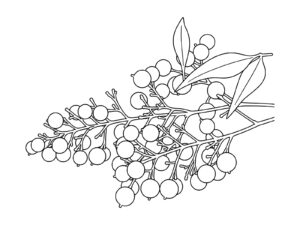
The first page shows Nandina berries and leaves drawn from a real photo. You can clearly see how the bunches of berries hang down.
The second page shows snow rabbits made with Nandina berries and leaves in a snowy garden.
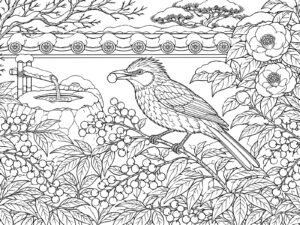
The third page is a detailed coloring page of a Japanese garden and a brown-eared bulbul coming to eat Nandina berries.
How to Color Nandina
For Nandina Berries, Use 2 Reds
If you color the Nandina berries red, and leave a tiny white spot in the middle, they will look shiny!
Color the berries in the back dark red, and the berries in the front bright red. This makes the cluster look pop out!
Trace the small dot on the tip of each berry with dark brown.
The Leaves Are a Mix of Green and Red
Nandina leaves are dark green, but the winter cold can turn some of them red or orange.
If you add a little red to the edges of a few leaves, it will look like a real winter Nandina.
Color the thin branches and stems red-brown.
The Snow and the Garden
Leave the snow white! Just add light blue or light gray to the shady spots to make the snow look soft and fluffy.
If you color the snow rabbit's berry eyes red and its leaf ears green, its white body will really stand out!
Color the brown-eared bulbul bird gray with brown cheeks. Leave the wall white, and color the roof tiles dark gray.
Get the Shape of the Cluster First
When there are lots of berries, color the whole cluster lightly with light red first to see the shape.
After that, color each berry one by one with red. That way, you will not miss any spots!
If you change how dark the green is for each leaf, the bush will look deep and full.
Color the water basin in the 3rd page gray. Leave the piled-up snow white, and color the camellia flowers red or pink.
The Lantern and Bamboo Fence in the 2nd Page
Color the lantern in the snowy garden gray. Color the bamboo fence ocher or light brown.
If you leave the snowy spots white, it will look just like a garden on a snowy day!
Fun Facts About Nandina
A treat for birds
Nandina berries are a tasty treat for birds when food gets scarce in winter.
Brown-eared bulbuls and thrushes eat the berries, and then drop the seeds in other places with their droppings. That is how Nandina spreads all over!
Nandina with white berries
Did you know there is also a white-berried Nandina called "Shiro-nanten"?
People sometimes plant red and white ones together because red and white are happy, lucky colors in Japan!
Don't eat them yourself
Nandina berries have been used in cough medicine for a very long time.
However, it is bad for your body to eat them raw, so make sure you never put garden berries in your mouth.
New Year and Nandina
Nandina is often used in New Year flower arrangements and to decorate tier boxes for Osechi food.
That is because the red berries look great for a happy celebration like New Year!
Also, people say that using chopsticks made from a Nandina tree helps you stay healthy. This comes from a Japanese wordplay meaning "turn bad luck away."
In the old days, people called the northeast corner of a house the "demon's gate." They planted Nandina there to wish for bad things to stay away.
The leaves turn red, too
Nandina leaves sometimes turn red in winter. Seeing green and red leaves mixed together is one of the best parts of winter Nandina!
Share These Nandina Coloring Pages


More Winter Flowers Coloring Pages
More Trees & Leaves Coloring Pages

-
Nandina Berries
-
Snow rabbit and heavenly bamboo
-
-
Nandina and Brown-eared Bulbul
-
-